Scientists shrank mice's brains and replaced the missing tissue with human 'organoids'
Scientists have devised a new way to incorporate human brain tissue into living mice, opening the door to new research.
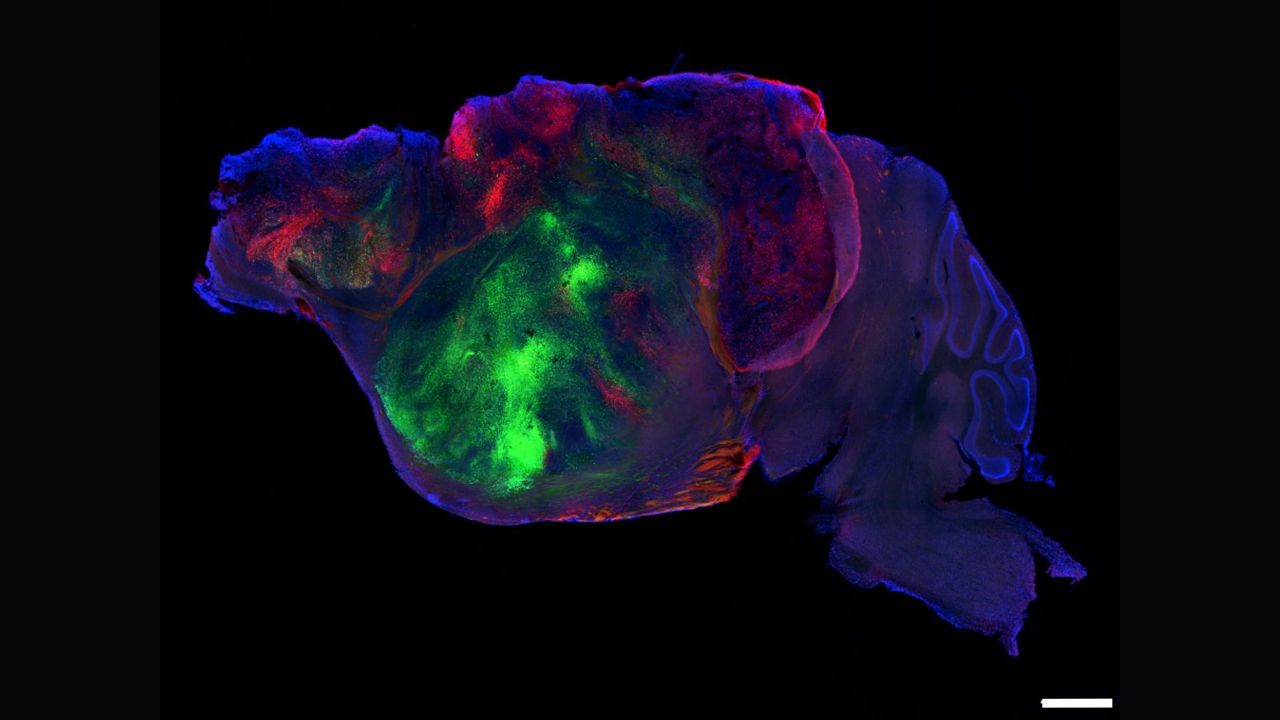
In a recent study, scientists transplanted human brain tissue into mice that were missing portions of their own brains. This experiment marks progress in the study of human brain organoids - miniature models of the human brain grown from stem cells. The ultimate goal is to use these organoids to better understand brain development and how it changes in diseases.
Dr. H. Isaac Chen, a neurosurgery professor at the University of Pennsylvania, praised this advancement but noted that organoids still fall short of replicating full-sized human brains. Stanford University's S. Pasca lab developed a genetically modified mouse that only has 2% of its cerebral cortex and hippocampus, allowing for the successful integration of human cortical tissue.
The human cells grew, connected, and extended into the surrounding mouse tissue within weeks, integrating many typical human cortical cell types. Despite some subtle deficits in motor skills, working memory, and socialization, the mice with human brain tissue still functioned reasonably well.
Written by urgent.news from Live Science's reporting — not their text. Machine-written — may contain errors; check the original before relying on it.
Also reported by 4 other outlets
- STAT+: Scientists made mice with half a brain. Then they filled them with human organoids statnews.com
- Scientists create mice with part-human brains theguardian.com
- Scientists recreated what mice saw from brain activity alone sciencedaily.com
- Scientists Grew Human Brain Tissue Inside Mice. Here's What Happened. sciencealert.com