Scientists Grew Human Brain Tissue Inside Mice. Here's What Happened.
A neuroscience breakthrough. Don't miss a story, subscribe here.
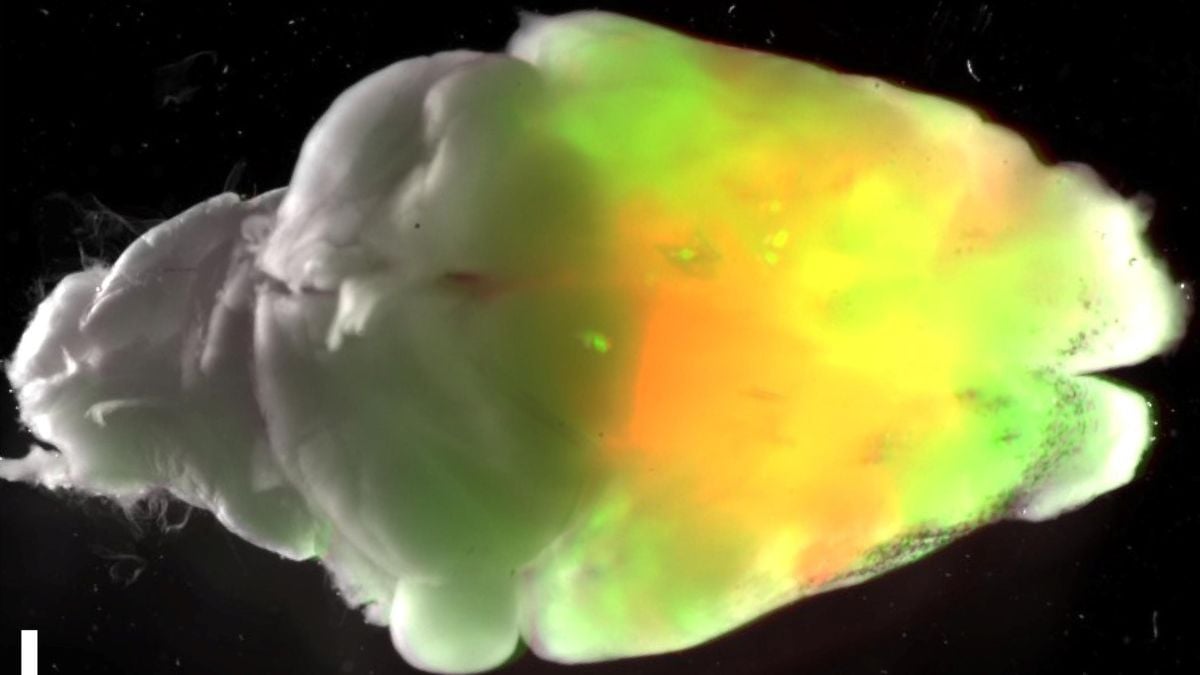
For the past ten years, researchers have made significant progress in creating "cerebral organoids," miniature three-dimensional brain-like structures, using human stem cells in a laboratory setting. Now, a group from Stanford University has discovered a novel method to enhance the utility of these organoids for studying brain development and disease.
They achieved this by cultivating these organoids within mice that had undergone significant portions of their brains being genetically removed. Neuroscientists consider these "neuro-chimeric" mice, with brains that are half-human by volume, a crucial advancement for a field that has faced longstanding challenges in accessing human brain tissue for research purposes.
However, such models also pose numerous ethical concerns that will become more pressing as they advance. In a study published in the journal Nature on Wednesday, the Stanford team presented their findings, which revealed the presence of human cells in the brains of 3-month-old chimeric mouse pups. These cells were particularly difficult to obtain in a dish and included pyramidal projection neurons that migrated into some of the animals' spinal cords.
Additionally, the researchers observed evidence of specialized, oversized neurons involved in social cognition, a feature unique to large-brain mammals like elephants, whales, and primates, including humans.
Written by urgent.news from STAT News's reporting — not their text. Machine-written — may contain errors; check the original before relying on it.
This story
This is one outlet's version. Read the fullest account.
- Scientists shrank mice's brains and replaced the missing tissue with human 'organoids' livescience.com
- STAT+: Scientists made mice with half a brain. Then they filled them with human organoids statnews.com
- Scientists create mice with part-human brains theguardian.com
- Scientists recreated what mice saw from brain activity alone sciencedaily.com