Researchers swap in human brain cells for a mouse's cortex
The results are only a slight improvement over missing the entire brain structure.
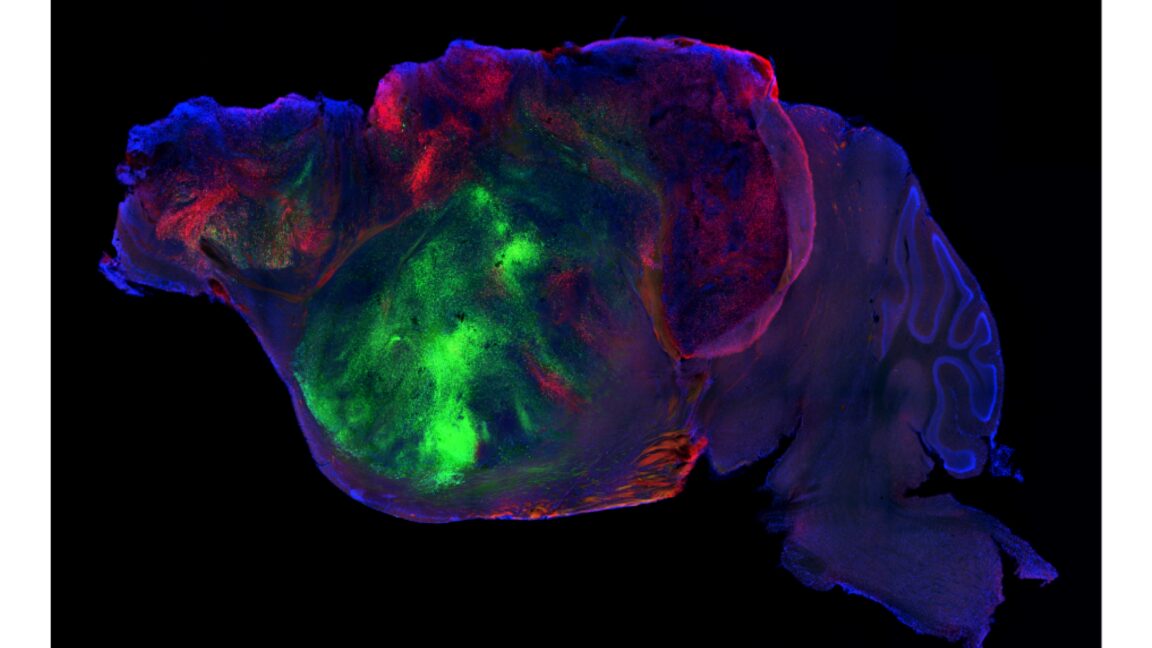
In the past few years, there has been significant interest in using organoids to study human diseases. These tiny tissue patches, created using stem cells, resemble the cell types and structures found in actual organs, potentially offering a more accurate model for diseases that involve complex interactions among specialized cell types.
However, even the most advanced organoids still lack many features of a real human body. Specifically, brain organoids fail to form the necessary connections with specialized brain structures, preventing them from functioning normally.
On Wednesday, a research team from Stanford University presented a potential solution to this problem. They genetically eliminated a significant portion of a mouse's brain and replaced it with human brain organoid cells. The replacement organoids, due to their three-dimensional tissue structure and variety of specialized cells, provide a more realistic model of intact tissue compared to isolated cells grown on a flat culture dish.
However, they still face limitations; they are not connected to a circulatory system, which is crucial for the liver to process chemicals produced by the organoid. Additionally, they lack immune cells that circulate within them.
Written by urgent.news from Ars Technica's reporting — not their text. Machine-written — may contain errors; check the original before relying on it.
This story
This is one outlet's version. Read the fullest account.
- Researchers swap in human brain cells for a mouse's cortex arstechnica.com