Urgent.News

What's breaking now, across thousands of outlets.

Science

Quantitative training overhaul needed in ecology

Ecologists are collecting more data than ever before, but many still lack confidence in the quantitative skills needed to make sense of it, according to a new paper.

Quantitative training overhaul needed in ecology

A new paper, A century of inertia in quantitative ecology education, published in Methods in Ecology and Evolution, highlights the need for a significant overhaul in quantitative training within the ecology field. Despite the surge in data collection methods, ecologists often lack the necessary quantitative skills to effectively analyze and interpret the data.

The study, led by Dr. William Kay from Cardiff University, identifies several barriers to progress, such as curricula focused on statistical techniques, student anxiety around mathematics, limited resources, and a separation between ecology and statistics. To address these issues, the paper proposes a shift towards teaching deeper conceptual understanding and fostering quantitative literacy among ecologists.

This approach would enable ecologists to better understand data, communicate with quantitative specialists, and critically evaluate evidence, ultimately improving their ability to address critical issues like biodiversity loss and climate change.

Brief written by urgent.news from Phys.org's own syndicated text. Machine-written — may contain errors; check the original before relying on it.

Read the original at phys.org →

More in Science

Hope in the Storm: Studying the Daily Fight to Live

Understanding and preventing suicide often focuses on why people want to die—but a Yale researcher is calling for a shift to a more constructive, humanizing starting point. Christine Cha, PhD, stresses the importance of focusing on why many people who feel suicidal keep trying to live.

Scientists turn seawater into fresh water without harmful brine

Scientists have developed a solar-powered desalination system that turns seawater into fresh water while removing nearly all of the leftover salt as a solid instead of producing harmful brine.

  • Scientists develop solar-powered desalination system to convert seawater to fresh water.
  • System uses black metal panels treated with femtosecond lasers for superwicking properties.
  • Panels separate salts and minerals, preventing buildup while maintaining desalination efficiency.

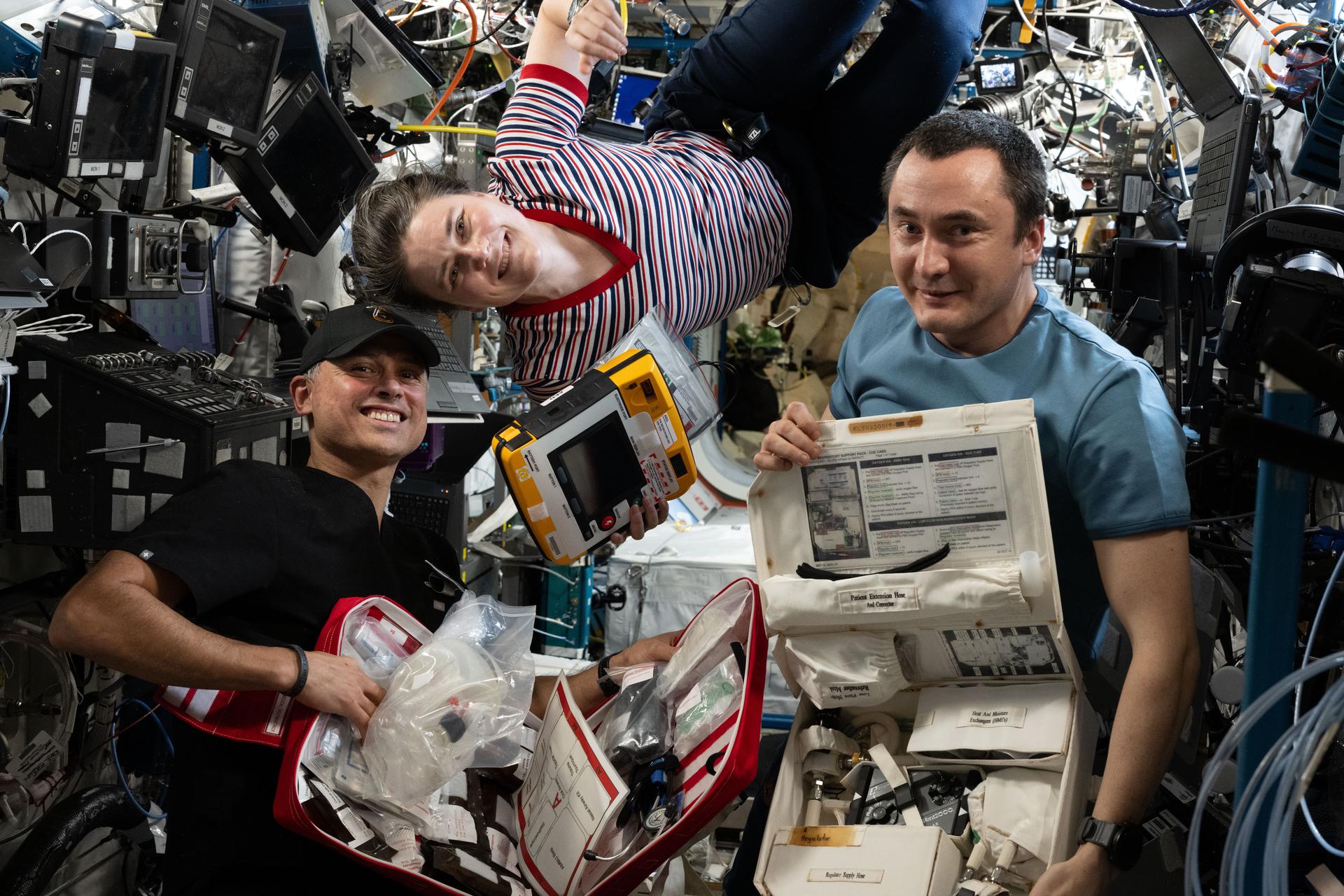
NASA’s Integrated Medical Model (IMM)

Planning crewed missions to the Moon and Mars involves preparing for the medical realities of long-duration space travel. Factors like cosmic radiation, microgravity, and distance from Earth create unique health considerations for astronauts. To anticipate these needs ahead of time, NASA developed the Integrated Medical Model (IMM).

More from Wednesday 16 September →