New trick could reveal text on 2,000-year-old scrolls charred by eruption of Mount Vesuvius
Using X-ray technologies and custom-made software, researchers were able to read text they wrote on a fake ancient scroll designed to mimic those destroyed at Herculaneum in A.D. 79.
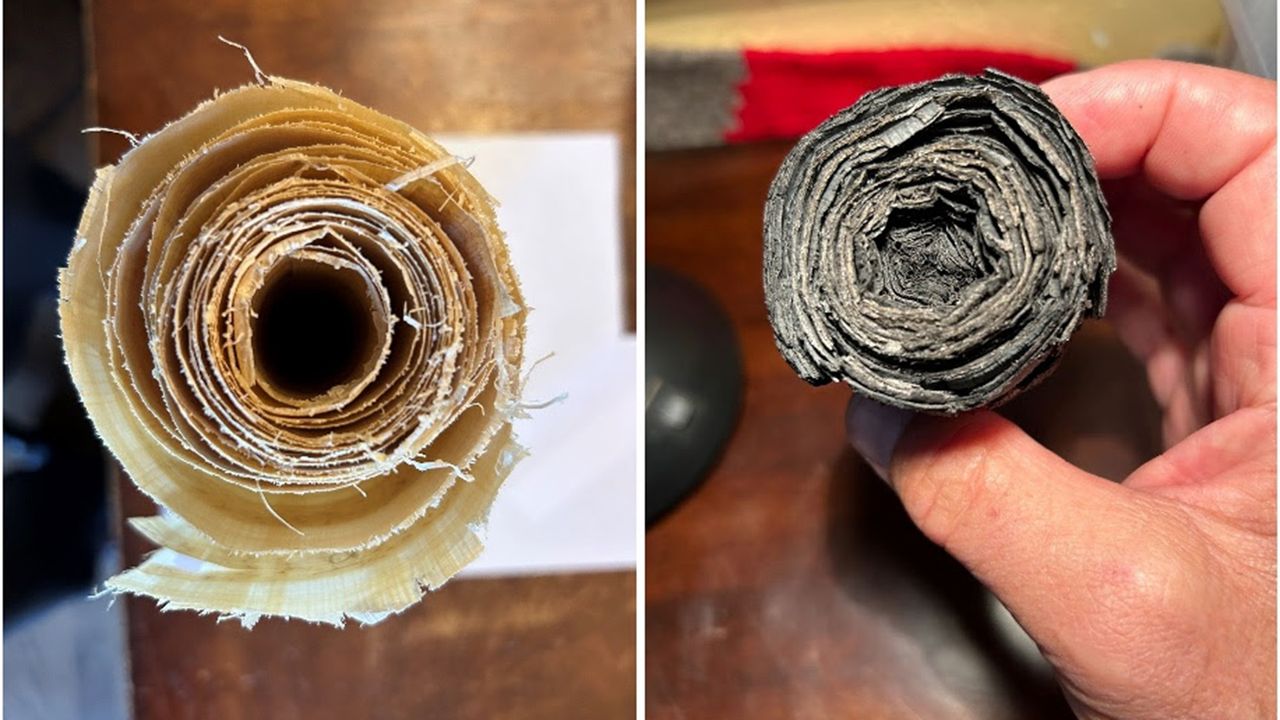
A groundbreaking method may soon unlock the secrets of ancient scrolls scorched by the eruption of Mount Vesuvius over two millennia ago, according to a new study. The research focuses on a lead-enriched ink used in some of the approximately 2,000 papyrus scrolls discovered in the ancient town of Herculaneum in the 1750s. A team of scientists created modern scrolls with leaded ink, charred them, and discovered that they could read the text using various techniques, including X-ray technologies and artificial intelligence.
Douglas Seiler, a research affiliate at the University of California, Berkeley and co-author of the study, highlighted the potential of this new method: "It's amazing what you can get electrons to do." Since the discovery of these scrolls, primarily authored by Epicureans and Stoics, researchers have struggled to read them due to the carbon-based nature of both the papyri and the ink.
However, some scrolls contained leaded ink, leading the team to propose a new approach. Published in the journal PLOS One, the study suggests that scientists should initially scan the scrolls for leaded ink and then employ their technique to read these precious texts. This method could enhance text-detection algorithms, safeguard the scrolls, and potentially digitize more of the long-lost writings.
Written by urgent.news from Live Science's reporting — not their text. Machine-written — may contain errors; check the original before relying on it.