A Retired Inventor Burned Homemade Scrolls to Help Read 2,000-Year-Old Texts Buried by Mount Vesuvius
Learn how experiments with homemade scrolls could help reveal lost writing in the Herculaneum library buried by Mount Vesuvius.
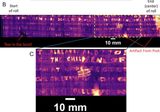
Retired inventor Douglas Seiler conducted experiments in his home lab to study how he might read ancient Herculaneum scrolls that were severely damaged by Mount Vesuvius in 79 CE. Seiler placed a roll of papyrus containing modern writings inside a steel container and heated it in a furnace until the scroll charred. His goal was to understand how scholars could potentially read scrolls that have been nearly destroyed for centuries.
The Herculaneum scrolls present a significant challenge for historians and scholars due to their carbonized state after the volcanic eruption. X-ray imaging and artificial intelligence have been used to read portions of some scrolls, but the ink and charred papyrus are largely composed of carbon, making the writing hard to distinguish. Seiler funded this research himself and collaborated with chemists to develop inks containing various amounts of lead.
In a study published in PLOS One, Seiler and his team utilized X-ray technology and specialized software to non-invasively read sections of a homemade, charred scroll without opening it. They added lead to the test ink so that the lettering would be more visible under the X-rays. Earlier research has also found lead in some ancient Herculaneum ink, leading the team to suggest that checking for lead in unopened scrolls could help identify which carbonized texts might be more readable.
The researchers anticipate that the homemade scrolls could aid in improving the software used to read the ancient texts without risking the original manuscripts. By comparing the program’s reconstruction with the actual handwriting preserved on the charred scrolls, developers could enhance the accuracy of the reading software. Leah Packard-Grams, a papyrus specialist from UC Berkeley, highlighted the importance of this discovery in understanding the direct writings of people from over 2,000 years ago, providing a unique glimpse into their thoughts and correspondence that cannot be found in later copies or libraries.
Written by urgent.news from Discover Magazine's reporting — not their text. Machine-written — may contain errors; check the original before relying on it.
This story
This is one outlet's version. Read the fullest account.