Micron announces 512GB DDR5-9200 memory modules with 16W power draw — up to 12TB per server, claims 60% less energy-intensive than four 128GB modules
After five years, Samsung's 512GB DDR5 memory modules get their first direct rival from Micron, which also promises to offer speed bins up to 9200 MT/s. But their prices could be way too high even for hyperscalers.
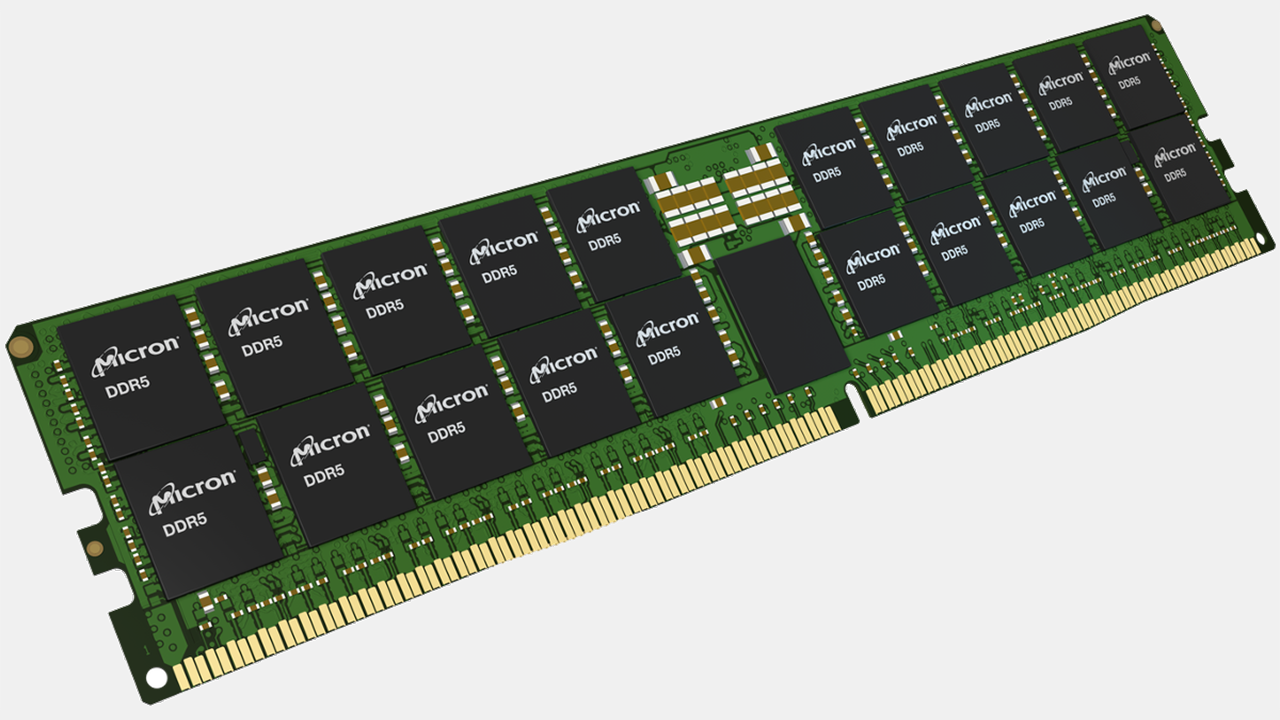
Micron has introduced its first 512GB DDR5-9200 memory module designed for servers requiring large amounts of memory. These modules will allow server manufacturers to create machines with up to 12TB of fast memory, pending the module and server prices.
The new modules are being tested by AMD and Intel for their upcoming server platforms. Micron uses advanced packaging to stack multiple DRAM dies vertically and connect them with through-silicon vias (TSVs). The company does not disclose the specific memory devices used, but claims the 512GB RDIMM consumes over 60% less power than four 128GB modules. This suggests the 512GB module is a highly advanced IC.
While Samsung introduced the first 512GB DDR5 RDIMM in 2021, Micron's module is the first certified to operate at a 9200 MT/s data transfer rate with a standard 1.1V voltage. This implies the use of Micron's advanced 16Gb DDR5-9200 devices made on its 1γ fabrication process, which is more power-efficient than previous generations.
512GB DDR5 modules are currently niche products, with Samsung's 512GB RDIMMs not becoming widespread despite AMD and Intel introducing processors with over 100 cores. Micron targets these modules for servers running analytics, in-memory databases, simulations, virtualization, agentic AI, and other workloads demanding high-core-count processors and plenty of memory.
According to Micron, 512GB modules can boost performance in memory-constrained Spark Support Vector Machine (SVM) analytics workloads by up to 1.4 times compared to configurations with 256GB DDR5 modules. This is because the modules provide 24GB of memory per core in a server running two 256-core CPUs, which is more than sufficient for these applications.
Written by urgent.news from Tom's Hardware's reporting — not their text. Machine-written — may contain errors; check the original before relying on it.