Korea inks 35 deals with Tajikistan, Kyrgyzstan, covering critical minerals, halal markets
Korea signed a combined 35 agreements and memorandums of understanding (MOU) with Tajikistan and Kyrgyzstan on Wednesday, spanning energy, investment, security and cultural cooperation, as Seoul hosted the first Korea-Central Asia Summit this week. President Lee Jae Myung met Tajikistan's President Emomali Rahmon at Cheong Wa Dae in Seoul, where the two leaders signed 17 agreements to expand…
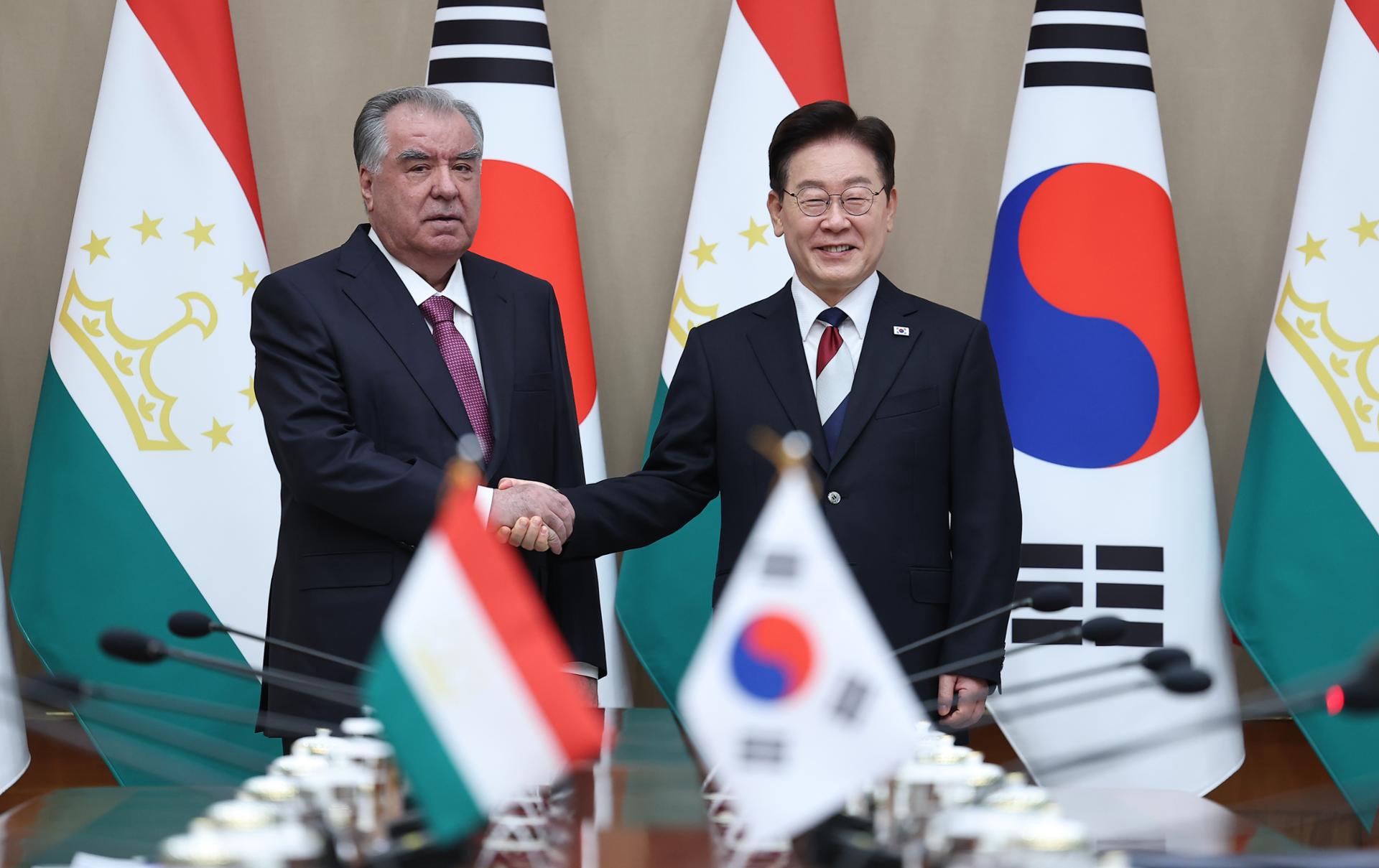
Korea inked 35 agreements with Tajikistan and Kyrgyzstan during the first Korea-Central Asia Summit, held in Seoul. The agreements span a range of sectors, including energy, investment, security, and cultural cooperation. President Lee Jae Myung and Tajikistan's President Emomali Rahmon signed 17 memorandums of understanding (MOU) to boost textile, chemical, and machinery exports, as well as lay the groundwork for cooperation in artificial intelligence and digital industries.
The deals also cover railways, transportation, logistics, intellectual property, energy, and industrial safety. Both sides explored possibilities for cooperation on critical minerals and advancing the green transition. The agreements also aimed to strengthen customs and police cooperation against transnational crime, expand exchanges in personnel administration, anti-corruption efforts, and education.
The ties between Korea and Tajikistan have grown steadily since 1992, and this visit marked a significant step in establishing a deeper partnership between the two nations.
Written by urgent.news from The Korea Times's reporting — not their text. Machine-written — may contain errors; check the original before relying on it.
This story
This is one outlet's version. Read the fullest account.