Interest rates hold expected but Bank of England facing tough choices
Forecasts of further rises in the inflation rate mean some analysts expect the Bank to act by the end of the year.
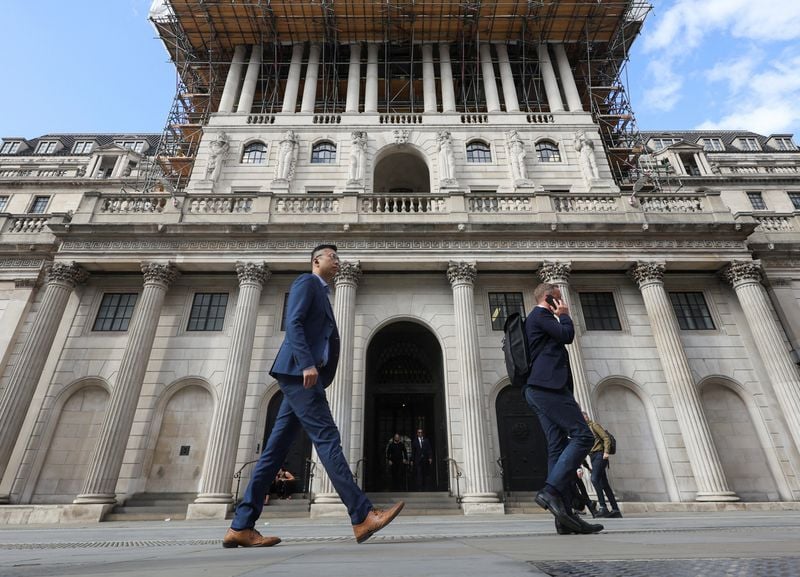
The Bank of England is set to maintain interest rates at 3.75% in a forthcoming decision, despite surging inflation linked to the ongoing Middle East conflict. The Monetary Policy Committee (MPC) comprises nine members and has been deliberating amid a global uptick in energy prices and rate increases.
Economists anticipate the MPC will retain the benchmark Bank rate for a sixth consecutive time, though there is uncertainty about whether a rate hike is required before the year's end. The Bank rate plays a critical role in establishing the benchmarks for banks and lenders when setting interest rates for borrowing and saving.
The Bank rate revelation is scheduled for Thursday at 12:00 BST. Following the July meeting, the MPC suggested a potential rate increase if the Iran war escalates and oil prices stay above $100 a barrel. Andrew Bailey, Bank of England governor, stated that if the conflict persists and oil prices remain above $100, interest rates may need to rise further.
Inflation, measured by the Consumer Prices Index (CPI), rose to 3.1% in August from 2.9% in July, marking the highest rate in six months. This acceleration is attributed to higher petrol, diesel, and airfare costs. Economists anticipate that the persistent global energy costs will further impact consumer food and fuel prices, suggesting that inflation may not yet have peaked.
The MPC is cognizant of the European Central Bank's recent interest rate hike to 2.5% due to the Middle East conflict and its projection of prolonged inflation above its 2% target. Simultaneously, the US Federal Reserve raised its interest rates to 3.5%-3.75%. However, the MPC's members will also avoid exacerbating pressure on employers and job prospects. Higher borrowing costs affect households, but borrowers can benefit from more advantageous savings rates.
Major lenders have already increased the cost of new fixed-rate mortgages in response to market expectations and the global picture. Andrew Montlake, Coreco's chief executive, noted that the inflation dragon remains unslain, and lenders' funding costs staying under pressure may make cheaper mortgages challenging to offer.
Borrowers are advised not to panic but to start looking early if nearing the end of a fixed rate, secure an option, and consistently review it. Average two-year and five-year residential mortgage rates have reached their highest levels since May 2023 and November 2023, respectively, according to Moneyfacts. Savers may receive more competitive returns, but the purchasing power of their savings could be eroded by the rising cost of living.
Harriet Guevara, Nottingham Building Society's chief savings officer, advises households to focus on their best interests in the medium and longer term and regularly check their savings for competitive returns.
Written by urgent.news from BBC Business's reporting — not their text. Machine-written — may contain errors; check the original before relying on it.
This story
This is one outlet's version. Read the fullest account.