China marks breakthrough on railway linking Central Asia to Europe
China has completed drilling a key tunnel on the China-Kyrgyzstan-Uzbekistan railway, which will create a shorter trade route to Europe and bypass Russia.
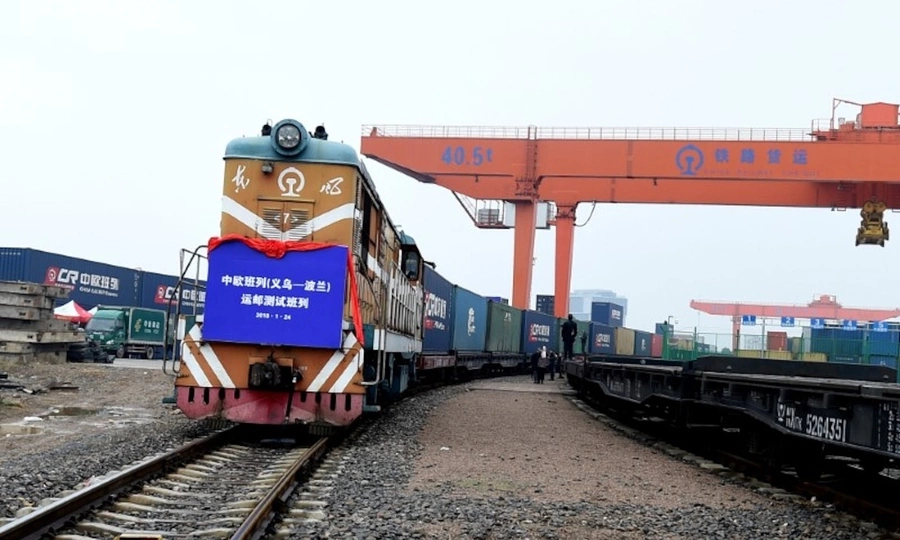
China has marked a significant milestone in its railway project connecting Central Asia to Europe by completing the drilling of a 210-meter tunnel in the Kyrgyzstan section. The China-Kyrgyzstan-Uzbekistan Railway Company, a joint venture between the three governments, reported that this tunnel is the first in the Kyrgyz section to be fully drilled since construction commenced in June 2025.
Currently, construction in the Kyrgyz segment has reached 17% completion, with the railway stretching over 500 kilometers, including approximately 305 kilometers through Kyrgyzstan. This railway will link Kashgar in China's western Xinjiang region with Andijan in Uzbekistan, cutting through the mountainous terrain of Kyrgyzstan.
Upon completion, the railway is projected to offer the shortest land route from China to the Middle East and Europe, potentially reducing transit times by up to eight days compared to the existing China-Europe Railway Express, which currently traverses Russia or Kazakhstan. This development is especially beneficial for landlocked countries like Kyrgyzstan and Uzbekistan, as it provides direct overland connections to China and markets in the Asia-Pacific region.
Construction efforts are ongoing, with 27 tunnels, 43 bridges, and 88 roadbed sections currently in progress, alongside the construction of 20 railway stations.
The railway project, initially proposed in 1997, has faced numerous delays due to challenging terrain, engineering difficulties, differing railway gauges, and geopolitical concerns. The inaugural 167.5-kilometer stretch from the Chinese border to Makmal in Kyrgyzstan will adhere to China's standard gauge, while the remaining nearly 140 kilometers leading to Uzbekistan will maintain the Soviet-era broad gauge. A transshipment hub at Makmal will facilitate the connection between these two gauge systems.
Kyrgyzstan, the railway's primary beneficiary, anticipates its freight capacity to reach up to 15 million tons, more than double its capacity in 2025. This projection has generated optimism regarding the railway's economic potential, with projections suggesting it could generate over US$300 million annually, even in the most adverse scenarios.
Kyrgyz Deputy Prime Minister Edil Baisalov highlighted the route's potential to bring in over US$300 million annually, even under conservative estimates, according to reports from the South China Morning Post.
Written by urgent.news from VnExpress International's reporting — not their text. Machine-written — may contain errors; check the original before relying on it.