‘U-turn’ kuota bahan api masuk akal dari sudut ekonomi, kata ahli akademik
Tan Peck Leong berkata pengurangan pada April dan pemulihan kuota pada September selari perubahan harga minyak mentah Brent serta kos subsidi kerajaan.
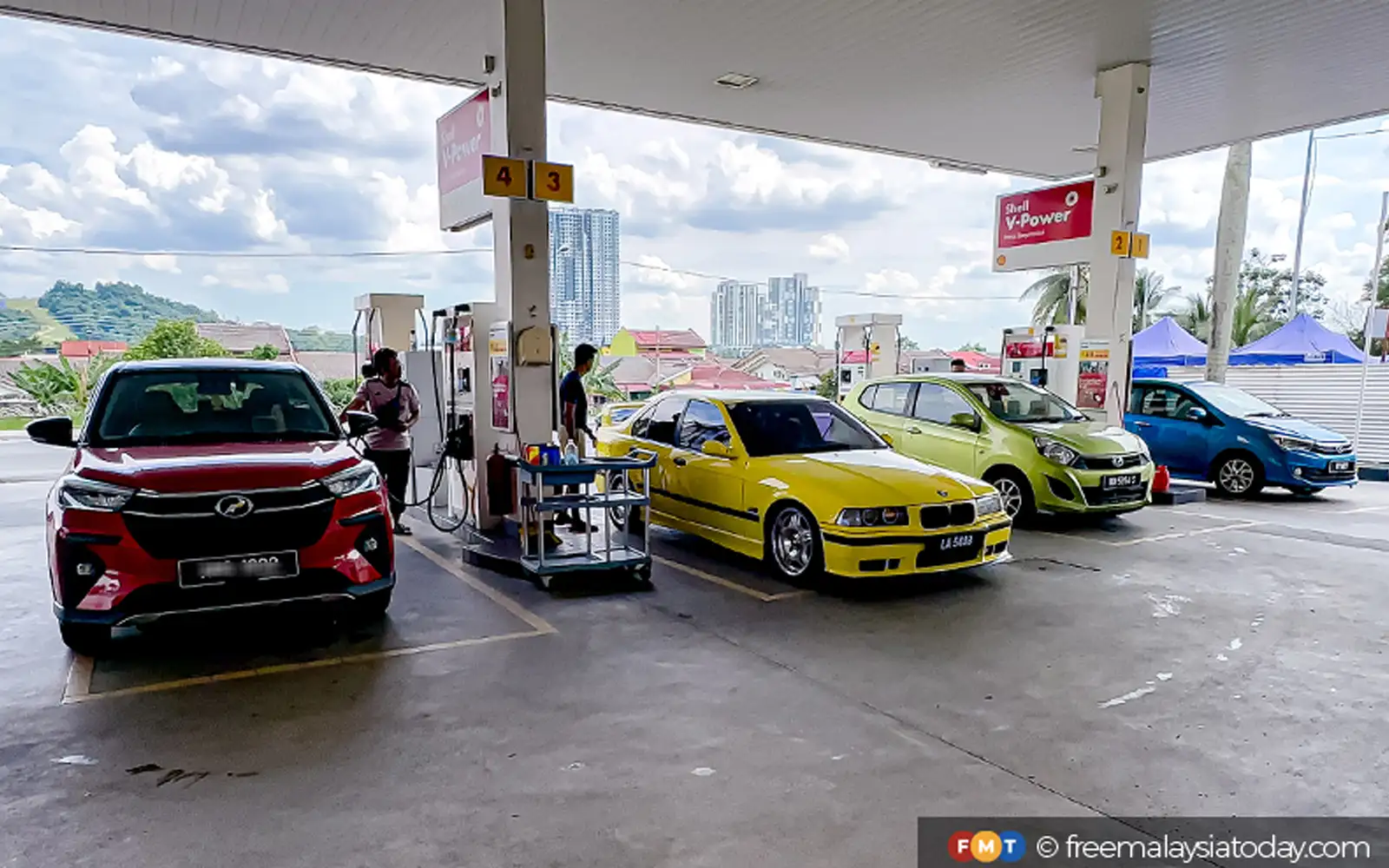
Malaysia's government decision to reduce the BUDI95 petrol subsidy quota from 300 liters to 200 liters in April, and then revert it to 300 liters this month, may appear as a political "U-turn," but it can be explained from an economic perspective, says academic Tan Peck Leong from Universiti Teknologi Mara. The reduction was made when global oil prices were high, with the cost of maintaining the RON95 subsidy per liter increasing to RM1.99.
"From an economic standpoint, reducing the monthly quota from 300 liters to 200 liters during that period was reasonable," said Tan in an interview with FMT. The statement follows remarks by Umno President Zahid Hamidi, who accused the Prime Minister Anwar Ibrahim of reversing the quota change due to fears ahead of the elections.
Data shows that less than 1% of BUDI95 users consistently use more than 200 liters per month, while the average usage is around 100 liters. In an illustrative calculation, Tan estimated that if about 1% of Malaysia's 16 million BUDI95 users used the full additional 100 liters in April, the government would incur an extra RM36.5 million in costs for that month.
The same 16 million liters would cost around RM29.3 million if the subsidy quota was reinstated, or RM7.2 million less. This calculation does not include BUDI Diesel. "Calculations show that presenting this as a purely political move is overly simplistic," Tan said. The quota reduction took effect on April 1 when the global oil market faced uncertainty following the escalation of the US-Iran conflict.
Brent crude prices continued to rise that month, reaching a peak of USD126.41 per barrel on April 30, the highest in over four years. In Malaysia, unsubsidized RON95 stood at RM4.27 per liter from April 9 to April 15, compared to RM1.99 per liter for BUDI95 in the same period. As of August 28, just before Anwar announced the reinstatement of the 300-liter quota, Brent had fallen to USD89.31 per barrel, while unsubsidized RON95 stood at RM3.82 per liter for the period of August 27 to September 2.
Tan said the reinstatement does not mean Malaysians suddenly use more fuel. Rather, the additional 100 liters for BUDI95 and BUDI Diesel will largely serve as a safety net for occasional long-distance travelers or those facing higher usage during peak months, particularly in Malaysia's eastern coastal areas. "The difference is clear: 200 liters is more economically viable, while 300 liters provides greater comfort to users," he said.
"The government seems willing to accept a slight fiscal burden in exchange for higher public confidence and acceptance of the targeted subsidy system." Syaza Shukri from Universiti Islam Antarabangsa Malaysia noted that the quota reduction and reinstatement can't be seen as a U-turn if the government can clearly explain the reasons behind the two decisions.
However, she acknowledged that as the general election approaches, opposition parties may exploit the change to portray it as a policy shift or a pre-election ploy. She said the quota reinstatement truly addresses public concerns while also providing political benefits to the government. "If the public feels pressured, they will undoubtedly affect their support for the government," she added.
Syaza also pointed out that criticisms of Zahid Hamidi, Umno's deputy prime minister and presidential candidate, should be viewed in the context of his dual roles. As a member of the Cabinet, Zahid shares collective responsibility for the government's decisions, while his presidency of Umno can be seen from his position as party presidential candidate ahead of the general election.
"We know that Zahid is deputy prime minister and a member of Jemaah Menteri, so he should also share collective responsibility for the decisions made collectively by the government," she said. "At the same time, he is also Umno's presidential candidate, and Umno is increasingly distinguishing itself from PAS. So, this can be read more into his presidential stance ahead of the election rather than just as deputy prime minister."
Tan suggested that any future quota adjustments would be easier to justify if the government set clearer guidelines linking the quota to oil prices, per-liter subsidies, or the total monthly subsidy.
Written by urgent.news from Free Malaysia Today's reporting — not their text. Machine-written — may contain errors; check the original before relying on it.
This story
This is one outlet's version. Read the fullest account.
- ‘U-turn’ kuota bahan api masuk akal dari sudut ekonomi, kata ahli akademik freemalaysiatoday.com