U.S. container imports climb 3.8% to 2.6 million TEUs, 3rd highest monthly level
Imports climbed 3.8% from July to 2.60 million TEUs as gains at East, Gulf and West Coast gateways coincided with a broad increase in sourcing-market volumes and rising port transit delays. The post U.S. container imports climb 3.8% to 2.6 million TEUs, 3rd highest monthly level appeared first on FreightWaves .
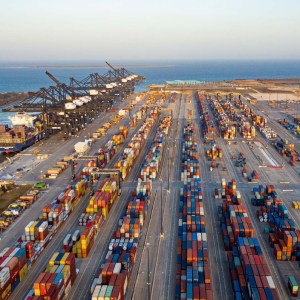
U.S. container imports surged 3.8% in August, reaching 2.60 million TEUs, marking the third-highest monthly volume on record, according to Descartes Datamyne data. This growth was driven by increased activity at major East, Gulf, and West Coast ports, as well as overall gains in sourcing market volumes. August saw a 3.8% rise from July and a 3.3% increase from the same period in 2025.
Only May 2022 surpassed this volume, with 2,622,465 TEUs imported. The month-over-month increase was noteworthy as it reversed the declines seen in both July and August of 2024 and 2025, despite ongoing uncertainties such as tariff exposure, Middle East shipping disruptions, and Panama Canal capacity constraints.
The 10 largest container gateways handled 84.6% of U.S. containerized imports in August, with a 3.8% increase compared to July. Eight of these ports experienced monthly gains. New York/Newark saw the largest increase, up 24,122 TEUs (7.2%), followed by Savannah (22,761 TEUs, 9.2%) and Long Beach (12,945 TEUs, 2.8%). Houston (8,569 TEUs, 4.7%) and New York-New Jersey (8,548 TEUs, 18.1%) also saw notable gains.
Conversely, Oakland and Los Angeles reported declines, with Oakland decreasing by 5,628 TEUs (7.4%) and Los Angeles by 1,748 TEUs (0.4%).
While major gateways experienced stronger throughput, they also faced rising transit delays. Houston and Seattle recorded the most significant increases, with average delays rising to 5.8 days and 7.6 days, respectively. Savannah's delay increased to 6.1 days, and other ports such as Los Angeles, Norfolk, New York-New Jersey, Tacoma, Oakland, Charleston, and Long Beach also saw moderate increases.
This rise in delays indicates intensified operational pressure as imports grew during the late-summer shipping season. Despite these challenges, Gulf Coast ports continued to expand their volume, handling 252,675 TEUs, a 4.2% increase from July and 11.7% above their 12-month average, though still 1.9% below their May 2026 peak.
Written by urgent.news from FreightWaves's reporting — not their text. Machine-written — may contain errors; check the original before relying on it.