‘Not the people I interviewed’: Trump lashes Supreme Court after election ruling
The court’s decision to block changes to mail-in voting ahead of the midterms leaves the president’s plans in tatters, as he fumes over what he sees as disloyalty by his appointees to the bench.
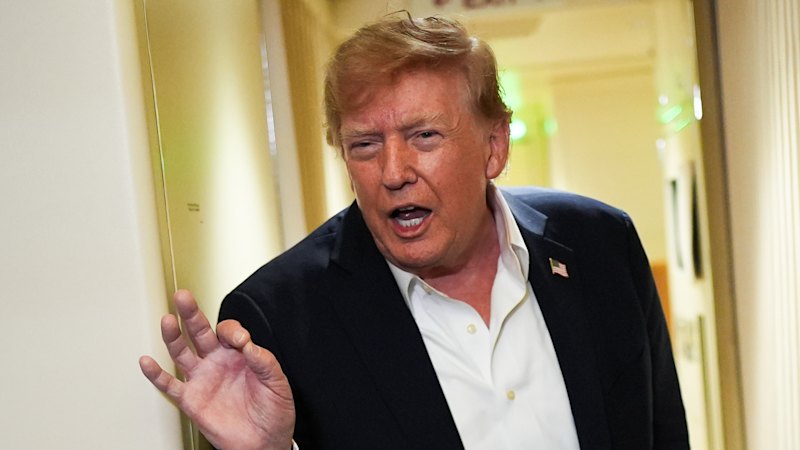
The Supreme Court on Monday denied President Donald Trump's request to impose restrictions on mail ballots for the upcoming midterm elections, concluding a rush of last-minute legal proceedings as voting was already in progress. The ruling permits states to continue sending out mail ballots using the same methods they have employed for years, with these methods accounting for roughly one-third of total votes cast.
This was a decisive loss for Trump, who has frequently highlighted the importance of election integrity, despite a lack of substantial evidence linking mail ballots to fraud. The Supreme Court's majority concluded that the administration's attempt to enforce the restrictions this year is likely to be unsuccessful in court, although the brief emergency order did not elaborate on its reasoning.
Justices Samuel Alito and Clarence Thomas dissented from the majority's decision. The Trump administration had sought the court's approval to permit restrictions prior to the decisive November contests for Congress. Alito argued in his dissent that the Postal Service possesses broad authority to regulate the mail and likely holds the power to enforce the restrictions.
Justice Brett Kavanaugh concurred that the restrictions should not take effect for the midterms but hinted at a potential agreement with the Trump administration if the issue were to resurface in the court in the future. Mail ballots are already being dispatched to voters by election officials, who have stated that a complete overhaul is not feasible in the weeks leading up to the midterms.
In fact, Alabama, North Carolina, and Wisconsin initiated mail ballot distribution to voters within the past week as the new system was still not operational. The Trump administration's plan would mandate states to adopt a consistent envelope design and submit lists of eligible voters to an online portal. The Postal Service could decline to deliver ballots to states that failed to comply.
The administration's actions could have been particularly disruptive in states that exclusively send out mail ballots. Washington's Secretary of State Steve Hobbs, a Democrat, stated that the decision allows for the continuation of "a safe, secure, and accurate election" without disrupting existing election processes. Arizona's Democratic Secretary of State Adrian Fontes emphasized the importance of continuing to reject the idea that access and security are mutually exclusive in running robust elections.
Utah's Lieutenant Governor Deidre Henderson, a Republican and the state's chief election officer, expressed confidence in the 2026 election proceeding as usual after the Supreme Court's decision. The White House and Justice Department did not respond immediately to requests for comment but have previously portrayed the restrictions as common-sense measures to ensure election security.
State officials and voting rights groups opposed the restrictions in court, contending that the president lacks constitutional authority to establish election rules that would effectively eliminate mail voting prior to a major election. A whistleblower report suggested that the postal system's requirements could potentially result in millions of mail ballots being undelivered due to problems with an unoperational online portal, with a single barcode error potentially invalidating an entire batch of ballots.
Some states lack the necessary infrastructure to swiftly revert to in-person voting, according to court documents. The League of Women Voters, a plaintiff in the case, labeled the proposed restrictions as an "extraordinary attempt to interfere with voting" and warned that it could have caused chaos in elections. The organization's CEO, Celina Stewart, stated that voters should never be caught in the middle of a political power struggle.
Lower courts had previously agreed to block Trump's plan, including a preliminary injunction issued by a judge nominated by the president. However, the Trump administration appealed to the Supreme Court, arguing that federal control of the Postal Service enables them to set rules for mail ballot handling and that compliance was achievable.
While the federal government secured an early procedural victory at the Supreme Court, the justices did not definitively address the legality of the plan. Trump, who has consistently opposed mail voting, has falsely attributed his 2020 election loss to Democrat Joe Biden to mail voting, even though he has used this method to cast his own ballot, including recently.
A 2025 report by the Brookings Institution found that mail voting fraud occurred in only about four cases out of every 10 million mail ballots cast.
Written by urgent.news from Fast Company's reporting — not their text. Machine-written — may contain errors; check the original before relying on it.
This story
This is one outlet's version. Read the fullest account.
- Spanish Supreme Court refuses to grant Puigdemont amnesty despite EU court ruling spainenglish.com
- Supreme Court justices reject Trump’s restrictions on mail ballots ahead of midterm elections fastcompany.com
- Trump attacks Supreme Court after ballot ruling economictimes.indiatimes.com
- Trump slams ‘horrible’ Supreme Court mail-in ballot ruling freemalaysiatoday.com
- ‘Not the people I interviewed’: Trump lashes Supreme Court after election ruling theage.com.au