NASA’s Webb Reveals Dynamic Panorama of Star Formation
This starry view of the nearby star-forming region IC 348 is one of the largest images released to date from NASA’s James Webb Space Telescope. Using Webb, astronomers searched IC 348 for brown dwarfs, which are less massive than the smallest stars. The researchers discovered brown dwarfs just twice the mass of Jupiter, bringing the […] The post NASA’s Webb Reveals Dynamic Panorama of Star…
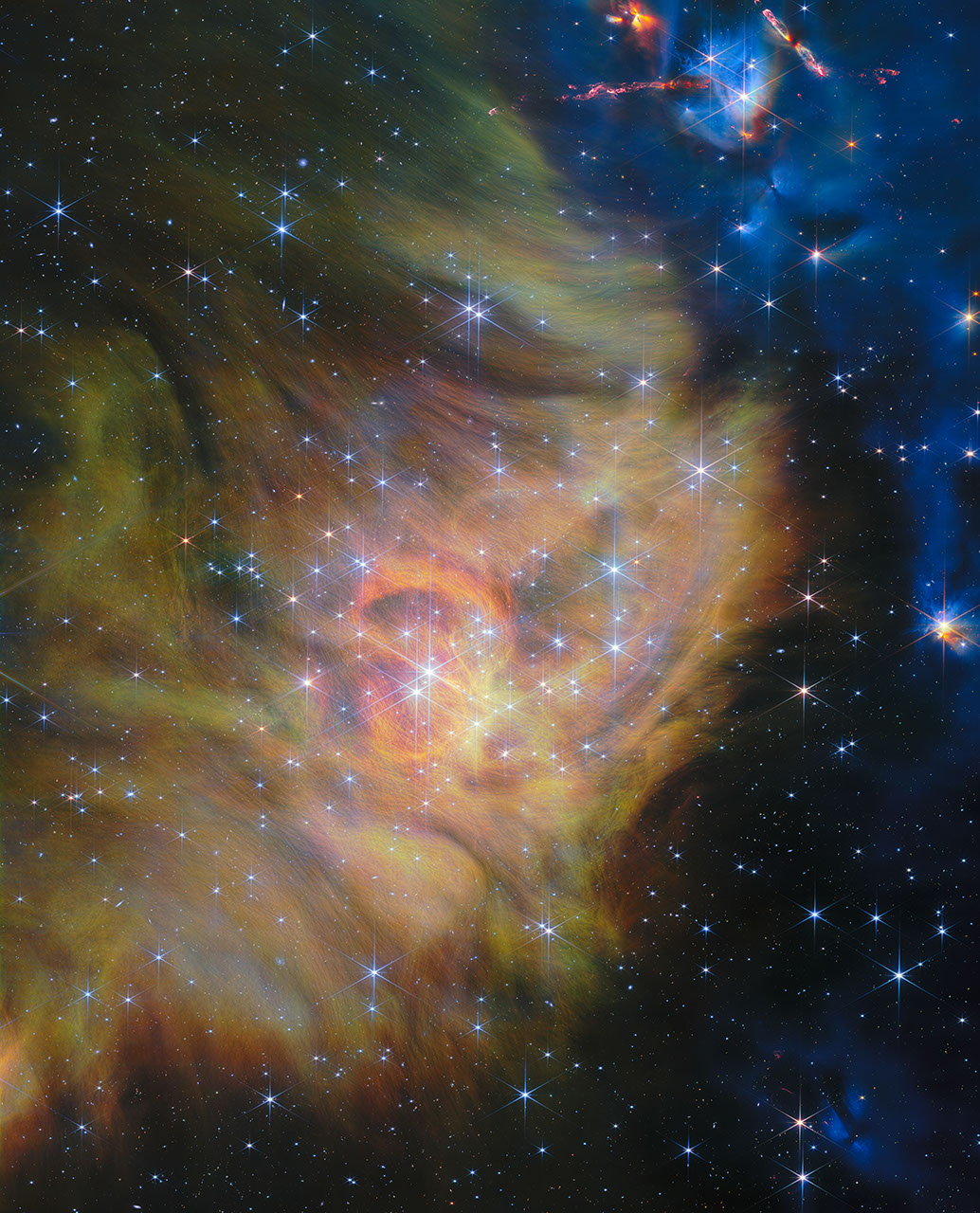
The James Webb Space Telescope has released a large image of the star-forming region IC 348, located 1000 light-years away in the constellation Perseus. This region is a cold cloud of molecular hydrogen gas that has collapsed to form new stars.
The image, one of the largest released by the telescope so far, shows a dynamic panorama of star formation. Astronomers used the telescope to search for brown dwarfs in IC 348, which are objects less massive than the smallest stars.
According to ESA Space Science, researchers discovered brown dwarfs with masses just twice that of Jupiter, a new mass range for the study of these objects. Brown dwarfs form like stars but their cores never get hot enough to fuse hydrogen into helium.
Brief written by urgent.news from NASA Science, ESA Space Science — 2 reports on this story. Machine-written — may contain errors; check the original before relying on it.
Also reported by 2 other outlets
- NASA’s Webb Reveals Dynamic Panorama of Star Formation science.nasa.gov
- Webb reveals stunning panorama of star formation esa.int