How Indian Railways aims to maximise its freight revenue potential
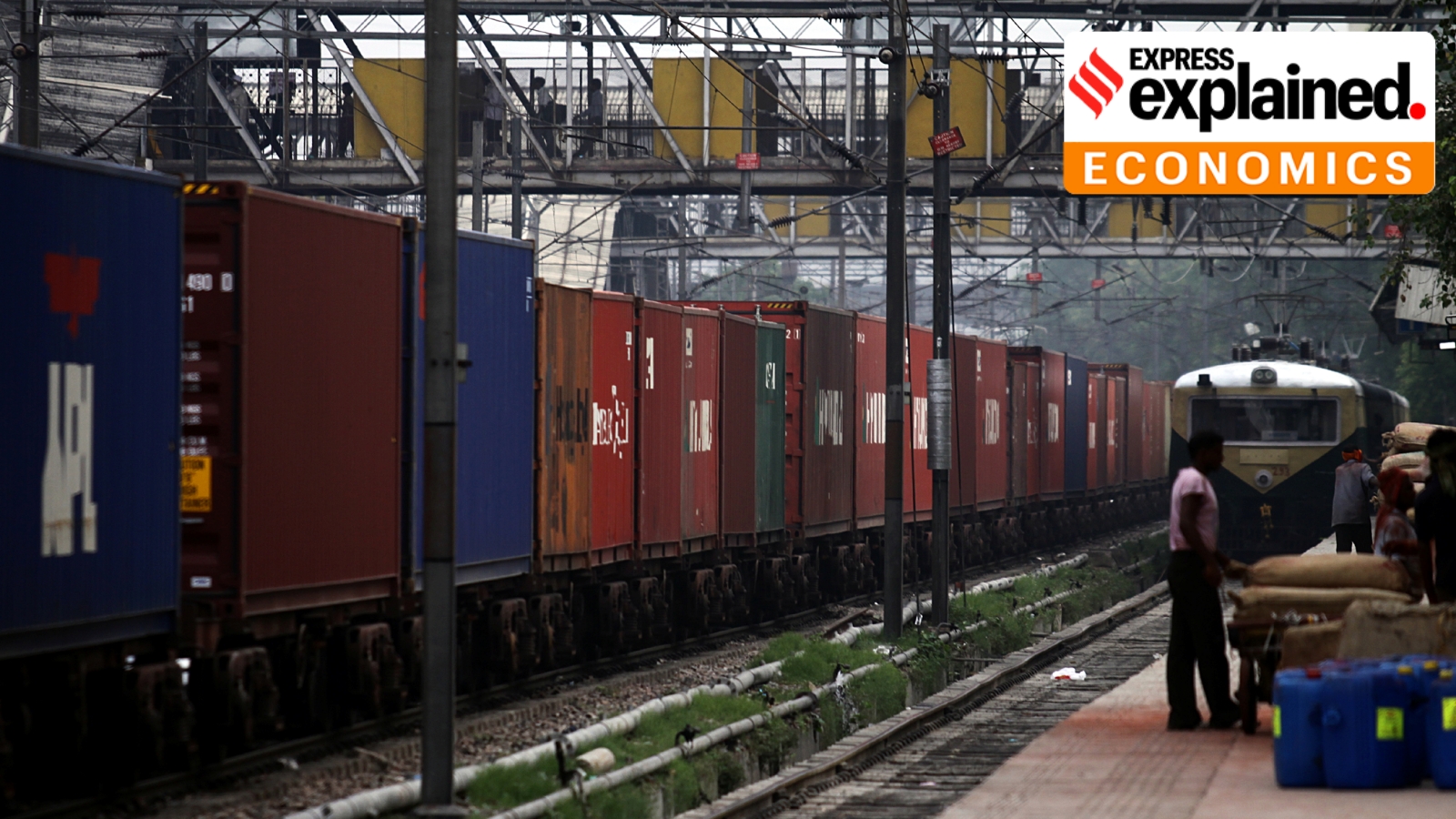
Indian Railways, often referred to as the lifeline of the country, handles over 20 million passengers daily, making it one of the world's largest passenger and freight transportation systems. Freight revenues, which account for over 65% of the Railways' total earnings, help subsidize passenger travel. However, the expansion of the National Highways network has increased competition for freight transport, and congestion and inadequate last-mile connectivity pose significant challenges to maximizing its potential.
To tackle these issues, the Indian Railways has embarked on a mission to quadruple the line capacity of its seven high-density networks (HDNs), which account for more than 40% of the network traffic. The Vaitarna-JNPT section, marking the completion of the 1,506-km Western Dedicated Freight Corridor (DFC), has already been commissioned. The Railways is also expediting a third DFC, connecting Dankuni (West Bengal) to Surat (Gujarat), and has operationalised the 1,337-km Eastern DFC by the end of 2023.
High density routes (HDNs) are the passenger-freight corridors where the number of trains running exceeds the network's capacity in most sections. These corridors, comprising 11,051 km or nearly 16% of the total Indian Railways network, handle over 40% of the total traffic. Operating at 70-80% of its total capacity is considered ideal to avoid congestion, but only 4.6% of the HDN is currently operating below this threshold.
The current line-capacity utilisation of the HDN ranges from 18.89% to over 150%, with congestion frequently occurring in sections, leading to delays for freight trains and overall network inefficiency.
To address these challenges, the Union Cabinet recently approved eight multitracking projects spanning 1,196 km, with a budget of Rs 20,804 crore. Multitracking will not only reduce congestion but also lower logistics costs. Currently, the logistics cost on rail is Rs 1.60 per tonne per kilometre, compared to Rs 3.60 on road. By increasing freight transportation on rail to 3,000 million tonnes by 2030, the Indian Railways aims to reduce logistics costs to 8-9%, currently at 12-13%.
Written by urgent.news from The Indian Express's reporting — not their text. Machine-written — may contain errors; check the original before relying on it.