From surviving dry spells to building resilience: Alhassan’s Story
In 2025, the World Food Programme (WFP), with funding support from the Government of the Republic of Korea, provided emergency relief assistance to more than 3,800 households (impacting more than 19,000 people) across 5 regions of northern Ghana. The intervention served as a critical lifeline for families facing severe food insecurity caused by 2024's prolonged dry spells and poor harvests. Among…
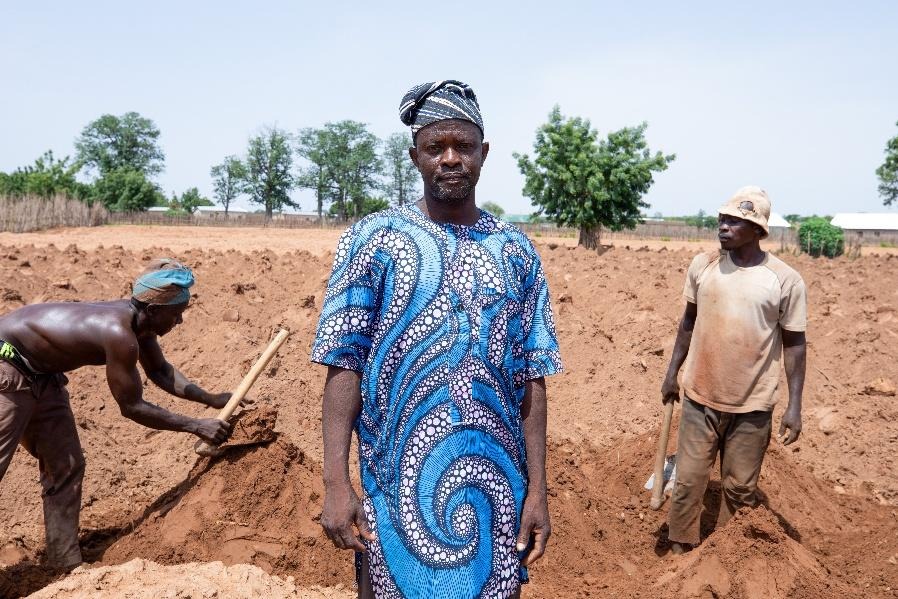
In 2025, the World Food Programme (WFP), backed by Korean Government funding, supported more than 3,800 households across five northern Ghanaian regions, reaching over 19,000 people due to severe food insecurity resulting from 2024's prolonged dry spells and poor harvests. Alhassan, a farmer from Kumbungu District with a family of fourteen, was among those beneficiaries.
Like many farming households in northern Ghana, Alhassan depended on rainfall for his living but lost his entire crop investment when the rains failed, leaving his family facing daily food challenges. The WFP's cash-based emergency response provided Alhassan's household with GHS 1,161 monthly from May to October 2025, helping them purchase food and maintain basic nutrition during the crisis.
Alhassan, determined to rebuild his family's future, used some of the cash to cultivate maize, soyabean, and yam on two acres each. Although the soyabean and yam harvests were affected by unfavorable weather, the maize provided much-needed food for the household. Alhassan harvested two big sacks of maize, which supported the family's food needs when the next harvest came.
Realizing the uncertainty of rainfall patterns, Alhassan diversified his livelihood by starting a guinea fowl rearing business using part of the cash assistance. The venture quickly proved profitable, providing additional food for the family and allowing him to fund his 18-year-old daughter's university education after she gained admission.
The guinea fowl business income also enabled Alhassan to hire laborers for his yam farm, reflecting the gradual recovery and stability experienced by his family. Alhassan's journey from emergency assistance to self-reliance showcases how timely humanitarian support can empower vulnerable households to rebuild livelihoods, invest in their future, and handle future climate impacts.
Written by urgent.news from MyJoyOnline Ghana's reporting — not their text. Machine-written — may contain errors; check the original before relying on it.