Feeding, not poisoning
The food poisoning incident has left parents a lingering question: How could a program intended to nourish children end up putting their health at risk? And, perhaps more frighteningly, could their children be next?
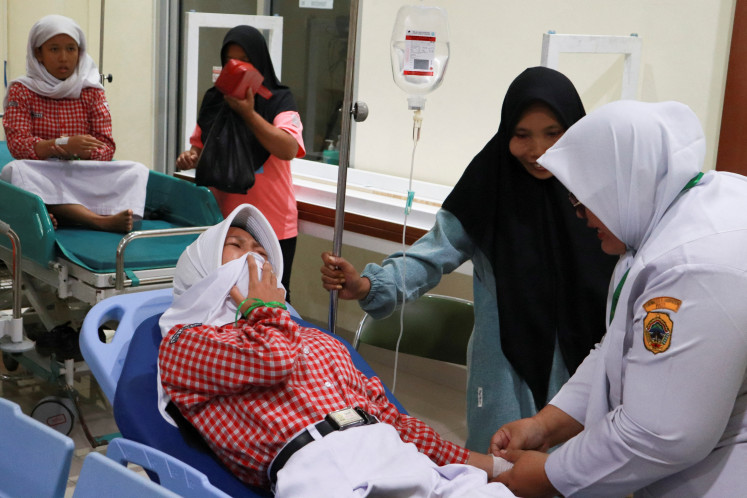
A food poisoning incident has left a 16-year-old student in Karo, North Sumatra, grappling with severe health issues. The tragedy began with a single state-provided lunch, which has since spread far beyond acute food poisoning into a long-term struggle for the teenager and her family. Febiona Purba, a once bright and high-achieving student, now battles memory loss, recurring seizures, and impaired speech, according to her mother.
She struggles to recognize close friends and relatives, a stark transformation from her previous self.
This is not an isolated case. At least 15 out of the 353 students sickened in the Aug. 13 outbreak still require frequent hospitalization. Some are dealing with persistent gastrointestinal damage, while others have developed severe kidney complications. The local police have initiated an investigation into potential criminal negligence in Febiona's case, marking the first formal probe into the thousands of poisoning incidents plaguing the government's flagship initiative.
Doctors have conducted two electroencephalogram (EEG) tests on Febiona, and her brain activity is reported to be normal. However, the public, and parents in particular, are left confronting a haunting question: How could an initiative aimed at nourishing children have jeopardized their lives? And even more chillingly, could their own children be at risk?
Since the free nutritious meal program launched in January of the previous year, roughly 53,000 students and teachers have fallen ill. Despite the National Nutrition Agency (BGN) repeatedly pledging tighter safety measures, including stricter delivery windows and closing kitchens without the Health Ministry’s Hygiene and Sanitation Compliance Certificate (SLHS), these interventions remain insufficient.
Even in the first 10 days of this month, more than 3,000 student recipients fell ill, leaving the issue of food safety in the program hanging in the balance.
Written by urgent.news from The Jakarta Post's reporting — not their text. Machine-written — may contain errors; check the original before relying on it.