Dzaiddin taught Judiciary to listen again, says Chief Justice
Chief Justice Tun Wan Ahmad Farid Wan Salleh said Dzaiddin’s unusual journey through journalism, policing and law may have given him a broader understanding of justice.
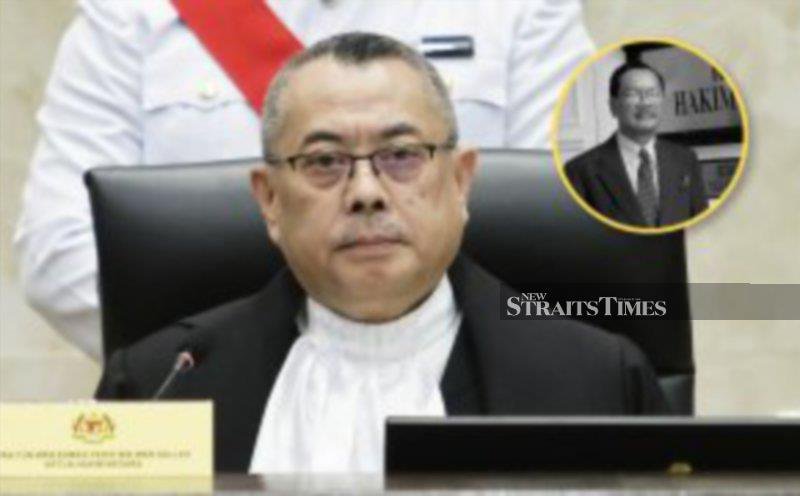
Chief Justice Tun Wan Ahmad Farid Wan Salleh praised Dzaiddin's unique background, which included work in journalism, policing, and law, suggesting this diverse experience may have given him a broader understanding of justice. He recognized that Dzaiddin could view justice from both a judicial and public perspective. During a memorial service for four late senior judges at the Federal Court, Chief Justice Salleh remarked that Dzaiddin had taught the Judiciary to listen again.
Dzaiddin's career began in 1956 as a journalist for the Malay Mail before transitioning to the police force as an inspector. It was while working in the police force that he was encouraged to pursue a career in law by former Lord President Tun Mohamed Suffian Mohamed Hashim. Dzaiddin became a part-time judicial commissioner in 1979, serving in the Kuala Lumpur and Penang High Courts, before being appointed to the Supreme Court in 1993.
He ultimately achieved the highest judicial position in 2000 when he was appointed Chief Justice. Attorney-General Tan Sri Mohd Dusuki Mokhtar highlighted Dzaiddin's judicial legacy, which included decisions that emphasized the courts' role in ensuring public power remained within legal bounds. He cited the case *Mohamad Ezam Mohd Noor and Others v Ketua Polis Negara*, which dealt with the detention of individuals under the Internal Security Act 1960.
Dusuki emphasized that this decision underscored the judiciary's responsibility to scrutinize public power and ensure it adhered to the law. He stressed that no public authority is above legal scrutiny, and every criminal investigation and detention must be conducted lawfully. Dusuki concluded by acknowledging Dzaiddin's enduring legacy in upholding standards, fostering confidence, strengthening institutional relationships, and offering a vision for the future of the courts.
Written by urgent.news from New Straits Times's reporting — not their text. Machine-written — may contain errors; check the original before relying on it.
This story
This is one outlet's version. Read the fullest account.
- 'Buat kerja': Late Chief Justice Abdul Hamid's simple creed nst.com.my
- Selective silence will hurt GBA – Chief Justice ghanaiantimes.com.gh