CBO on Iran War Costs
Letter released today: DoD’s Operational, Logistical, and Sustainment Costs. CBO estimates that as of August 1, 2026, the armed conflict with Iran has cost DoD approximately $38 billion. That amount reflects the costs of replacing expended munitions and equipment lost in battle, increased flying hours, other operations, and increased fuel costs. It also reflects that […]
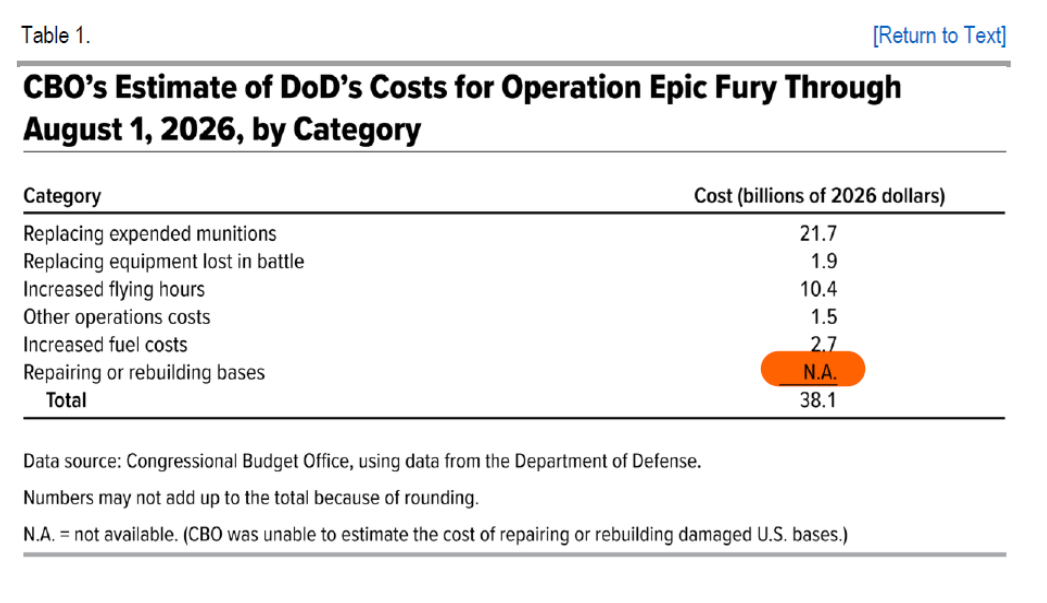
The Department of Defense (DoD) incurred approximately $38 billion in operational, logistical, and sustainment costs for the armed conflict with Iran as of August 1, 2026. This figure accounts for the replacement of munitions and equipment lost, increased flying hours, other operations, and higher fuel costs. The initial intense phase of the conflict lasted just over a month, with limited U.S. forces involved compared to larger, lengthy operations in Iraq and Afghanistan.
The CBO's estimate does not include costs borne by other federal agencies, such as the Postal Service, nor does it account for expenses already included in the federal budget, like the military's basic operating costs. As the conflict continues, costs are projected to rise, escalating rapidly if the intensity of the conflict increases.
If violence remains low, an additional month of conflict would cost about $2 billion; with the intensity of the conflict akin to July, the monthly cost could rise to $3 billion. Repairing or rebuilding U.S. bases in the Middle East is a real cost, but CBO lacks information on the value of damaged or destroyed equipment, plus the extent of repairs is unclear.
Even if fully repaired or rebuilt, a portion of the costs might be covered by host nations. Higher energy prices resulting from the conflict are expected to push up consumer prices, leading to higher inflation rates in the first quarter of 2027. Overall PCE inflation is projected to be 0.5 percentage points higher than previously estimated, while core PCE inflation will remain elevated longer due to the delayed impact of higher energy prices on non-energy goods and services.
Written by urgent.news from Econbrowser's reporting — not their text. Machine-written — may contain errors; check the original before relying on it.