Astrophysics study suggests Venus may have swallowed its moon
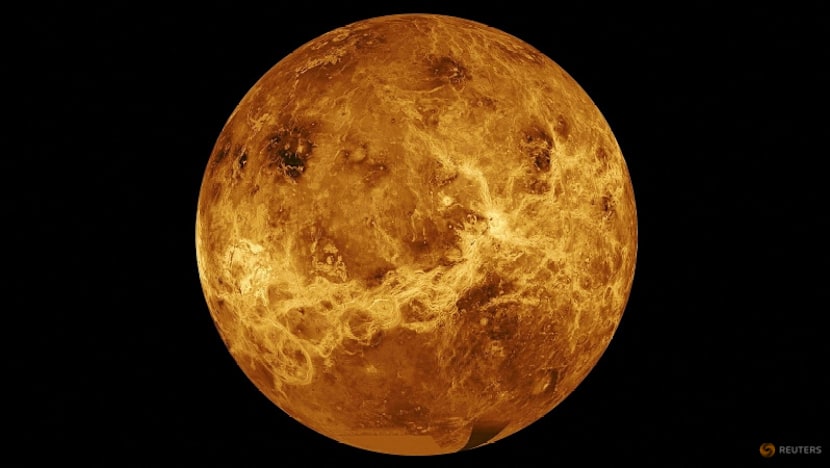
A California-based astrophysicist has proposed a new theory to explain why Venus, a planet nearly identical in size, mass, and structure to Earth, lacks a moon. According to the study published in The Astrophysical Journal, the extremely slow rotation of Venus on its axis would have caused any potential moon to spiral inward and eventually be destroyed in a catastrophic collision.
Lead author Stephen Krane of the University of California, Riverside, stated that if Venus had ever possessed a moon, it would have been swallowed up relatively quickly. The computer models used in the study simulated the gravitational mechanics of hypothetical Venusian moons and revealed that each one would meet the same fate - collapsing into the planet. This event is believed to have occurred within the first billion years of Venus's existence, which is roughly 4.5 billion years old.
Previously, scientists suggested that Venus either never formed a moon or had one that was destroyed during a massive impact event. However, the UC Riverside study focused on Earth-moon dynamics and found that the key factor is the planet's rotational speed. Venus takes 243 Earth days to complete a rotation, while Earth completes a full spin every 24 hours, making Earth's rotation roughly 200 times faster.
This difference in rotation rates is responsible for the Moon's gradual movement away from Earth, receding by about 4 centimeters per year. On the other hand, Venus's slow rotation has resulted in any potential moons being consumed in a catastrophic collision. While there is no concrete evidence to support the existence of a Venusian moon, it is thought that the planet may have been subjected to numerous celestial collisions during its early formation, similar to Earth.
Two upcoming NASA missions, DAVINCI+ and VERITAS, scheduled for launch in the late 2020s or early 2030s, aim to further unravel the mysteries of Venus by studying its atmosphere and geologic features.
Written by urgent.news from CNA - Business's reporting — not their text. Machine-written — may contain errors; check the original before relying on it.
This story
This is one outlet's version. Read the fullest account.
- Astrophysics study suggests Venus may have swallowed its moon channelnewsasia.com
- Crescent moon aligns with Venus in Saudi skies english.ajel.sa