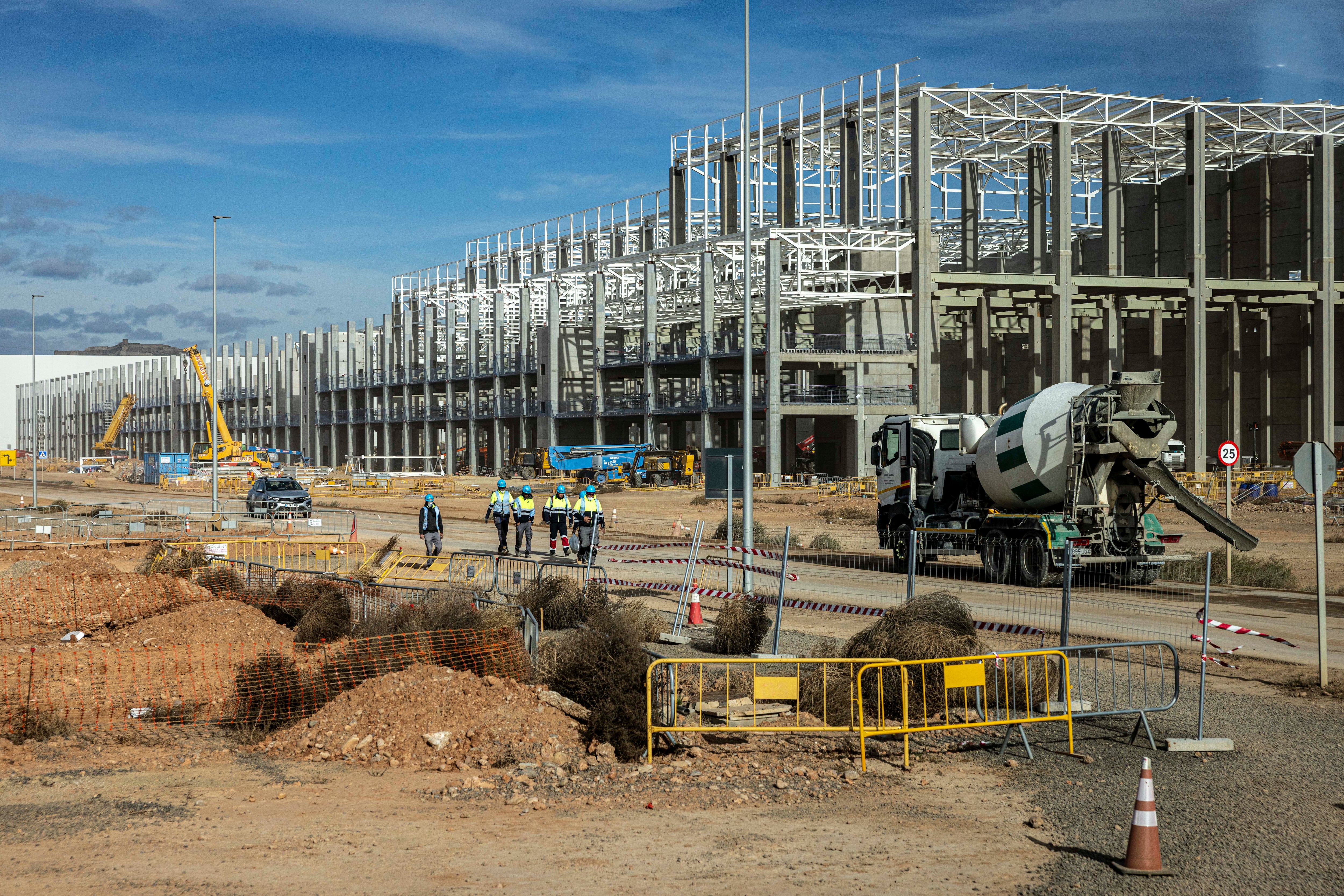
Analysis-Toyota revamp hints of wider industry shake-up in China
A potential agreement between Toyota's two primary Chinese partners may signal a transformation in the foreign joint-venture model within China's automotive sector. Guangzhou Automobile Group (GAC) revealed plans to acquire a portion of FAW Group's stake in an unspecified joint venture with a foreign company, possibly FAW Toyota. This development could result in closer integration of Toyota's two Chinese entities. Both GAC and FAW did not respond to inquiries, while Toyota declined to comment.
China, the world's largest automotive market, is on the brink of a restructuring following years of rapid expansion, which left it with excess capacity and over 100 competing car brands. Analysts suggest that this proposed deal might presage larger-scale consolidation within the industry as overcapacity has eroded profitability and the economics of parallel networks.
Foreign automakers have long operated in China through separate partnerships with local manufacturers, FAW in the north and GAC in the south. However, as growth has slowed, competition has intensified, and the shift to electric vehicles has squeezed profits, the rationale for maintaining these parallel operations has weakened. Bill Russo, founder of the Shanghai-based consultancy Automobility, believes that greater efficiency could lower overlapping investments and enhance sales and distribution.
However, he emphasizes that this alone would not resolve the challenges faced by foreign automakers in China, particularly the loss of relevance due to evolving consumer technology preferences.
The traditional joint-venture model, which foreign automakers have relied upon in China for decades, is increasingly under pressure. As the industry's profit pool diminishes, redundant investments and internal inefficiencies are becoming unsustainable. Toyota has already experienced a decline in its market share in China's passenger vehicle segment and faces competition from foreign automakers like BYD, Geely, and Chery, which have gained significant market share through the development of electric and hybrid vehicles. These local brands are now expanding aggressively into international markets.
Foreign automakers have steadily lost ground to local rivals in China over the past five years. BYD, Geely, and Chery have gained significant market share with rapidly developed electric and hybrid vehicles, while traditional foreign brands like Volkswagen have also faced significant challenges. Toyota's share of China's passenger vehicle sales has fallen to 7%, behind BYD, Geely Auto, and Volkswagen, according to China Passenger Car Association data.
In 2021, Toyota and its Chinese partners accounted for 7% of passenger vehicle sales in China, ranking behind BYD, Geely Auto, and Volkswagen. Toyota has sought to streamline its operations in response to the changing landscape in China. The challenge for Toyota and other foreign automakers in China lies in the industry's brutal price war, driven by years of investment and capacity growth, which is putting pressure on profit margins.
The government has repeatedly warned about overcapacity and the detrimental impact of price wars, with profit margins in the vehicle manufacturing segment falling to 1.5%, the lowest in nearly a decade.
Written by urgent.news from Investing.com's reporting — not their text. Machine-written — may contain errors; check the original before relying on it.