Why Regulated Enterprises Need Risk-Tiered Model Routing
AI is getting cheaper, but enterprise spending keeps rising. An AI PM's take on tokenomics, model routing, and why the cheapest token isn't the safest choice.
The AI landscape is undergoing rapid changes as costs of processing tokens decrease, yet enterprises are scaling their AI use beyond small pilots. Insurance and financial services are realizing that tokenomics – the economics of AI at the unit level – should become a core operating discipline. Rather than focusing on a single winning model, the better question is which model should handle different types of work, with varying reliability levels and governance rules.
Tokenomics makes pricing more complex than a simple subscription model. Enterprises often combine usage-based pricing, committed capacity, caching discounts and different rates for input and output. Even with cheaper models, systems can become expensive if prompts are poorly crafted, agents loop unnecessarily, or every task is routed to the most capable model by default. Thus, cost governance remains crucial as falling prices encourage more experimentation and volume.
The shift to open-weight models represents a larger trend than just one challenger. Families of models like DeepSeek, Qwen, Kimi, GLM and MiniMax are improving, making it harder to assume enterprise options must always come from closed providers. Pricing for these models has also become more competitive. For instance, DeepSeek reduced its flagship V4-Pro pricing by 75 percent permanently in May 2026.
For regulated industries, this market shift necessitates a different approach. Insurance and financial services workflows often involve tasks where small quality gaps can lead to significant downstream costs. Reliability is especially critical in agentic workflows. Even if a model succeeds most of the time at each step, the combined workflow may still fail often enough to cause rework, manual review and customer friction.
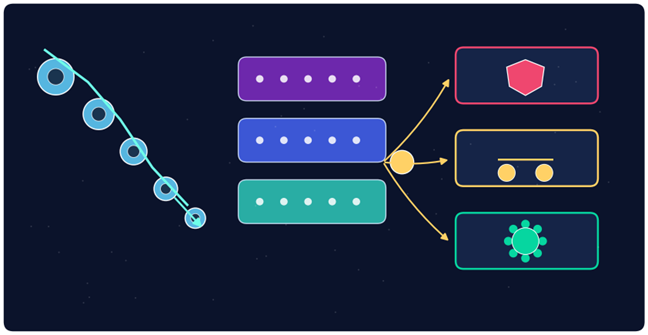
A risk-tiered model routing framework addresses these concerns. Work is classified by business risk, and model choice follows from that classification. Routine tasks can go to smaller or open-weight models, while medium-risk tasks use stronger models with additional checks. High-impact decisions are routed to the most reliable model available, often paired with human review or independent verification.
This approach saves money and makes cost and reliability explicit, allowing product leaders to define which tasks require frontier-level capability.
In practice, this tiering can significantly reduce inference costs for low-risk tasks such as document summarization, intake classification, and internal drafting. Meanwhile, critical tasks tied to underwriting judgments, compliance communications, or customer-facing decisions can continue to justify a reliability premium, paired with human review. As enterprises navigate this evolving AI landscape, a risk-tiered model routing strategy becomes essential for effective cost management and risk mitigation.
Written by urgent.news from HackerNoon's reporting — not their text. Machine-written — may contain errors; check the original before relying on it.