Unseen Script: Abu Dhabi exhibition finds meaning in the patterns of everyday life
There are patterns to our lives that become so familiar that we stop noticing them. The road taken to work each morning, the objects kept around the house, the changing light across a city skyline or the small gestures repeated without thought can gradually become part of a personal rhythm. “Every household keeps a script no one wrote down, the gestures, routines and small fidelities through…
Everyday life often follows patterns that become so familiar they are no longer noticed. Shafeena Yusuff Ali, founder and executive director of Rizq Art Initiative in Abu Dhabi, explains that "every household keeps a script no one wrote down, the gestures, routines and small fidelities through which a life quietly holds itself together."
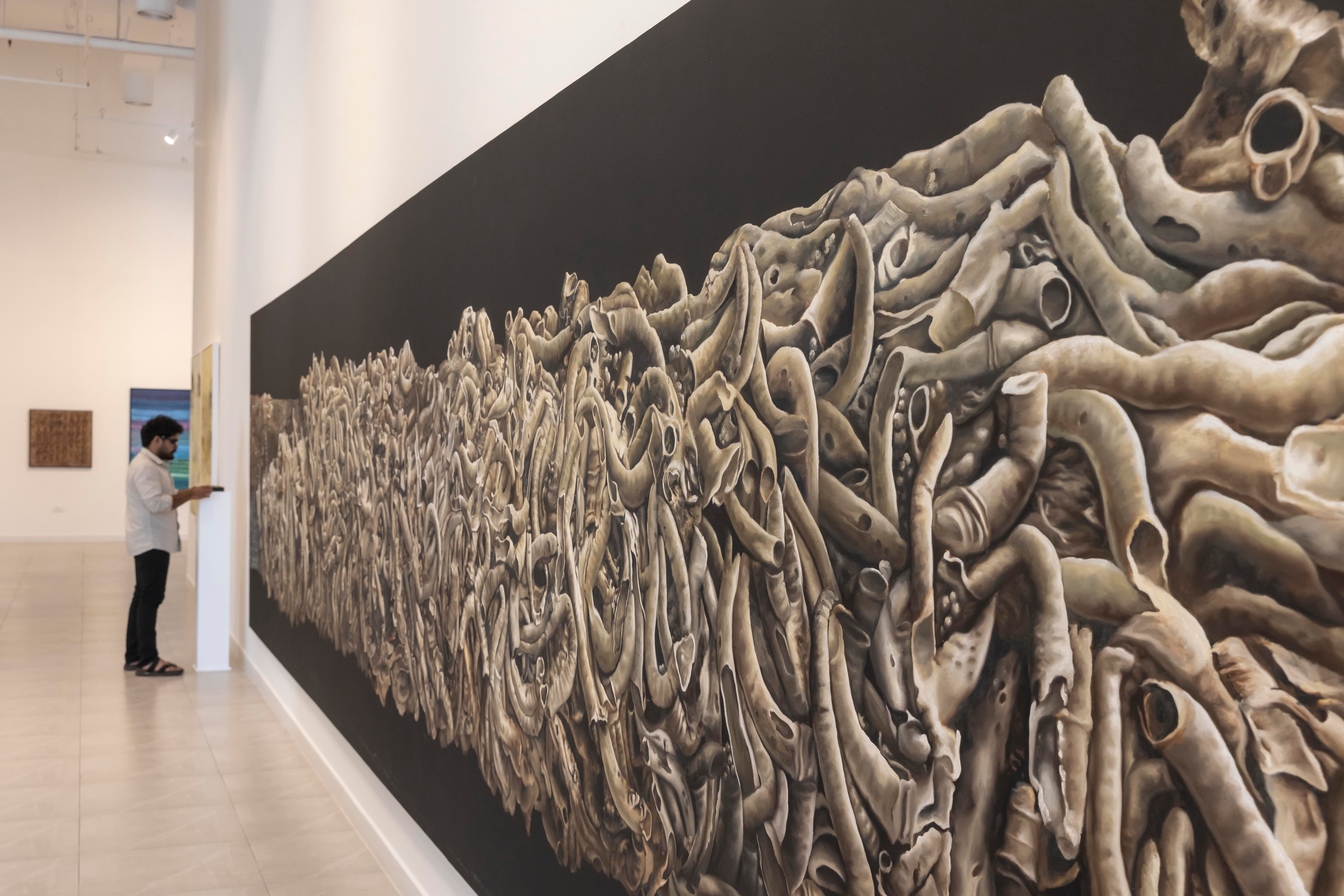
This theme is central to the current exhibition at Rizq Art Initiative on Reem Island, titled "Unseen Script." The show, running until October 28, features ten artists exploring themes of repetition, memory, nature, and how people interpret the world around them.
Artistic Director Meena Vari notes that these ideas have gained new significance in the current AI era, where patterns in human behavior are increasingly identified and even predicted. This perspective is reflected in Syrian artist Ismail Al Rifai's landscapes, which draw on roads and routes frequently traveled by individuals. Vari emphasizes that while technology can identify patterns, human consciousness remains distinct from artificial intelligence.
The exhibition includes works of varying scales, from large oil paintings to intimate assemblages. Indian artist Abdulla P A's towering oil painting explores the concept of home through natural and man-made structures, while Colombian-French artist Ana Escobar Saavedra uses seashells and other found objects to create small, intricate pieces. Each work presents a unique perspective on everyday life, with some requiring a distance to appreciate their scale and others demanding close attention to reveal hidden details.
Emirati artists Najat Makki, Nujoom Alghanem, and Nasir Nasrallah, as well as Lebanese artist Fadi Balhawan, Colombian-French artist Joanna Barakat, Palestinian artist Neveen Abu Samra, and Indian-born Simrin Mehra Agarwal also contribute to the exhibition. Vari's curatorial approach involves identifying recurring themes within each artist's practice, highlighting how they return to similar ideas across their work.
Some artists take a more personal approach, such as Nasrallah, who explores his heritage by visiting his grandfather's antique shop in Sharjah and inventing stories around the items he finds there. Balhawan combines language, calligraphy, and abstraction in his work, using words as poetry. Other pieces, like Emirati artist Alghanem's paintings, delve into the relationship between the city and nature, often featuring a lack of a conventional horizon that represents the new reality of modern urban life.
The exhibition also addresses the natural world, with Indian artist Mehra Agarwal examining decaying palm leaves and Abu Samra repurposing discarded materials. "There is a script that is being written for us by nature too," Vari observes. In her previous exhibition, "Under the Same Sky," Vari explored how UAE artists experience belonging, memory, and place.
"Unseen Script" shifts focus towards the less visible forces that shape everyday experience, reflecting Rizq Art Initiative's evolution as an arts organization in Abu Dhabi. Founding Director Ali emphasizes the importance of staying contemporary and addressing the conversations of today, rather than simply repeating conversations from the past.
Written by urgent.news from The National UAE's reporting — not their text. Machine-written — may contain errors; check the original before relying on it.