Ukraine’s FLYCAT strike drone is built to fly without satellite signals. Its bigger new sibling is designed to reach 200 km behind the front
Everything on the combat-proven FLYCAT but the engines is made in Ukraine, and Octava Defence says the new long-range version can stay airborne for more than two and a half hours.
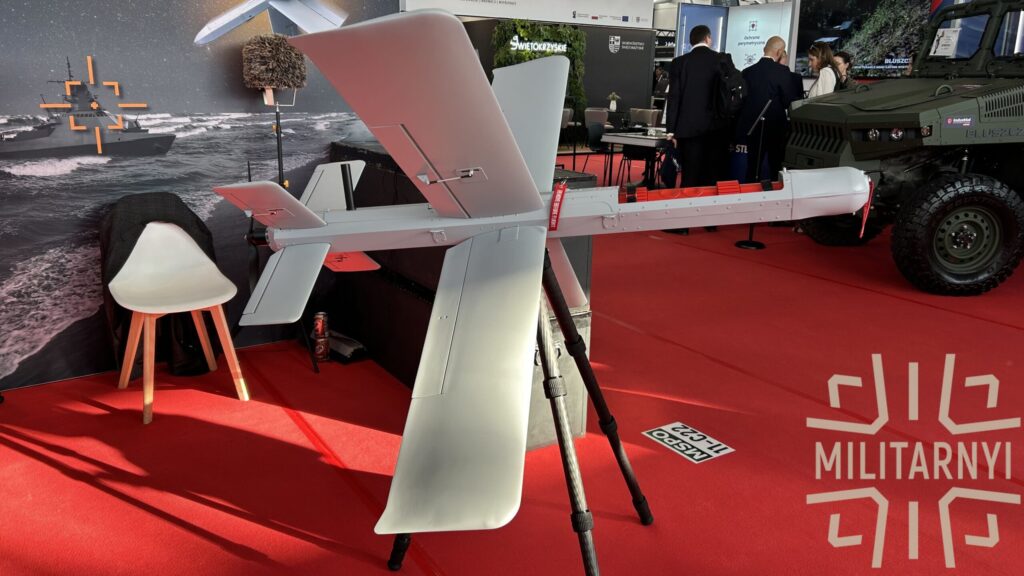
Ukrainian company Octava Defence displayed a new long-range strike drone capable of reaching beyond Russian lines at the MSPO 2026 defense exhibition in Kielce, Poland, on September 13th. The exhibition showcased the larger version of a drone already deployed in combat, designed to function effectively in electronic warfare environments without relying on satellite signals—particularly crucial due to Russian jamming attempts.
The smaller FLYCAT drone, unveiled in January 2026 by Venator Technologies, has already been employed in combat operations since March, with an enhanced version entering service in July and August. This improved model is now undergoing formal approval processes to be recognized by the Ukrainian government as an official weapon. The upgraded FLYCAT drone can cover distances of over 80 km, maintain flight for an hour, and accommodate a warhead weighing up to 3.7 kg.
It is built to target armored vehicles, artillery, radars, air-defense systems, and smaller shelters or communication equipment. The drone can collaborate with a scouting drone to pinpoint targets and coordinate simultaneous or sequential strikes against multiple objectives. Most components of the drone are produced within Ukraine, including communications, navigation, guidance, and warhead systems, with engines sourced from abroad.
Its surveillance cameras, either day-only or day-and-night, feed into a terminal guidance module that identifies targets as the drone approaches within a range of 2,000 meters. The FLYCAT SL, an even more advanced version, continues to undergo testing, boasting an extended range of more than 200 km, an extended operational time of over two and a half hours, and a heavier payload capacity of up to 7 kg, intended for attacking command posts, armored vehicles, artillery, and air defenses positioned far behind the frontline.
Written by urgent.news from Euromaidan Press's reporting — not their text. Machine-written — may contain errors; check the original before relying on it.