Michigan increased funding for English learners by $12.5 million. Advocates say a big gap persists.
This year, Michigan lawmakers increased state funding for English language learners by $12.5 million — but not all such students will benefit. Michigan does not provide school districts with additional funding for students who are nearly proficient in English, even though…
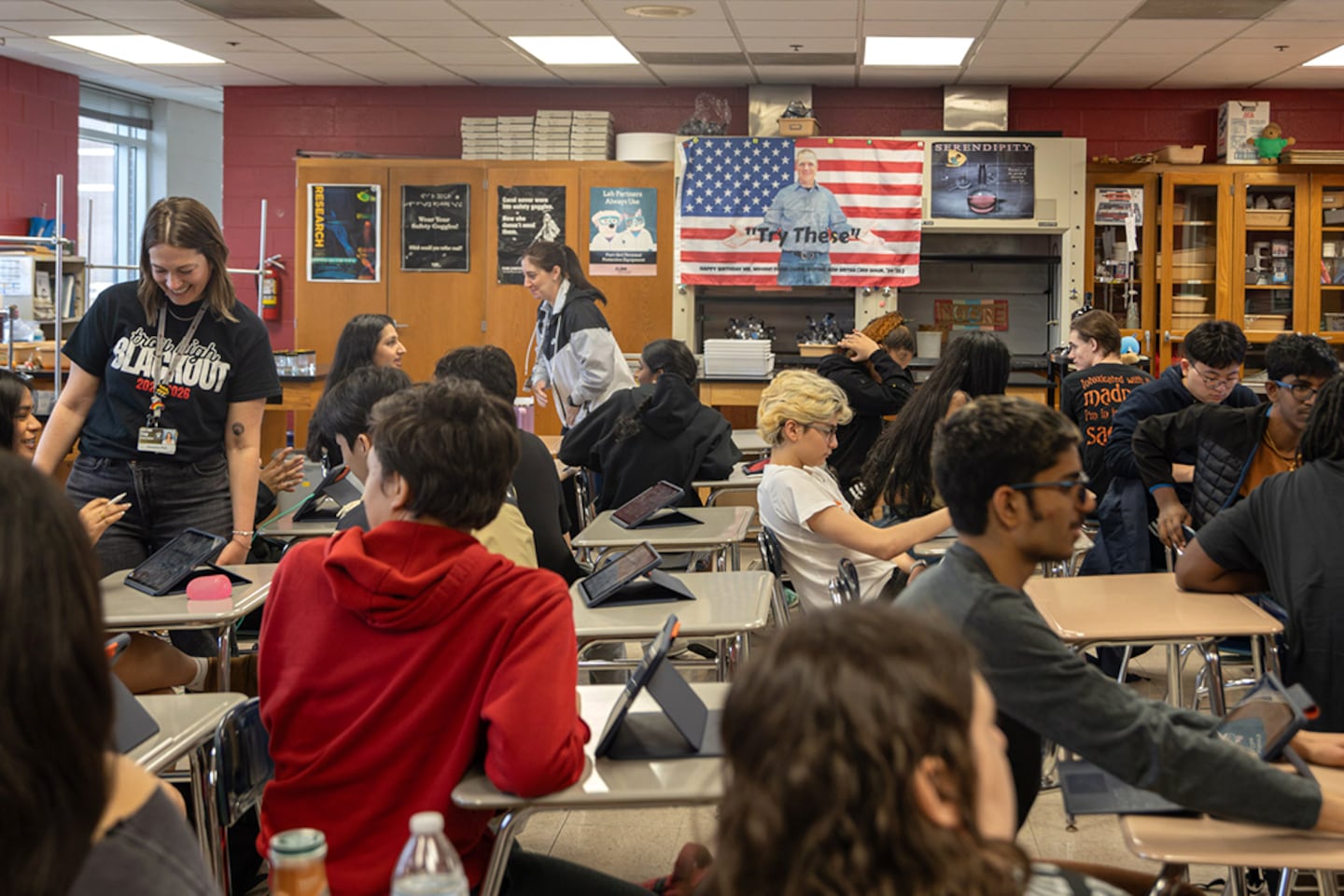
Michigan lawmakers recently added $12.5 million to state funding for English language learners (ELLs) in public schools. However, not all ELL students will benefit from this increase. Unlike 48 other states that provide funding for ELLs, Michigan does not offer extra money for students who are nearly proficient in English, despite legal requirements.
State and federal law mandate that districts provide English language development instruction to students scoring between 1.0 and 4.7 on the annual WIDA ACCESS assessment for English proficiency. Yet, Michigan's funding system only allocates additional dollars to districts based on student scores from 1.0 to 6.0. Students scoring between 1.0 and 4.7 receive varying amounts of extra funding, while those scoring 4.0 and above receive none.
This disparity in funding has created a significant gap. For instance, in the Troy School District, Superintendent Richard Machesky reported that about 90% of the district's 2025-26 budget for English learners came from general fund dollars because state funding was insufficient. The district received only $607,000 in state funds to serve approximately 1,900 ELL students, allowing the hiring of just five English language development specialists.
Similarly, in Hamtramck Public Schools, Director Afrin Alavi noted that 17% of ELL students score at the highest levels on the WIDA assessment, but without dedicated funding for these students, the district faces "structural deficits" in its multilingual learner budget. In the 2024-25 school year, Michigan's public schools had 104,200 English learners, 7.3% of the state's total student population.
About 24,000 of these students did not qualify for additional state funding but still needed at least 150 minutes of English language development instruction weekly.
Advocates argue that increased funding could help more English learners transition out of specialized programs and succeed in their core classes. According to a 2025 report by the Education Policy Innovation Collaborative (EPIC) at Michigan State University, nearly half of ELLs remained in specialized programs after six years, indicating a potential mismatch between students and their instructional needs. The report recommended substantial increases in ELL funding, from $3,500 to $7,500 per student based on WIDA scores.
The Michigan School Finance Research Collaborative, an independent education research center at Michigan State University, also emphasized the need for increased ELL funding. Lawmakers pledged to increase ELL funding annually until it met the recommended amounts, though no specific timeline was set. For example, the Detroit Public Schools Community District received about $6.7 million in additional funding for 7,400 ELL students in the 2025-26 school year, but none for 1,041 students who scored 4.0 and above on the WIDA assessment.
Superintendent Nikolai Vitti pointed out that concentrating funding at the lowest proficiency levels does not address the needs of students approaching proficiency. Despite efforts, such as hiring 58 multilingual academic interventionists, achievement gaps persist among Michigan's English learners.
Written by urgent.news from Chalkbeat's reporting — not their text. Machine-written — may contain errors; check the original before relying on it.