Marine bacteria team up to break down one of the ocean's toughest carbon-storing molecules
Researchers reveal how communities of marine bacteria divide the task of degrading fucoidan, a key player in ocean carbon storage.
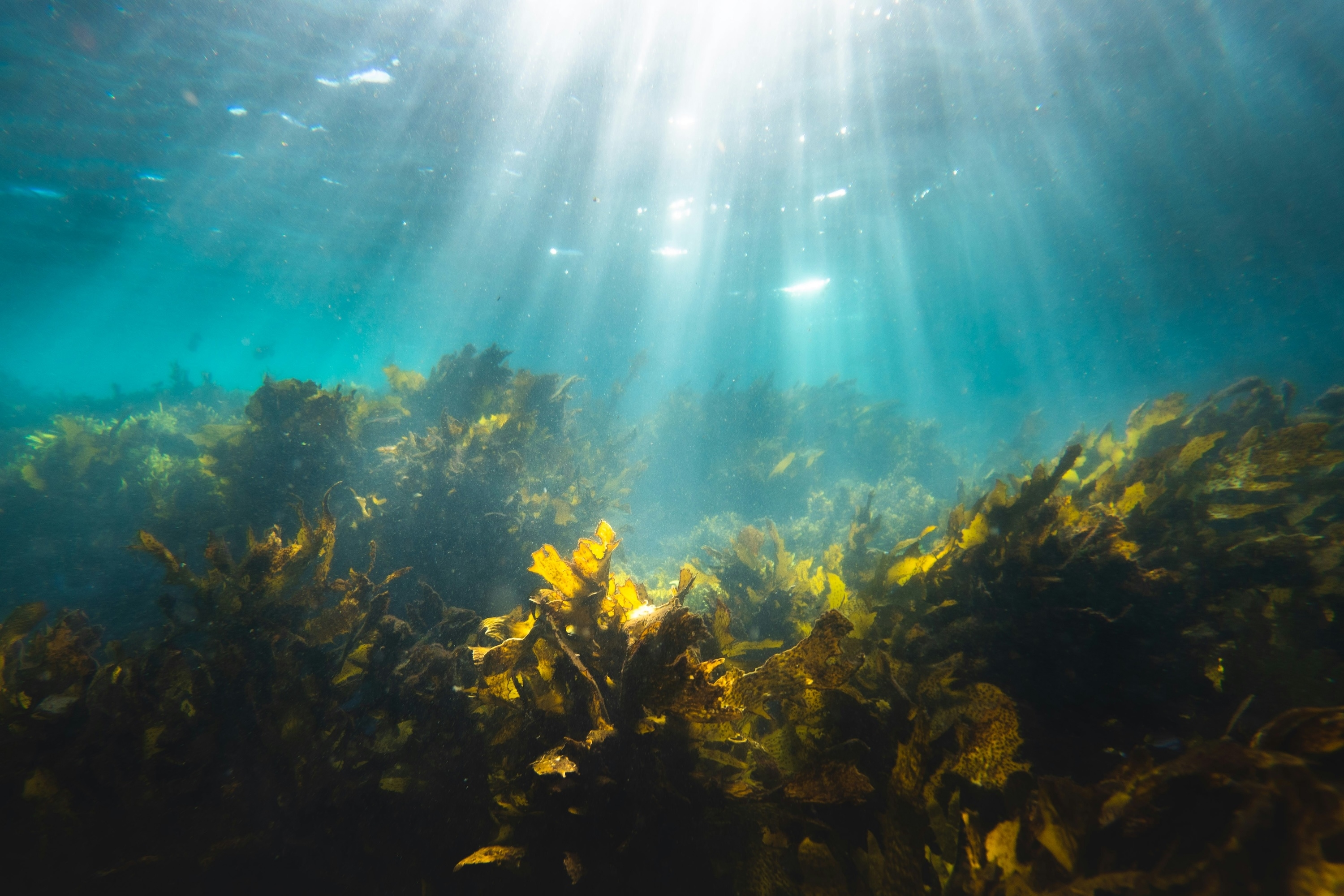
Deep beneath the ocean's surface, brown algae and diatoms create a complex carbohydrate called fucoidan. This molecule forms a protective layer around the algae, making it challenging for microbes to break down. Fucoidan's resistance to decay is significant because it can sink and store carbon in the ocean for extended periods, playing a vital role in the ocean's carbon cycle.
Scientists have known about individual bacteria that can break down parts of fucoidan, but the question remained whether a whole community of bacteria could break it down entirely. A recent study in Nature answered this question, revealing that it is indeed possible, but not through a single bacterium's efforts.
The research team found that fucoidan degradation relies on teamwork, with different bacterial strains specializing in various parts of the molecule. Some bacteria excel at breaking down the fucose-rich backbone, while others focus on removing the side branches containing uncommon sugars like xylose and galactose. When strains with complementary sugar preferences work together, their combined efforts surpass individual bacterial capabilities.
This cooperative division of labor not only facilitates complete degradation but also makes the process more predictable, despite the underlying complexity.
The study also discovered that certain bacterial combinations are often found together in natural ocean samples, supporting the idea that this functional role division may exist in the ocean itself. This finding has implications beyond microbiology, suggesting that by using a combination of specialized bacteria, complex biomass like brown algal carbon could be more efficiently processed.
The study's approach might also be applied to other biopolymers, potentially offering a simpler way to predict microbial community behavior. However, the research leaves open the question of why bacteria have not evolved to consume fucoidan entirely, suggesting constraints within the sugar molecule's structure.
Written by urgent.news from MIT News Research's reporting — not their text. Machine-written — may contain errors; check the original before relying on it.