Active black holes reveal star-forming rings and shock waves in nine nearby galaxies
A new study of nine nearby galaxies has shown that actively growing supermassive black holes may contribute to, rather than prevent, star formation in their host galaxies.

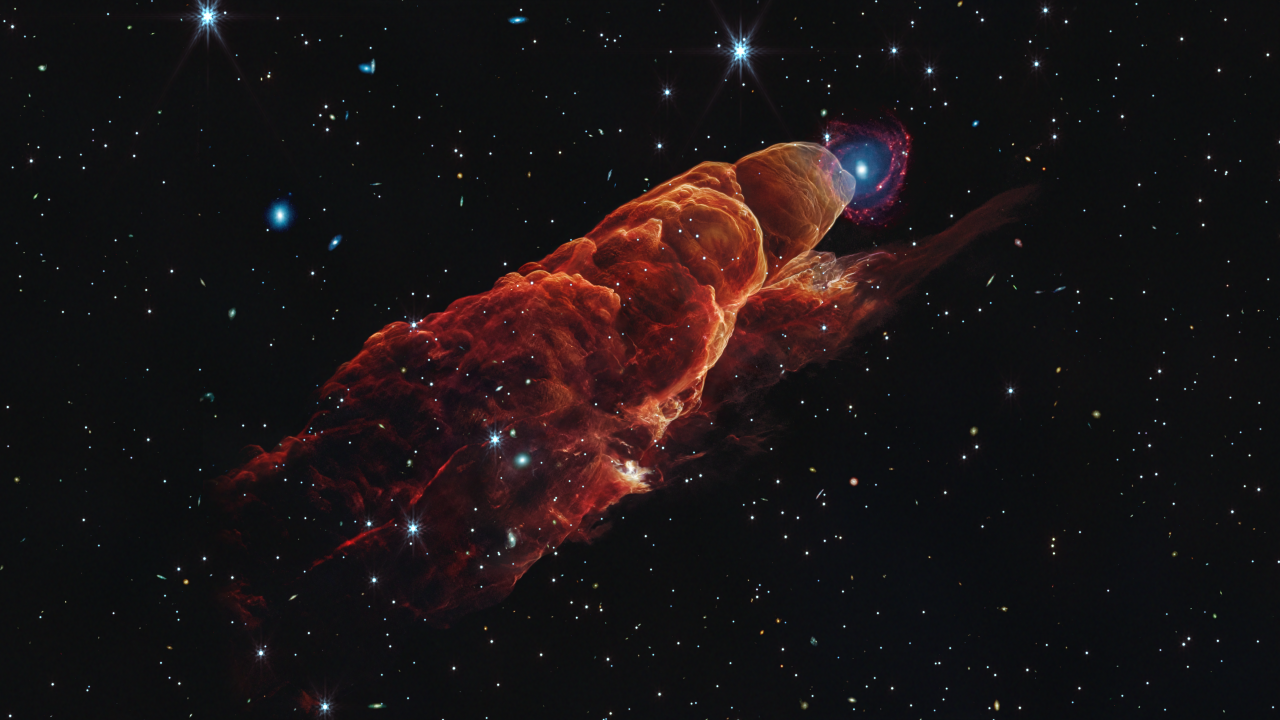
A study of nine nearby galaxies has discovered that actively growing supermassive black holes may play a role in star formation, contrary to previous beliefs that they inhibit it. Research utilizing observations from the VLT/MUSE instrument reveals that these active galactic nuclei (AGN), powered by material falling into a supermassive black hole, are frequently associated with star-forming rings or arcs, cone-shaped regions of energized gas, and fast shocks.
These shocks occur when energy outflows from the black hole interact with the surrounding gas. The findings, published in The Astrophysical Journal, provide a new perspective on how AGN feedback can influence galaxy growth and evolution. Peixin Zhu, a graduate student and astronomer at the Center for Astrophysics, stated, "We're seeing that black holes are not just consuming material at the centers of galaxies, but they're actively reshaping their surroundings."
The study focused on galaxies with actively accreting black holes, showing that black holes are not merely consuming material but are also reshaping their environments. This research helps to understand the complex feedback cycle that plays a crucial role in galaxy evolution.
Written by urgent.news from Phys.org's reporting — not their text. Machine-written — may contain errors; check the original before relying on it.