Malaysia, Kerala seek stronger economic ties in high-value sectors
KOZHIKODE, India: Malaysia and Keralam are seeking to deepen economic cooperation in high-value sectors including the digital economy, healthcare, tourism and education, as both sides look to unlock new opportunities for trade, investment and business partnerships.
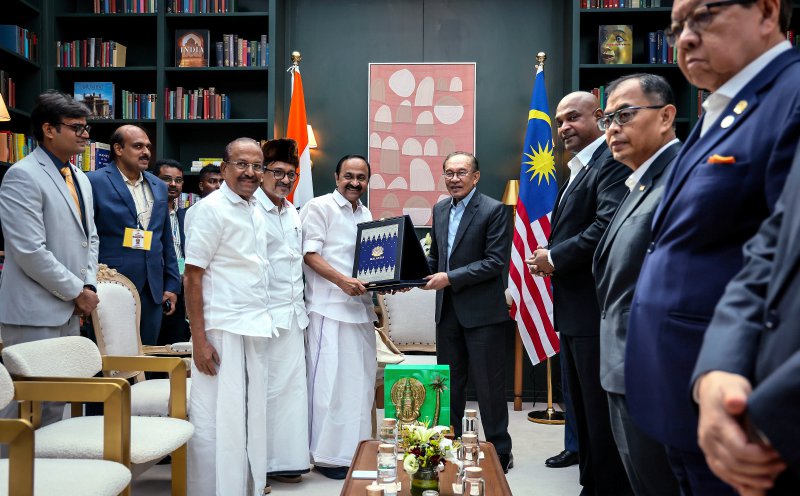
KOZHIKODE, India: Malaysia and Keralam are aiming to enhance economic ties in high-value sectors like the digital economy, healthcare, tourism, and education, seeking new trade, investment, and partnership opportunities. Prime Minister Datuk Seri Anwar Ibrahim engaged in talks with Keralam's Chief Minister V.D. Satheesan to strengthen business relationships and boost trade and investment flows between the nation and the southern Indian state.
Discussions also revolved around expanding tourism, business, and cultural exchanges, with a focus on closer collaboration between government and industry as a potential driver for wider economic cooperation. Anwar emphasized the potential for building strong partnerships in knowledge-intensive sectors, particularly digital economy and healthcare, where Keralam boasts significant capabilities and skilled workforce.
Both sides also deliberated on expanding education and tourism cooperation, including enhanced institutional and industry links that could generate new commercial prospects, increase mobility, and deepen people-to-people connections. Anwar extended an invitation for Satheesan to visit Malaysia, facilitating direct interaction between Keralam's government and Malaysian businesses, investors, and industry groups to identify potential collaboration areas.
This engagement aligns with Malaysia's broader strategy to deepen economic relations with India beyond traditional merchandise trade, emphasizing investment, services, technology, talent, and other high-value activities. Keralam's robust services economy, healthcare sector, tourism industry, and substantial overseas diaspora present promising avenues for Malaysian companies seeking partnerships and broader Indian market access.
For Malaysia, closer ties with Keralam could open new channels for business-to-business collaborations, investment, technology cooperation, and talent exchanges, while reinforcing economic links with southern India. Anwar's visit concluded his India engagements following the 18th BRICS Leaders Summit in New Delhi, where Malaysia, as a BRICS Partner Country, advocated for a greater role for the Global South in global economic and multilateral affairs.
The summit reiterated the commitment to enhanced trade and investment cooperation, stronger economic integration, local-currency and cross-border payment systems, food and energy security, digital transformation, and reform of global institutions. Malaysia sees the BRICS platform as an additional avenue to diversify trade and investment relationships and secure access to major emerging markets.
During his time in New Delhi, Anwar met with Indian Prime Minister Narendra Modi, Russian President Vladimir Putin, Iranian President Masoud Pezeshkian, and Ethiopian Prime Minister Abiy Ahmed, underscoring Malaysia's strategy of leveraging BRICS to expand economic and diplomatic ties across the Global South. Following his India trip, Anwar will travel to the Maldives for a state visit on September 14-15, where Malaysia and the Maldives are anticipated to sign several bilateral memoranda of understanding.
Written by urgent.news from New Straits Times's reporting — not their text. Machine-written — may contain errors; check the original before relying on it.