India Powers Nepal Through Flood Crisis, 654 MW Supply Cleared Till December
New Delhi: India has approved electricity supplies to Nepal for 18 hours a day until December 31, offering critical energy support after catastrophic flash floods damaged hydropower infrastructure and sharply reduced domestic generation. The Ministry of Power has authorised exports to the Nepal Electricity Authority, providing the Himalayan nation with additional electricity as it grapples with…
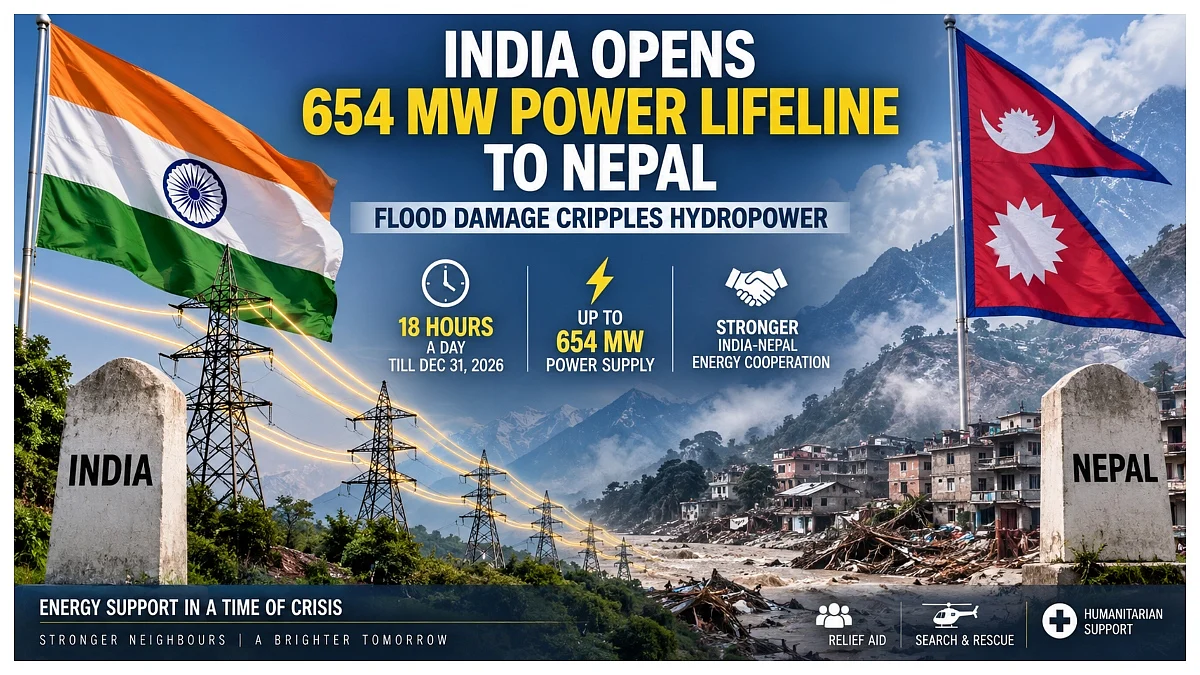
India has authorized 18 hours of daily electricity exports to Nepal until the end of December, providing vital energy support following devastating flash floods that damaged the country's hydropower infrastructure and drastically reduced domestic power generation. The Ministry of Power granted permission for this electricity transfer to the Nepal Electricity Authority, aiming to alleviate the power crisis in Nepal.
Through two transmission lines, India can export up to 654 MW of electricity to Nepal. The Muzaffarpur-Dhalkebar 400 kV double-circuit transmission line will transmit 600 MW, while the Tanakpur-Mahendranagar 132 kV single-circuit link will carry the remaining 54 MW. The electricity export arrangement is subject to a review in December 2025.
The floods have dealt significant damage to Nepal's hydropower infrastructure, decreasing the nation's power generation capacity and creating an urgent need for additional electricity. India stated that this approval would assist Nepal in bridging the immediate power deficiency while preserving their historical energy cooperation.
In addition to the electricity support, India has intensified its humanitarian aid efforts. New Delhi has dispatched relief supplies and personnel for search, rescue, and forensic operations. The Indian Air Force aircraft have transported emergency material to Kathmandu, including mud-rescue suits, gas detectors, breathing apparatus, inflatable walkways, portable generators, lighting towers, and dewatering pumps.
Nepal is grappling with a mounting disaster. The death toll has risen to 1,386, while approximately 5,130 people remain missing across the affected regions. The catastrophe was triggered by an ice-rock avalanche near the Nepal-Tibet border on August 26, causing widespread devastation across northern and central Nepal. So far, 104 recovered bodies have been identified and handed over to the families of the victims.
Rescue operations continue, with security forces having rescued over 13,700 people. Another 339 individuals are receiving hospital treatment for injuries sustained during the disaster.
Written by urgent.news from Free Press Journal's reporting — not their text. Machine-written — may contain errors; check the original before relying on it.