If Britain stops believing in AI we’ll sabotage our own progress
Britain faces an “AI belief challenge” driven by public skepticism over job losses and corporate greed, requiring companies to align technological progress with human interests, says Michael Hayman Technology companies at the frontier of AI development are rethinking the speed at which they improve the capabilities of their models. Safety is the focus. With it [...]
Britain is grappling with an "AI belief challenge" stemming from public skepticism surrounding job losses and corporate greed, according to Michael Hayman, UK Chair of BPI Group. Technology companies leading the charge in AI development are now reevaluating the pace of their advancements, with safety taking center stage. However, a critical societal question arises: what transpires if the public no longer believes that AI progress benefits them?
A recent ONS survey indicates that only 36% of British adults believe AI will enhance their lives. This belief gap, coupled with a widening chasm between AI's growing capabilities and the public's trust, is highlighted by the second annual BPI Reputational Resilience Index. The index reveals that 49% of adults are susceptible to negative narratives about companies, rising to 60% for app-based businesses.
A damning claim has emerged as the top harm score: corporations utilize AI as a justification for job cuts and profit augmentation.
While discussions among AI behemoths continue, this issue transcends mere technology—it's also a story about perception: job losses, corporate greed, misinformation, and the fear that progress will primarily serve companies at the expense of people. For businesses, the risk lies in embracing an anti-progress narrative. Perception of values plays a crucial role; resilient companies that have established trust through their actions are better equipped to withstand attacks. Conversely, vulnerable brands experience a significant drop in consumer support following attacks.
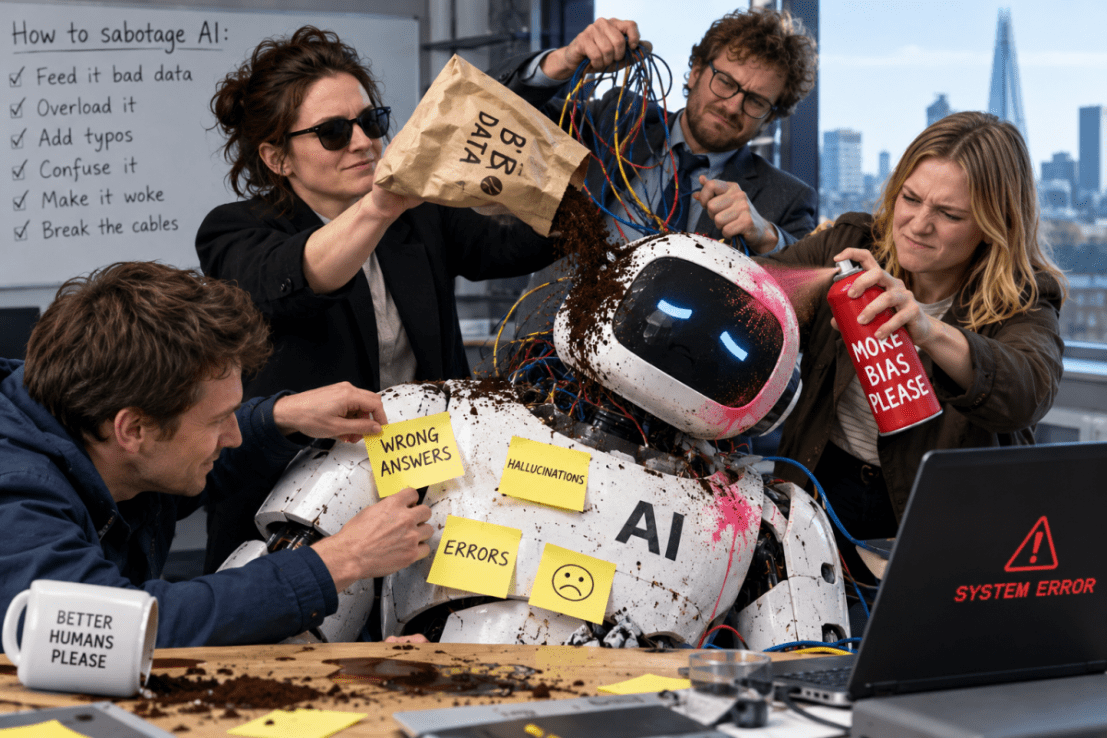
The analogy of "sabotage" dates back to the French word "sabot," originating from workers allegedly disabling machines they believed would jeopardize their livelihoods. Today's AI algorithms pose a different threat: if people perceive themselves as victims rather than beneficiaries, opposition to AI becomes inevitable. Companies, therefore, risk becoming the saboteurs of their own technological revolution if their actions align with the very narrative they aim to combat.
The rapid acceleration of AI technology carries the risk of amplified anxiety and heightened concern. As leaders contemplate the deployment of frontier technologies, they must ensure that AI's promise is a promise kept for people, focusing on realizing human potential rather than merely testing the boundaries of technology.
Written by urgent.news from City AM's reporting — not their text. Machine-written — may contain errors; check the original before relying on it.