Gipfel am Polarkreis: Europäer nehmen Kampf um Einfluss in der Arktis auf
Neue Schifffahrtsrouten, Bodenschätze und Sicherheit: Unweit des Polarkreises berät Merz mit EU-Partnern über die europäische Arktis-Strategie. Dabei werden auch erhebliche Bedrohungen gesehen.
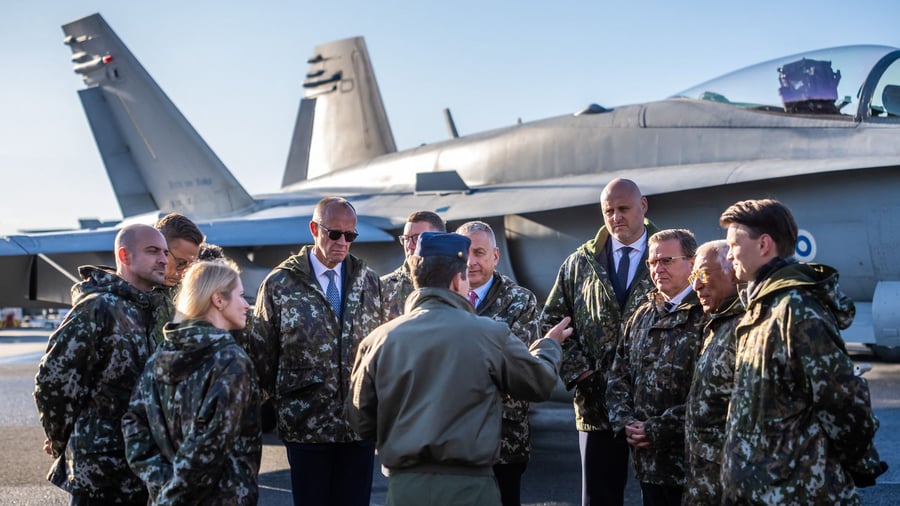
European leaders are intensifying their battle for influence in the Arctic, gathering at a summit in Rovaniemi, Finland, on the Arctic Circle. German Chancellor Friedrich Merz and representatives from eleven other nations pledged to bolster their EU commitment and provide necessary resources. Merz emphasized that more attention had to be given to the Arctic as a critical area for European security.
The summit statement claimed that all participants agreed on the need for the EU to act more strategically and proactively in the European Arctic. This would involve enhancing monitoring, information exchange, and creating a shared situational picture. The signatories also called for increased investment in infrastructure, including transportation routes, digital networks, military mobility, and other facilities, in anticipation of hybrid threats and the protection of critical installations on land and at sea.
Economically, the countries see opportunities in critical raw materials, tourism, and new shipping routes created by the melting Arctic ice. The main threat behind the push is Russia, due to heightened geopolitical competition, the consequences of Russia's war against Ukraine, China's growing security interest, and the accelerating and severe impacts of climate change.
While geographical northern parts of EU countries Finland and Sweden are most relevant to the Arctic region, Grønland also holds significant relevance for the EU. Despite not being a member of the EU, the large Arctic island belongs to the Kingdom of Denmark. The disputed claims of the US President Donald Trump on the resource-rich territory are not explicitly mentioned in the declaration.
However, the signatories welcome a recently announced EU investment package of 200 million euros, which will be used for infrastructure to mine valuable raw materials. To resolve the conflict with Washington and discuss future cooperation, Denmark, Greenland, and the USA had tri-lateral talks in the form of a working group. Danish Prime Minister Mette Frederiksen expressed optimism about finding a solution, noting the clear signals seen so far.
Along with Denmark and Greenland, Norway with Spitsbergen, Russia, the USA, and Canada are considered the Arctic Polar States. The EU aims to seek even closer cooperation with these countries, along with Iceland and the UK, on Arctic matters. The EU Commission will use the summit results to draft a new Arctic strategy, with Finland pushing for the inclusion of European icebreaker capabilities as a concrete project.
Finnish Prime Minister Petteri Orpo highlighted Finland's expertise in building icebreakers, emphasizing that without them, securing supply, trade, and military presence in large parts of the region would be unreliable, even as sea ice diminishes. This was confirmed by Bundeskanzler Friedrich Merz and EU Foreign Affairs Commissioner Kaja Kallas, who both stated that icebreakers are crucial and not just a Nordic concern, but a European one.
Written by urgent.news from Handelsblatt's reporting — not their text. Machine-written — may contain errors; check the original before relying on it.
This story
This is one outlet's version. Read the fullest account.