Empat kongres berlalu, politik Malaysia masih cari arah
Gabungan atas matematik kuasa boleh membentuk kerajaan. Gabungan atas gagasan bersama boleh membina negara.
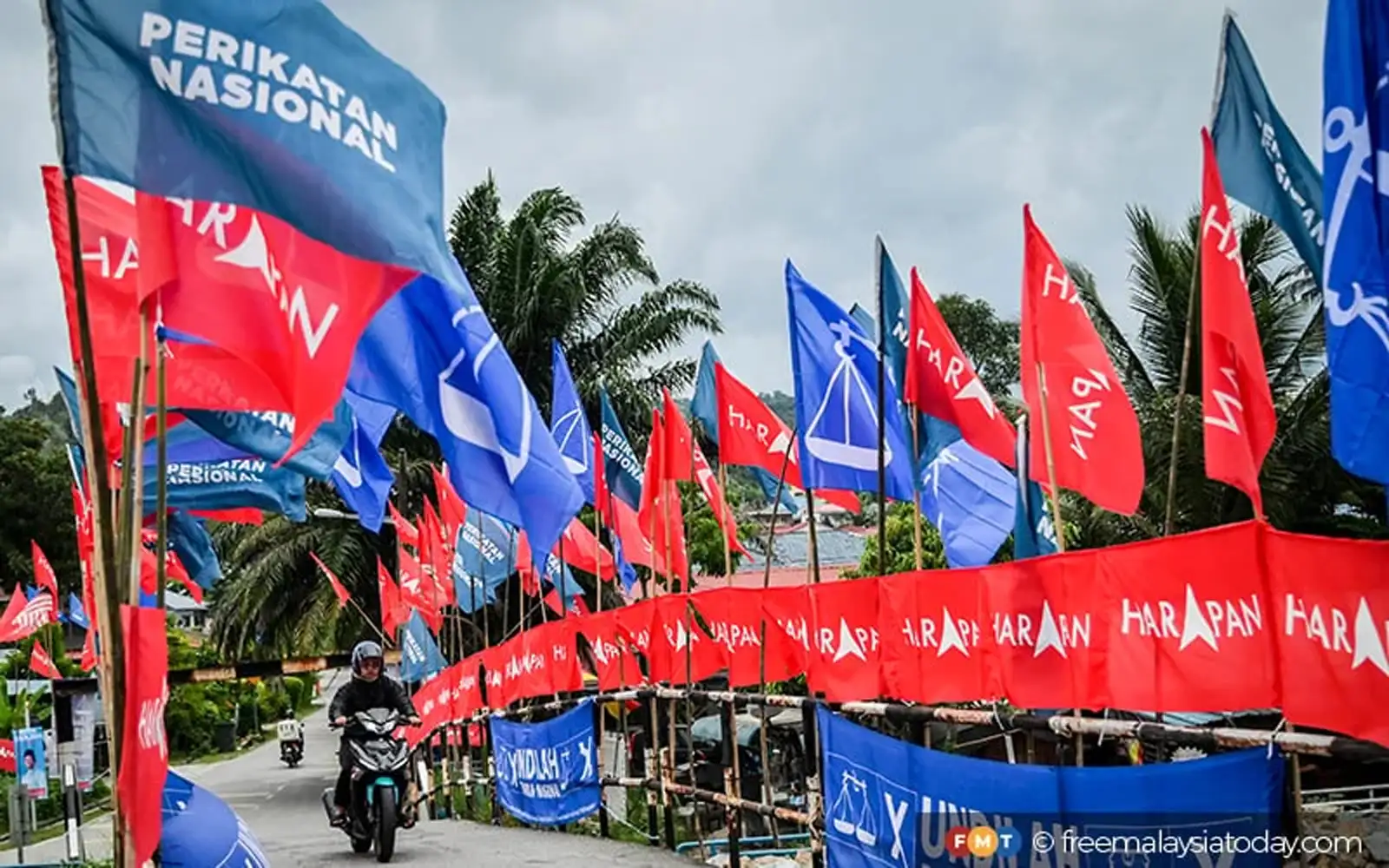
Four major party gatherings have now concluded in Malaysia. Within a short time, citizens have the opportunity to hear how each of the four parties perceives itself, evaluates opponents, maintains achievements, and plans steps towards the 2016 general election. Each party convinces the public that they are the strongest, most relevant, and most trustworthy.
However, after these four main stages, two questions remain unresolved. Firstly, who they ultimately want to govern after this period. Secondly, and more importantly, what common vision they wish to offer to guide Malaysia forward. None of them boldly commit to a joint choice. Each maintains its options, considers possibilities, and avoids closing doors prematurely.
This situation is known in political science as party-seeking (office-seeking) - parties position themselves for a winning coalition, not for the principles they wish to implement. This is not a new phenomenon, as every party attempts to position itself in the best power position. However, when the coalition choice remains open, the country remains in the political race - searching for who can be together with whom, who is becoming stronger, and which coalition has the best chance of ruling Putrajaya.
Discussions quickly return to questions of who, while the larger question of what they wish to build becomes peripheral. The four parties, each facing the challenge of maintaining their position in a united government without losing their identity and supporters' trust. Deciding to remain until the end of the term answers their present position, but does not answer the type of cooperation they will offer after PRU16.
PKR finds itself in a different position. A party born from a reform movement, it now forms the backbone of the government. While out of power, reform was a demand; after gaining power, it must be translated into achievements. PKR must also consider the type of coalition that can maintain its position after this. PAS is increasingly clear about its desire to strengthen itself as the Malay-Islamic opposition.
The question is, will this strength be translated through National Accord (PN) as it is now, broader cooperation, or a new configuration after the election? Umno may be the most intriguing. In party politics, it speaks more firmly about its strength and future, including the Green Agenda and broader cooperation possibilities. At the same time, it stresses the commitment to unity government until the term ends.
The party's and government stages may appear contradictory, but there is an important truth about mixed politics: political friends in government do not necessarily become competitors in politics. This is not a sign of instability, but a fundamental aspect of democratic power-sharing. Law, friend, enemy, and a lesson: Since 2018, almost all major parties have experienced government and opposition roles.
More than that, parties that have fought fiercely have also cooperated. Umno and PAS have alternated in the National Accord. Perikatan Nasional and PAS have been together in PN. Umno, PKR, and DAP, despite decades of opposition, now sit together in a united government. In politics, it is often said that there are no friends or enemies, only interests.
However, after nearly eight years of dynamic politics, Malaysia should be mature enough to determine what interests it truly wants to preserve between party interests or national interests? Every party answers: national interests. However, so often this answer remains only on the lips and stage of Congress, in practice it often does the opposite.
Competing without stopping government: However, nearly eight years of the same dynamic politics should also highlight our understanding of mixed politics. Mixed politics is not politics without competition, but the ability to manage competition without stopping government. Parties in the same government do not need to lose their identity or stop competing for support.
Here are two suitable models. Germany shows a coalition guided by foundations: before forming a government, parties discuss and publish a coalition contract - a program approved and capable of public evaluation. Indonesia shows a more fluid coalition, where former opponents can gather in one government, but usually at the cost of more power than ideas.
Two models, two ends. So, which direction should Malaysia lean towards? Citizens now have a record to compare, not just based on experience since 2018, but with a valuable record. Almost all major players can now be evaluated, as citizens have seen them as both government and opposition, heard what was promised outside of power and observed what was done after coming to power.
Thus, as PRU16 approaches, the citizens' assessment should move beyond mere party identity. The question is no longer just which party best represents us by religion, ethnicity, or sentiment, but which coalition has the ability, manpower, stability, and convincing ideas to lead Malaysia. Party identity and performance politics now need to be supplemented by an assessment policy, where citizens can judge based on records, not just sentiment.
But for citizens to make a fair assessment, parties need to offer clearer choices. Forming a government or building a nation? With these four congresses concluding, the most crucial question remains unanswered. Each party clearly tells who they are and why they are worthy of support. What remains elusive is who they wish to govern after PRU16, and more importantly, for what purpose.
Is the coalition to be determined only after the election, based on the mathematical seats? Or will the people be given an earlier glimpse?
Written by urgent.news from Free Malaysia Today's reporting — not their text. Machine-written — may contain errors; check the original before relying on it.
Also reported by 1 other outlet
- Empat kongres berlalu, politik Malaysia masih cari arah freemalaysiatoday.com