Don't Get Your Hopes Up for a City on the Moon
Bezos said we should move heavy industry to the Moon. Musk says we'll have sustainable lunar cities. We know there's ancient water ice in craters on the Moon's poles, but there's not enough water to support a city.
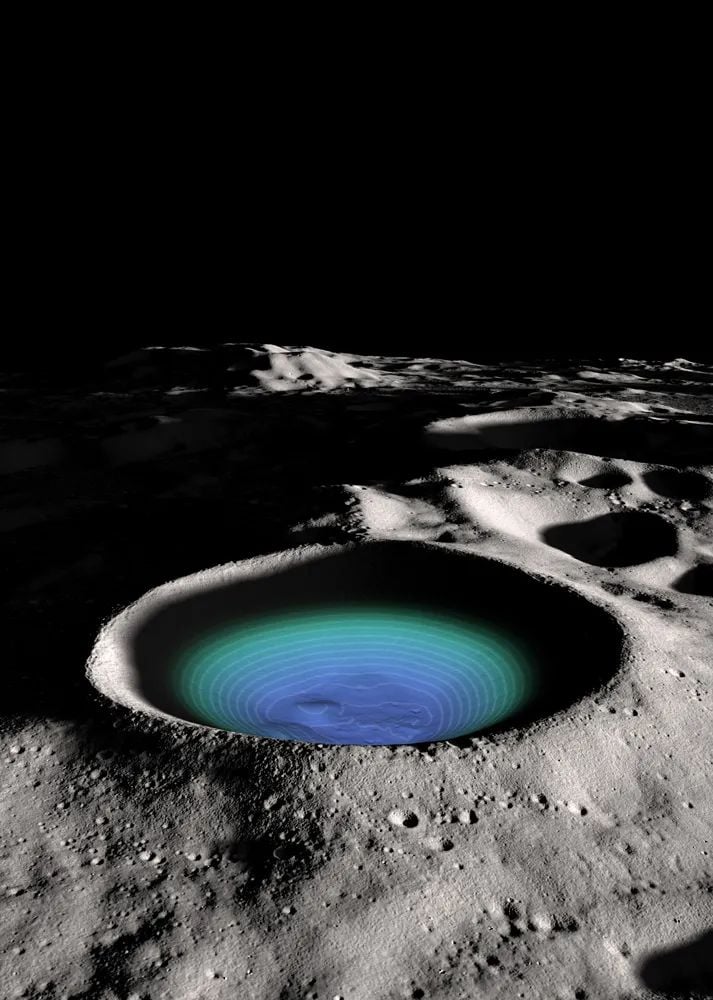
Researchers from the Smithsonian Astrophysical Observatory and Durham University estimate that even with advanced water recycling methods, a large lunar settlement could deplete the moon's water reserves within just a century. However, a small lunar town housing fewer than 10,000 inhabitants could potentially sustain itself with lunar water for several centuries.
The authors note that growing human populations on the moon will make water management a critical challenge, and they urge for thorough evaluation of water management options well in advance of establishing significant settlements. Water serves multiple purposes on the moon, including drinking, hygiene, food production, and air generation.
With current consumption rates, a million-person lunar city would exhaust its water supply in less than three years, even with highly efficient recycling techniques. To ensure long-term sustainability, researchers suggest improving water recycling efficiency by about tenfold or discovering additional water reserves on the moon. Solar power generation could also help sustain energy-intensive facilities like AI data centers, given the abundance of silicon on the moon's sunlit regions.
However, the likelihood of discovering deeper water reserves remains uncertain, as current surveys have only reached a few feet below the lunar surface.
Written by urgent.news from Discover Magazine's reporting — not their text. Machine-written — may contain errors; check the original before relying on it.
This story
This is one outlet's version. Read the fullest account.
- Small Lunar Towns Could Sustain Themselves on the Moon's Water for Centuries discovermagazine.com