Chinese researchers chart 5-stage path toward ‘last AI built by humans’
Researchers from China’s leading universities and tech giants are setting their sights on a crucial new front in the AI race with the US: developing systems capable of building better versions of themselves without human intervention. In a joint paper published on Thursday, researchers from ByteDance, Tsinghua University and the Shanghai Artificial Intelligence Laboratory, among others, outlined…
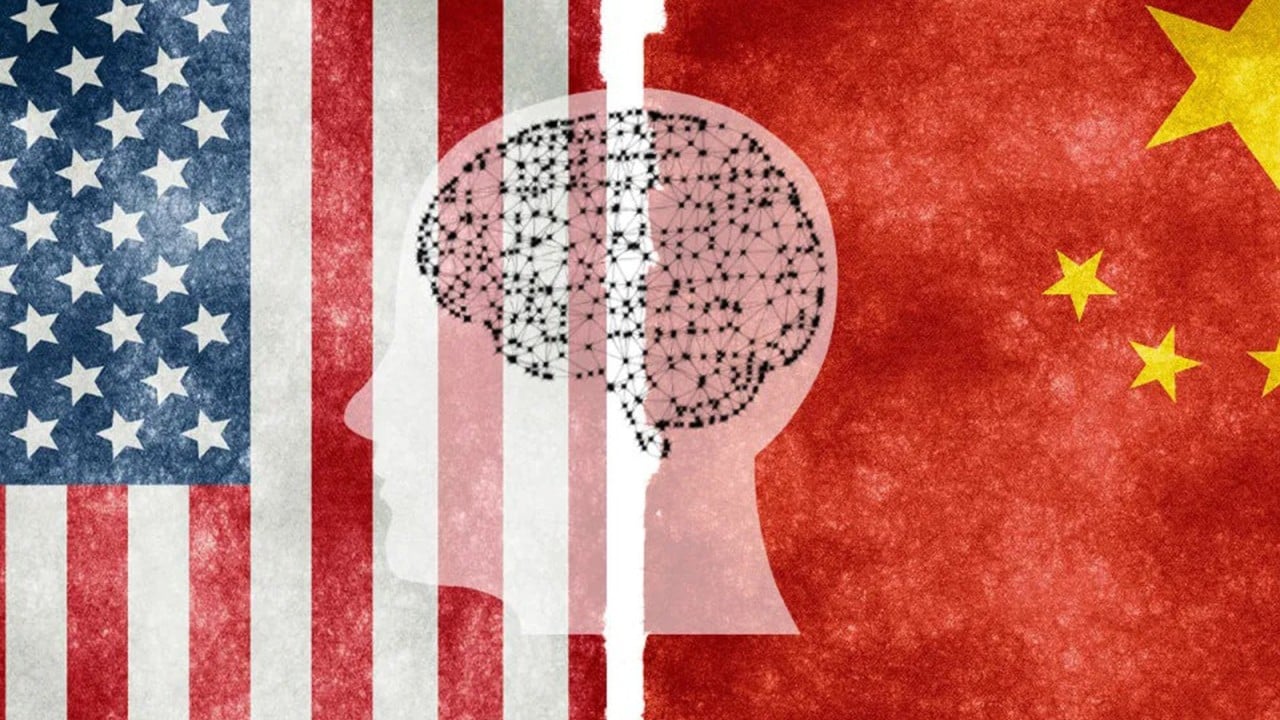
Researchers from prestigious Chinese universities and technology firms are focusing on a major challenge in the artificial intelligence (AI) competition with the United States: creating AI systems that can improve themselves without human intervention. In a recent paper, experts from ByteDance, Tsinghua University, and the Shanghai Artificial Intelligence Laboratory, among other institutions, outlined a five-stage roadmap towards recursive self-improvement (RSI).
The study, titled "The Last AI Built by Humans: Toward Genuine Recursive Self-Improvement," highlights the increasing trend of automating the costly process of training, evaluating, and fine-tuning AI models.
The paper details five progressive stages of AI autonomy. In the initial stage, an AI follows improvement procedures created by human engineers. As it progresses, the system begins selecting its own upgrades instead of merely following predetermined instructions. Later stages enable the AI to decide what new information or experiences it needs, adapting to changes after deployment.
The final stage would allow an AI to continuously refine the very methods used to enhance AI itself. This level of autonomy, known as recursive self-improvement, requires improvements to persist beyond a single task and be inherited by successor systems.
The authors argue that automating parts of AI research could give developers a competitive edge. If achieved, this transition could shorten development cycles and reduce labor and computational costs for building foundational models. However, while Chinese institutions are making rapid progress, US firms maintain an early lead, largely due to better access to computing resources.
Erich Grunewald, a senior researcher at the Institute for AI Policy and Strategy, notes that US companies still have several months of head start and greater access to computational power for deployment. Chinese firms are doubling down on autonomous training infrastructure, with Zhipu AI allocating nearly 60% of its recent $5 billion fundraising round to develop its next-generation foundation models and a fully self-training system.
Despite the challenges, Chinese researchers are advancing in this area. Articles from MiniMax 2.7 and DeepSeek highlight models that can update their memory, build complex skills, and execute multi-step tasks autonomously. However, safety remains a significant concern. The researchers stress the need for strict safeguards, including verified testing environments to ensure updates are safe and beneficial before deployment.
They note that achieving genuine RSI would vary depending on the AI field, with software engineering presenting a clear path, while robotics and scientific discovery face greater hurdles. The authors do not provide a timeline for when RSI could be realized.
Written by urgent.news from SCMP Tech's reporting — not their text. Machine-written — may contain errors; check the original before relying on it.