Bugs could help detect ‘forever chemical’ contamination
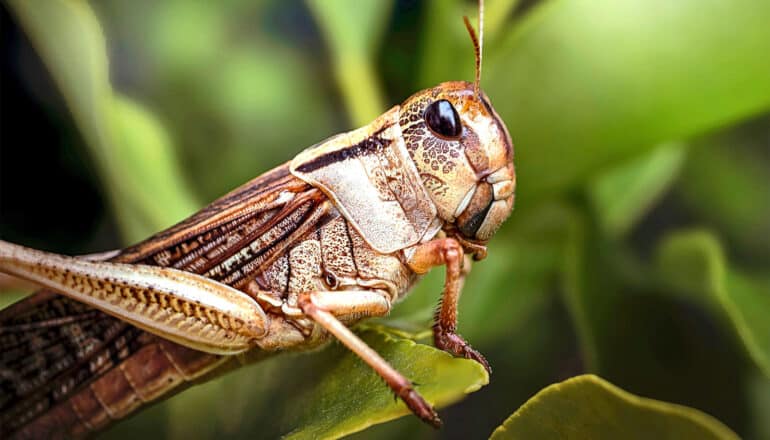
A recent study has revealed that neurons in a locust's brain can distinguish between multiple PFAS compounds, including PFOS, one of the most common "forever chemicals." PFAS, or per- and polyfluoroalkyl substances, are used in a variety of products and persist in the environment for long periods, making contamination difficult to monitor and clean up.
Debajit Saha, an associate professor at Michigan State University, explains that detecting PFAS is extremely challenging due to their slow breakdown and widespread use. The research team recorded neural activity from the portion of a locust's brain that processes odors and exposed the insects to gases containing several PFAS compounds, including PFOS.
They discovered that each PFAS compound produced a distinct neural activity pattern, allowing the insects to differentiate between the chemicals. The researchers were surprised by the locust's ability to detect these human-made chemicals, even though they do not naturally occur in the environment. Current PFAS detection methods typically rely on expensive, specialized laboratory instruments, while existing field methods often target specific compounds, complicating broad screening.
This study serves as a proof of concept, with the team now testing environmental water samples in Michigan to determine if the approach can detect PFAS contamination outside the laboratory. Ultimately, they aim to miniaturize the technology into portable biological sensors capable of rapidly screening multiple PFAS compounds in the field, potentially offering a new way to monitor contamination using living sensory systems.
Written by urgent.news from Futurity's reporting — not their text. Machine-written — may contain errors; check the original before relying on it.