Brain implant lets people with paralysis speak and gesture at the same time
Previous brain implants have enabled people with paralysis to either speak or move, but a new, larger one enabled them to do both simultaneously via an avatar
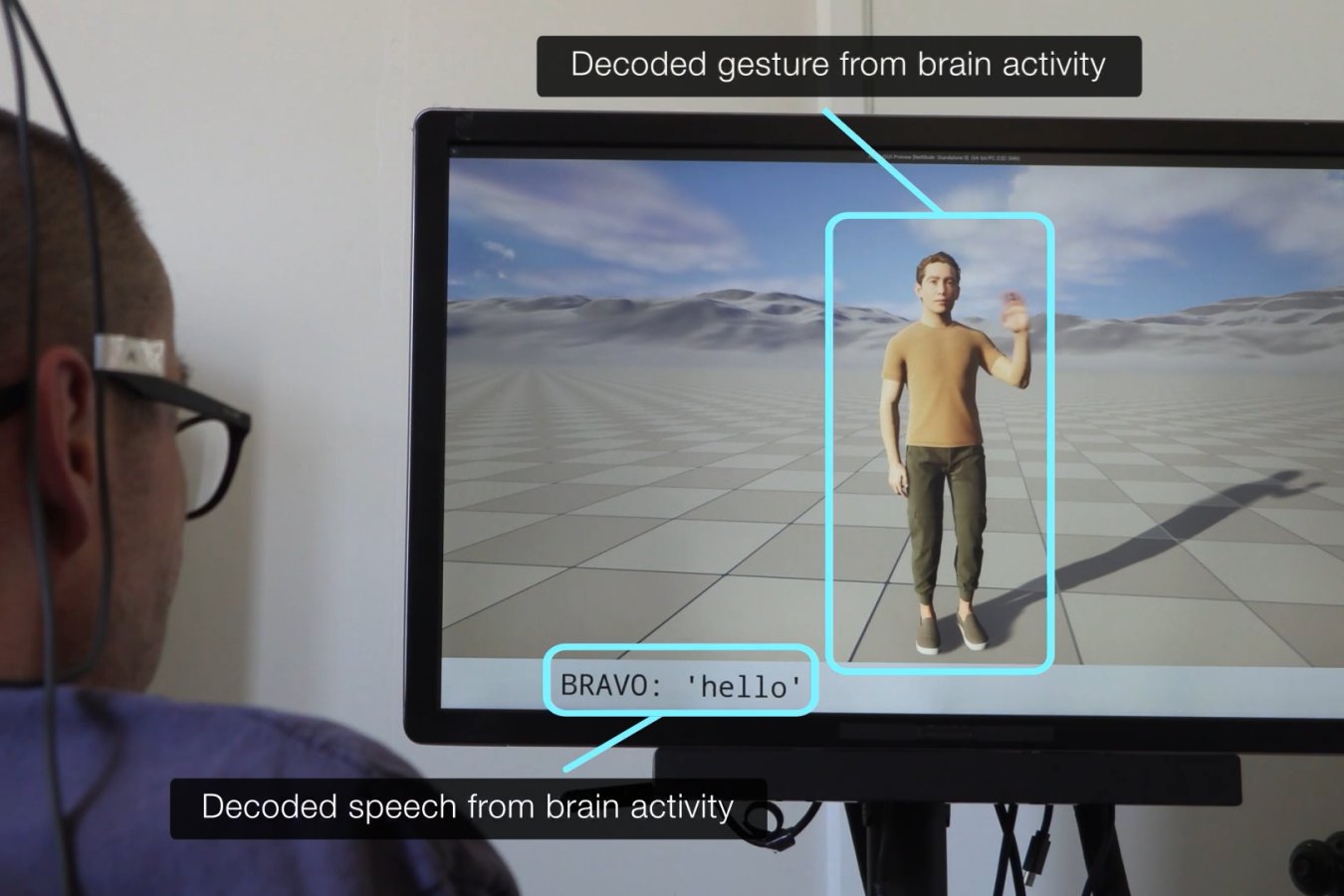
A revolutionary brain implant has enabled individuals with paralysis to both speak and gesture simultaneously, according to a groundbreaking study conducted by a team of researchers. This cutting-edge technology, developed by Chang Lab at the University of California, San Francisco (UCSF), could significantly enhance communication for those unable to express themselves through traditional means.
The study involved two participants with paralysis - Bravo-1r, who suffered a stroke, and Bravo-6, who had amyotrophic lateral sclerosis (ALS). Both individuals had lost most of their limb movement and were unable to speak, making conventional communication methods impossible. To test the feasibility of the brain implant, researchers recorded the participants' brain activity while they attempted to say 10 phrases and perform 10 gestures, such as waving, clapping, and shaking their head.
Using machine learning algorithms, the researchers trained custom models to predict the participants' intended phrases and gestures. The predictions were then used to control the movement of an avatar, mimicking the participants' actions. The results were impressive, with Bravo-1r's gestures and speech being predicted with 88% and 84% accuracy, respectively, while Bravo-6's predictions achieved 66% and 70% accuracy, respectively.
By using avatars instead of the participants themselves, the researchers were able to demonstrate that both speech and gesture could be decoded from brain activity simultaneously. This breakthrough opens up the possibility of enhancing communication for individuals with paralysis, allowing them to express themselves more accurately and with greater nuance. The team is already working on improving the accuracy of the models and expanding the range of phrases and gestures that can be accurately predicted.
While this technology represents a significant step forward in augmenting communication for individuals with paralysis, further research and development are necessary to ensure the accuracy and usability of the system in real-world scenarios. As the researchers continue to refine the models and algorithms, the future of this technology holds great promise for empowering those with paralysis to communicate more effectively and with greater ease.
Written by urgent.news from New Scientist's reporting — not their text. Machine-written — may contain errors; check the original before relying on it.


