Wirtschaft am Rhein: IHK: Schaden nach Niedrigwasser wird immens sein
Das andauernde Niedrigwasser im Rhein stellt Unternehmen vor Herausforderungen. Warum die IHK in Rheinland-Pfalz vor immensen Schäden warnt und was sie fordert.
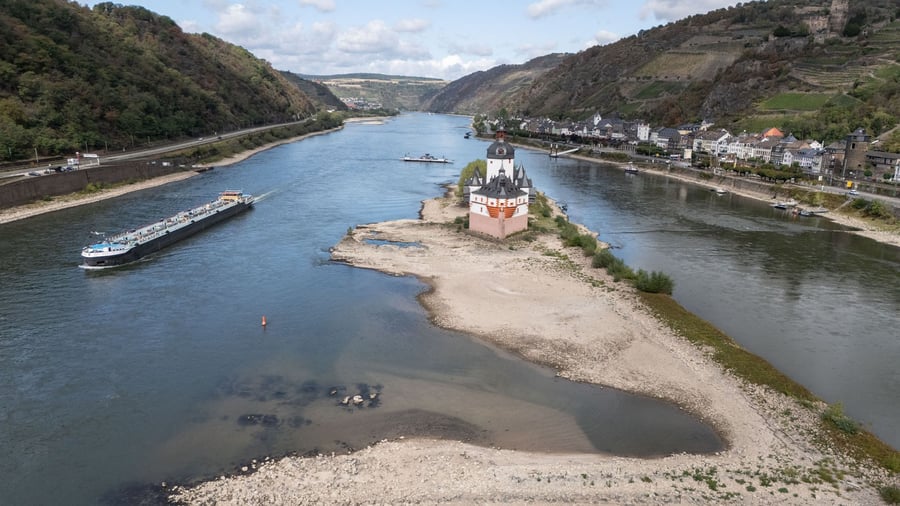
The ongoing low water levels in the Rhine are causing significant economic damage and could result in substantial national economic harm this year. Nicole Rabold, a traffic policy spokesperson for the IHK Rhineland-Palatinate Working Group, described the situation as "truly critical." If the water level at the Rhine-Palatinate Kaub falls below 40 centimeters, meaningful inland shipping may become impossible.
The Middle Rhine section between St. Goar and Mainz is a critical bottleneck on the important German waterway. The water level, a relative measurement, does not indicate the actual depth down to the bed. For shipping, the river depth is crucial. It varies along different Rhine segments. Historical low water levels: While the Kaub water level recently rose slightly following some rainfall, it has since dropped below the previous lowest recorded level of 25 centimeters in 2018.
This summer, it was already single-digit. Consequently, freight shipping on the Rhine has ceased, either not operating at all or only empty ships. This drives up costs, as an IHK Rhine-Hessen spokesperson added. Historical low water levels have been observed in other locations, such as Cologne, which has also fallen below its 2018 low of 69 centimeters.
The extent of the economic damage this year remains unclear, according to Rabold. Following the 2018 low water year, it amounted to approximately 2.4 billion euros. Since then, investments have been made and logistics optimized, including the use of low water ships and improved water level forecasts. These could help better plan transports.
Whether the damage will surpass that of 2018 remains to be seen, but Rabold stated that the economic damage would be "immense." Given the context of climate change, it must be assumed that low water years will become more frequent. A single measure will not solve the problem. However, deepening the Rhine could help, Rabold noted.
At the same time, the federal government must significantly increase investment in waterways. Consumer impacts could also be felt for longer, such as at the petrol pump. "It will still take until October for us to return to normal prices," Rabold said, referring to the impact of limited transports.
Written by urgent.news from Handelsblatt's reporting — not their text. Machine-written — may contain errors; check the original before relying on it.