Why Chinese shoppers are ditching supermarkets for small ‘community stores’
For Cindy Wang, the newly opened “community store” near her home in Guangzhou has been a godsend: the small outlet is cheaper than a traditional supermarket, but offers a bigger range of groceries than convenience stores like 7-Eleven. The 20-something now often stops off at the shop after work to pick up a few items. On an early September evening, she has bagged a bottle of milk for just 7 yuan…
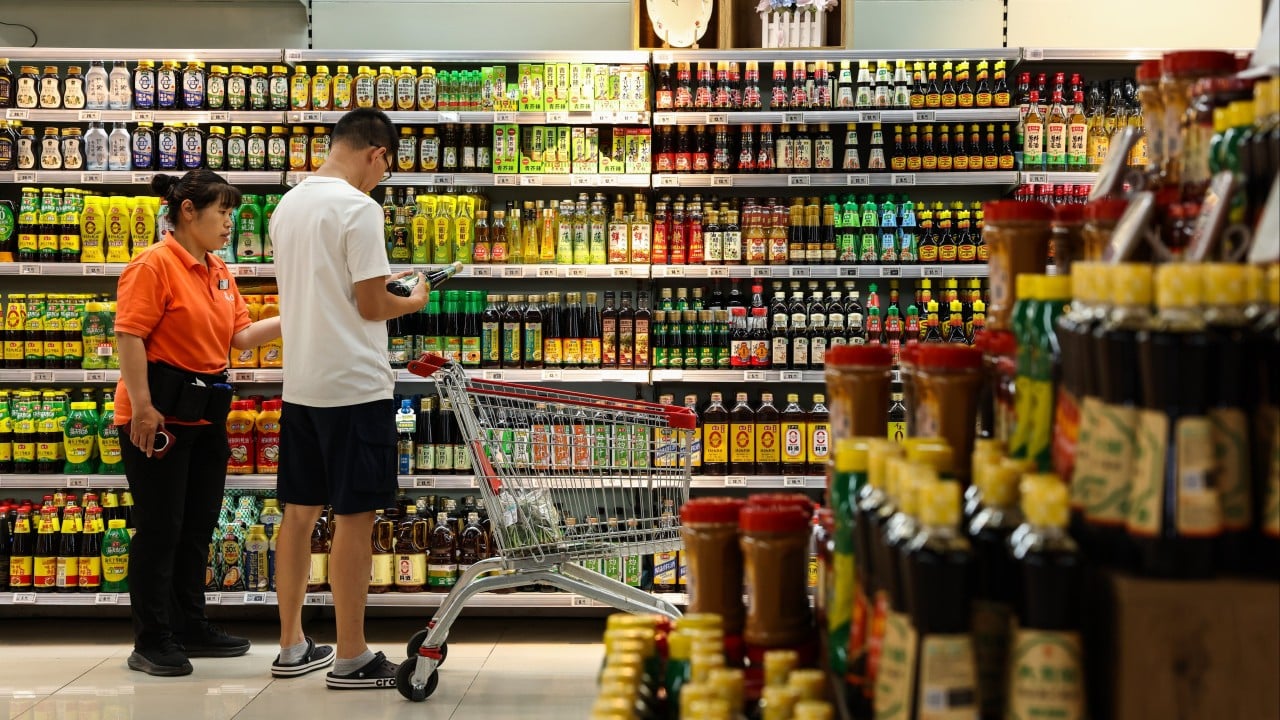
Cindy Wang, a young woman living in Guangzhou, has found a new favorite shopping destination: a community store that has opened near her home. Unlike the larger supermarkets, this small outlet offers lower prices and a wider selection of fresh groceries. Wang, who is in her twenties, frequently visits the store after work to purchase items such as milk, beer, and mangoes at affordable rates. "It's convenient and enjoyable, and I can still have a decent shopping experience without spending too much," she remarks.
Community stores are rapidly gaining popularity in China's retail sector as consumers shift away from traditional big-box supermarkets. These smaller neighborhood outlets provide a combination of lower prices and quick delivery services, making them more appealing to shoppers. Analysts point out that community stores offer a broader range of fresh produce compared to convenience stores, while also being more accessible than supermarkets.
Major Chinese retail companies are expanding their presence in the community store market. Meituan, a food delivery giant, operates a nationwide chain of community stores under the name Happy Monkey. JD.com, another major e-commerce firm, also has its own network of community stores. US retailer Walmart launched its community store initiative last year, opening around 20 locations.
Alibaba Group Holding has been focusing on neighbourhood grocery stores since 2024 through its Freshippo NB brand, which now operates nearly 500 outlets across the country.
These new community stores are particularly attractive to consumers who are being cautious with their spending amid China's economic slowdown. Inflation has been relatively low in China, with consumer prices increasing by only 0.8 percent year-on-year in August. Sheng, a senior research director at JLL East China, notes that consumers are prioritizing value for money and are looking for a balance of convenience, quality, and affordability when purchasing daily essentials.
Additionally, Chinese families are increasingly opting for smaller, more frequent purchases rather than stocking up on large quantities, a trend driven by the rise in smaller households and the preference for ready meals and eating out. Chen Jinni, an IT engineer living in Shenzhen, exemplifies this shift, stating that he has not visited a shopping mall in years and now relies on community stores for his grocery needs.
Written by urgent.news from SCMP Business's reporting — not their text. Machine-written — may contain errors; check the original before relying on it.