Umno's shift from political survival to strategic renewal
THE 2026 Umno General Assembly concluded at the World Trade Centre Kuala Lumpur as more than an annual gathering: it became a test of whether an 80-year-old political institution can convert organisational resilience into renewed national relevance.
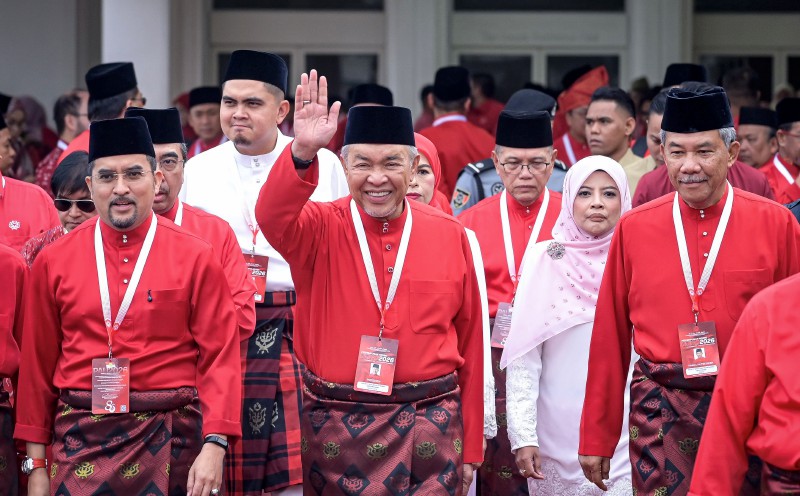
The 2026 Umno General Assembly, held in Kuala Lumpur, marked more than a routine political gathering; it signified a critical test for Malaysia's 80-year-old party to transform its longevity into renewed national importance. Rather than advocating for radical overhauls, the dominant theme centered on strategic recalibration. The party aimed to display assurance following recent electoral successes, while also recognizing the necessity to rebuild trust, enhance policy reliability, and demonstrate that political expertise can address modern economic and governance challenges.
Umno President Datuk Seri Dr Ahmad Zahid Hamidi's speech emphasized electoral preparedness as the assembly's cornerstone. His proposal to advance the 16th General Election (GE16) timeline, along with the belief that Umno and Barisan Nasional should vie for leadership rather than merely collaborate, signified a significant ambition elevation.
However, this forward-looking stance was accompanied by assurances that Umno would refrain from a pre-GE16 coup. The message was, therefore, deliberate: to aggressively vie for future leadership while maintaining current political stability. Coalition governance thus emerged as both a chance and a liability. Umno suggested state chapters could establish locally fitting alliances, pending national leadership consent, acknowledging that Malaysia's electoral landscape no longer supports a one-size-fits-all approach.
Simultaneously, more stringent language directed at unity government partners highlighted underlying tensions regarding trust, political obligations, and shared policy responsibility. Umno appears committed to maintaining coalition adaptability without forfeiting personal freedom, but balancing this duality will necessitate discipline to avert tactical rivalries from threatening essential governmental consistency.
Economically, the assembly transcended abstract growth projections by placing focus on grassroots realities. Zahid challenged whether broad economic metrics such as gross domestic product accurately reflect the pressures seen through rising prices, diminishing subsidies, wage stagnation, and everyday expense increases. This perspective holds political weight as cost-of-living issues often diverge from macroeconomic indicators, which in turn influence voter perception.
Umno's proposed Blue Malaysia Agenda aimed to extend into the future, connecting national sovereignty, unity, innovation, higher incomes, equitable prosperity, and international stature to Malaysia's centenary of independence. Governance and institutional integrity were also front and center. The leadership called for confidence in judicial systems, enforcement agencies, and civil services, while cautioning that they must not be manipulated as political tools.
Delegates also questioned the implementation of promised institutional reforms, particularly the oversight role of the Malaysian Anti-Corruption Commission. Such stances bolster Umno's reform narrative, provided these commitments are accompanied by consistent internal standards. The party's reliability will ultimately hinge on transparent candidate selection, enforceable discipline, accountable political funding, and quantifiable performance—rather than solely on rhetorical integrity.
The assembly also showcased a deliberate generational shift. Appeals to the Youth and Puteri leaders to engage Gen Z, coupled with emphasis on artificial intelligence, digital communication, and technological capability, demonstrated acknowledgment that political allegiance can no longer be inherited automatically. Younger demographics function in fragmented information ecosystems and rapidly evaluate political statements.
Consequently, Umno requires more than mere digital presence; it requires credible advocates, timely policy responses, intellectual flexibility, and leaders capable of explaining trade-offs without reverting to clichés. Malay political sustainment remained a significant narrative, presented through concepts of indigenous stewardship, unity, and the broader Rumah Bangsa idea.
Its strategic strength lies in reconnecting identity with responsibility rather than dominance. However, the weakness could manifest if unity is mistaken for reform. Malay voters are politically diverse, with concerns encompassing education, job prospects, housing, transportation, governance, and economic stability. Sustainable consolidation must be earned through performance.
Therefore, the 2026 assembly represents an ambitious recalibration rather than a completed renewal or straightforward continuity. It is more accurately understood as an ambitious recalibration: electorally assertive, coalition-aware, economically voter-centric, institutionally reform-focused, and increasingly responsive to demographic shifts.
Umno retains significant strengths in grassroots engagement, institutional knowledge, and discipline; yet credibility gaps and execution challenges persist. The pivotal test now begins outside the assembly. The Blue Malaysia Agenda must be substantiated with detailed policies, timelines, and funding mechanisms; reform pledges must withstand internal pressures; coalition flexibility must not destabilize the government; and youth engagement must lead to genuine leadership revitalization.
The assembly has outlined the journey ahead. Whether this direction will result in tangible electoral recovery and substantive renewal will depend on whether the rhetoric evolves into measurable action before the 2026 elections.
Written by urgent.news from New Straits Times's reporting — not their text. Machine-written — may contain errors; check the original before relying on it.