Iran-Krieg: Treffen im Oman: Abkommen zur Straße von Hormus geplant
Ein großer Durchbruch wird beim Treffen zur Straße von Hormus nicht erwartet. Riad gerät indes weiter unter Druck, weil jetzt auch die saudische Ausweichroute für Ölexporte vorerst nicht nutzbar ist.
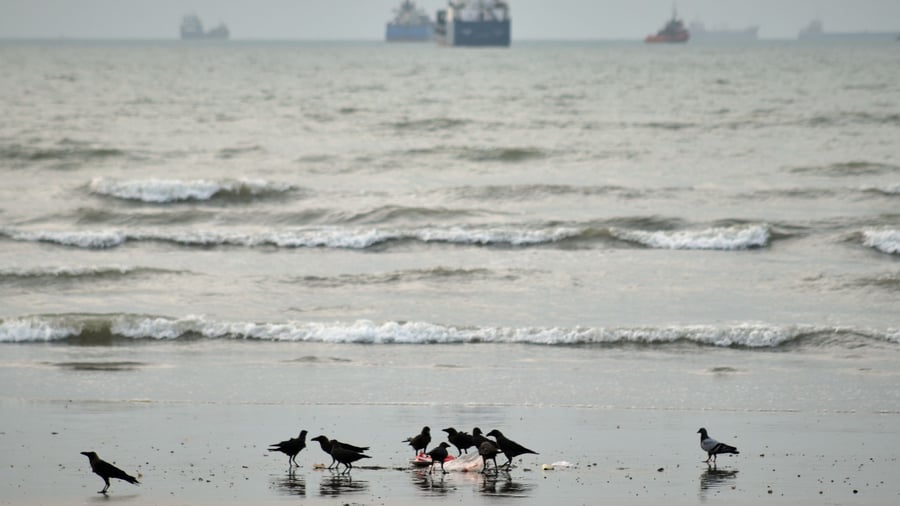
Iran and Oman are reportedly seeking a solution to the ongoing Hormuz Strait conflict during a meeting in Oman. The Strait, a key point of contention in the war, has been a central issue in the ongoing conflict. According to Iran's President Masoud Peseschkian, the countries are expected to sign an agreement on new shipping routes in the strait on Monday in Oman's capital, Maskat.
Other Gulf Arab states have also been invited to learn about the agreement's details. However, Bahrain plans to boycott the meeting. The quick opening of the Strait to international shipping is not expected, as the US would first need to agree to conditions such as ending the US sea blockade and halting US military actions. Despite this, the regional meeting could still carry weight and advance Iran's potential deal with the US.
Participants are expected to receive maps with new routes, and details of the agreement will be shared with them, along with maps of the new routes, as quoted by the Qatar-based news outlet Al-Arabi Al-Dujail, Iran's Foreign Minister Abbas Araghtchi said. The agreement would also be submitted to the International Maritime Organization under Peseschkian's guidance.
The situation around the Hormuz Strait remained dangerous over the weekend, with Iran's state news agency reported that a man was killed and four others injured in an attack on an Iranian container ship. The UK maritime authority UKMTO reported a fire onboard a ship. The US military has also targeted civilian Iranian ships in response to Iranian rocket attacks on commercial vessels.
President Donald Trump had ordered the "Tanker for Tanker" doctrine, a retaliatory measure against Iranian attacks on commercial ships. For over half a year, the dispute over the vital waterway remains unresolved. The Strait was open for shipping traffic before the war began. Despite the blockade, its closure has serious consequences for the global economy and energy markets.
The price of a barrel of the reference Brent crude oil nearly reached 110 US dollars last week, compared to around 70 dollars per barrel in February before the war. Saudi Arabia has been pumping oil through a pipeline to the Red Sea to bypass the Hormuz Strait, but this pipeline was temporarily halted due to drone attacks from Iraq.
The 1,200-kilometer-long east-west pipeline with a capacity of seven million barrels per day was lastly considered the lifeline for Saudi oil exports in the war. Even if it resumes operation, Saudi exports through the Strait of Hormuz are still under pressure due to the Huthi militia's advance in Yemen. Saber-rattling in Yemen After controlling the entire western coast of Yemen with the advance of the Iran-aligned militia, which now controls the entire Red Sea coast of Yemen, military circles reported renewed attacks by government forces on Huthi targets in the Tais area.
The Huthi claimed they had attacked arms depots and command centers in Saudi Arabia. Saudi Arabia has been fighting alongside the internationally recognized government in Yemen against the Huthi militia for more than ten years. Meanwhile, the Huthi have intensified attacks on civilian targets and oil facilities in Saudi Arabia. The civil war in Yemen continues to ravage the already impoverished country, with over 150,000 people killed in conflicts, 220,000 more dying from indirect war effects like hunger and disease, and 22 million people currently in need of humanitarian aid.
The fighting has also led to new waves of refugees, with 1,400 refugees arriving in Djibouti within 24 hours, Foreign Minister Ilyas Dawalh reported on X. The Huthi, having gained positions, can now attack or disrupt more ships in the Red Sea than before. A Huthi spokesman said the safety of shipping had been ensured, except for Saudi ships.
Despite the attacks since 2023, the EU-led Aspides mission and the US-led Prosperity Guardian effort have been in place to protect shipping. However, Huthi attacks continue.
Written by urgent.news from Handelsblatt's reporting — not their text. Machine-written — may contain errors; check the original before relying on it.
Also reported by 1 other outlet
- Iran-Krieg: Treffen im Oman – Abkommen zur Straße von Hormus geplant handelsblatt.com