Ipoh limestone hills: Gone from the skyline, but not from his camera
IPOH: Before a limestone hill disappears from the Kinta Valley landscape, Ching Boon Tat makes sure he has photographed it.
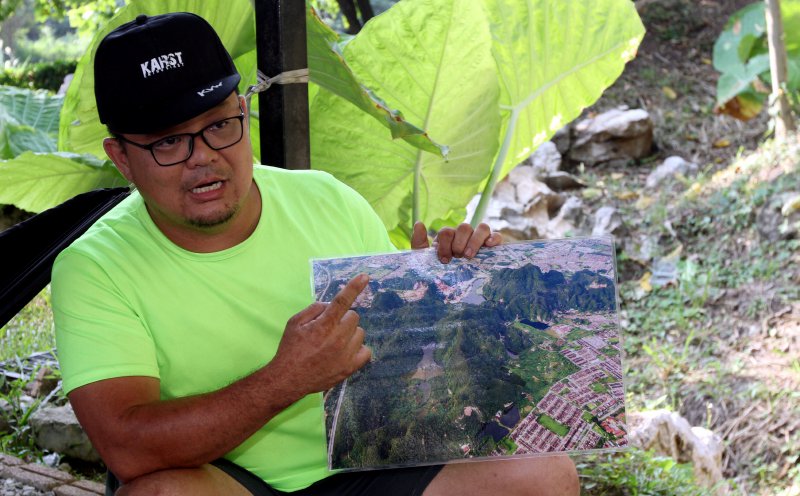
Ipoh, a city nestled in the Kinta Valley, has long been home to a 43-year-old mechanic named Ching Boon Tat. Before the limestone hills of the valley vanish from view, Ching ensures that he has captured their essence through his camera lens. These photographs serve as more than mere images; they are a tangible record of the natural heritage that may otherwise be lost to time.
As the world commemorates the inaugural International Day of Caves and Karst, Ching expresses his hope that greater attention will be given to the caves, limestone hills, and underground systems that have shaped the Kinta Valley for millions of years.
Fondly known as Ah Tat, Ching has dedicated years to documenting the limestone hills, caves, rivers, and other geological features across the valley. His interest in these natural wonders stemmed from his years of observing the valley's rivers, caves, and limestone formations. His profession as a mechanic, which involves repairing engines and dealing with corrosion, has honed his ability to notice how materials change and deteriorate over time.
This keen observation eventually led him to explore the Kinta Valley, where he began photographing its landscape and keeping detailed field notes.
Ching's photographic work has revealed remarkable details, such as fossils embedded in limestone, which are remnants of ancient marine life that existed hundreds of millions of years ago. For Ching, these photographs are not just images; they are a testament to the land's history and a reminder of its geological and environmental significance.
In response to the need for greater awareness, Ching founded Kinta Valley Watch in 2018. This volunteer group focuses on documenting the valley's limestone landscape, mapping river corridors, and sharing information with the public.
Ching emphasizes that the Kinta Valley should be viewed as an interconnected landscape rather than a collection of isolated features. The valley stretches from Sungai Siput in the north to Kampar in the south, encompassing cities such as Ipoh, Tambun, Jelapang, and Gopeng. He stresses that limestone is a non-renewable resource, and once a hill is quarried or destroyed, the caves, fossils, and underground water systems cannot be replaced.
The International Day of Caves and Karst serves as a timely reminder for people to appreciate the hidden wonders beneath and around the limestone landscapes they encounter daily.
For Ching, documentation is a crucial aspect of conservation. Despite lacking formal training in geology and facing financial constraints, he continues to document the valley's landscape through photography and extensive field notes. His growing collection serves as a visual archive of the Kinta Valley, including areas that have undergone changes or may no longer exist.
Ching reminds us that these limestone hills are not just rocks but the history of nature. Once they are gone, there is no way to restore what has been lost.
Written by urgent.news from New Straits Times's reporting — not their text. Machine-written — may contain errors; check the original before relying on it.