Hong Kong teen battling rare disease creates AI avatar to ensure his story lives on
A Hong Kong teenager with a rare muscle-wasting disease has created an AI version of himself, hoping the digital twin can continue sharing his life story and message of perseverance even after he is gone. Chen Tsz-kin, 17, unveiled “AI Tsz-kin” at the University of Hong Kong (HKU) on Sunday, weeks before his 18th birthday – an age the student said he had long feared reaching because he was once…
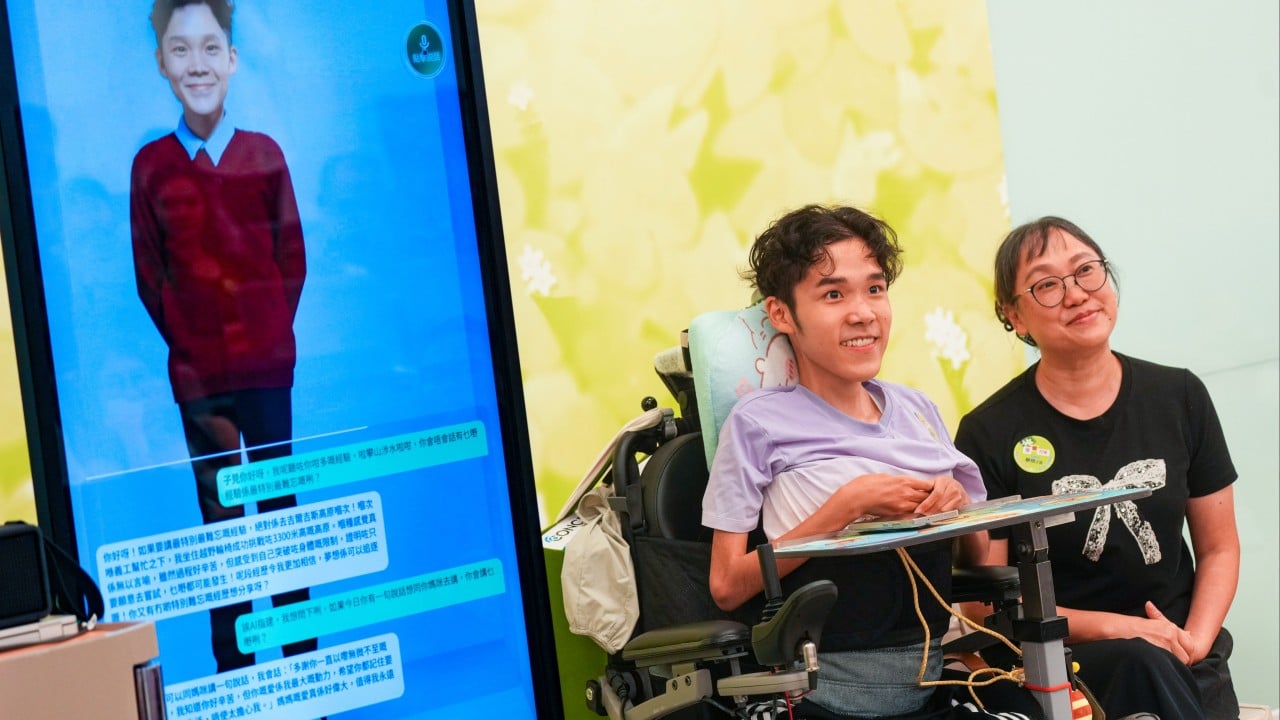
A 17-year-old Hong Kong student, Chen Tsz-kin, who suffers from Duchenne muscular dystrophy, has developed an AI version of himself to ensure his story and message of perseverance can continue even after he passes away. Tsz-kin unveiled "AI Tsz-kin" at the University of Hong Kong (HKU) on Sunday, just weeks before his 18th birthday, an age he feared reaching due to the disease's average life expectancy.
Despite his condition, which causes progressive muscle weakness and requires him to use a wheelchair, a back brace, and a night-time breathing machine, Tsz-kin has led an adventurous life, traveling to remote areas, completing expeditions, and engaging in activities like paragliding and diving. His health has deteriorated in recent months, with bouts of pneumonia leaving him fearing for his life.
To create the AI, he collaborated with Hong Kong-based Digital Domain, using 400 facial images, voice recordings, and his life experiences over six weeks. The AI can answer questions about his travels, favorite foods, views on death, and relationship with his mother. At the unveiling, AI Tsz-kin expressed gratitude to his mother and conveyed his message of hope and perseverance.
Digital Domain's CEO, William Wong, emphasized that the aim was not to replace Tsz-kin but to help him share his story and reduce physical burden. Tsz-kin, who plans to study social work, stressed that while his AI cannot replicate the emotional impact of a living person, the hope is that others will remember his lessons and not give up when facing difficulties.
Written by urgent.news from South China Morning Post's reporting — not their text. Machine-written — may contain errors; check the original before relying on it.