Geldanlage: Klimawandel: Welche Immobilien an Wert verlieren, welche gewinnen
Extremwetter kann für Eigentümer künftig gravierende Folgen haben. Welche Regionen in Deutschland besonders gefährdet sind und welche Immobilien schon heute darunter leiden.
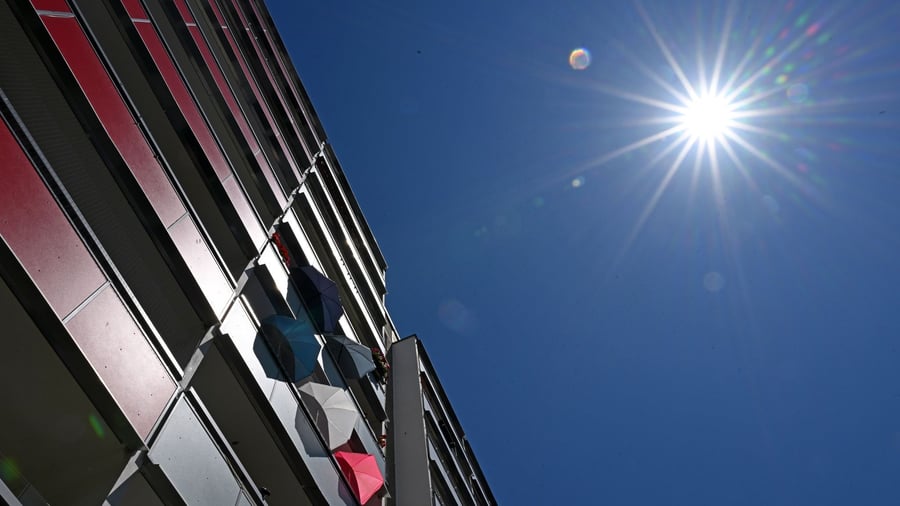
A recent study by Wüest Partner predicts that by 2050, up to 68% of buildings in Germany may face high heat stress. This risk is particularly pronounced in southern and central Germany, as well as in densely populated urban areas. However, the risk of heavy rainfall is also increasing, especially in southern Germany and the central hill regions.
Sven Bienert, director of the sustainability competency center at the International Real Estate Business School in Regensburg, notes that the risk depends more on the specific micro-location and the object's vulnerability than on the region itself. High water and heavy rainfall risks can vary significantly within a short distance, while heat risk is more affected by the density and shading of areas.
The study from Value AG found that houses located in particularly heat-exposed areas tend to depreciate more than the average. This drop is currently at 1.4%, representing the first signal of this trend. Similar effects are observed in cases of flooding, with properties in identified flood zones seeing price reductions even without a specific event. The impact extends to financing as well, with early European studies showing that physical climate risks are already influencing lending standards and financing conditions.
Energy efficiency has become a significant factor in the pricing and renting of properties throughout the German market. The Postbank and Hamburg World Economy Institute found that the most energy-efficient apartments (grades A+ to D) are valued at about €1,337 per square meter, while less efficient ones (grades E to H) are valued at between €1,000 and €1,193 per square meter.
In some major cities, the price difference can be as high as €1,893 per square meter. In 83 of the studied regions, the average price premium for energy-efficient apartments is over €1,000 per square meter, with the most significant increase being in Miesbach, Bavaria, at €3,133 per square meter.
The availability of suitable properties is also being affected by climate change. Dachwohnungen (attics) are becoming less desirable due to heat waves, with ImmoScout24 reporting a significant drop in demand for these properties in 2025. The analysis suggests that the gap between demand for attic apartments and comparable ground-floor apartments will continue to widen, especially if sufficient heat protection measures are not in place.
For instance, attic apartments without heat protection saw 40% fewer inquiries in June and July 2026 compared to ground-floor apartments in the previous year. With the introduction of heat protection measures, the difference in demand is much smaller, currently standing at 22% and 20% in the previous year.
Written by urgent.news from Handelsblatt's reporting — not their text. Machine-written — may contain errors; check the original before relying on it.