For China, H-6N bomber enhances nuclear deterrence and second-strike capability
Last month, the People’s Liberation Army (PLA) released footage showing its H-6N bomber flying with a nuclear-capable Jing Lei-1 (JL-1) air-launched ballistic missile (ALBM), offering a rare look at China’s airborne nuclear strike capability. The H-6N is one of the latest modernised variants of the H-6, the country’s only strategic bomber. Its flight carrying the ALBM during a joint anti-ship…
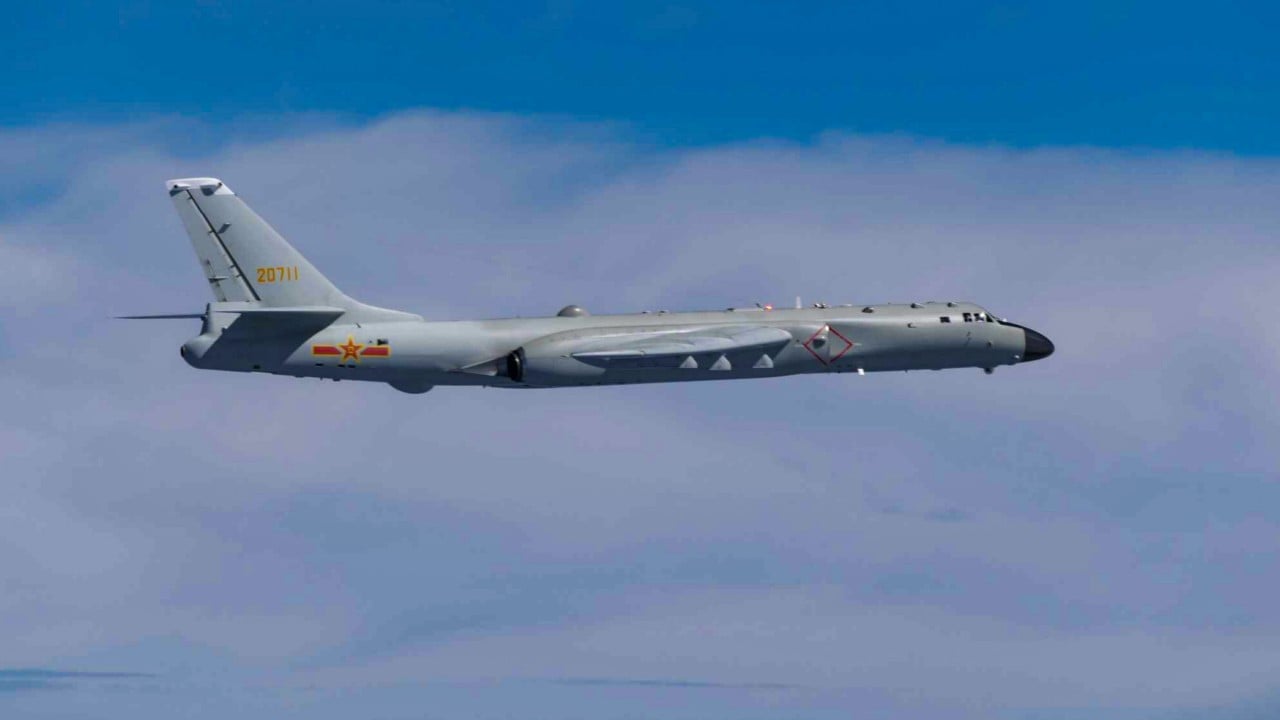
Last month, footage emerged showing China's H-6N bomber in action alongside a nuclear-capable Jing Lei-1 (JL-1) air-launched ballistic missile (ALBM), providing a rare glimpse into the country's airborne nuclear strike capability. The H-6N is a modernized version of the H-6, which is the only strategic bomber in China's arsenal.
In a documentary aired by state broadcaster CCTV marking the PLA's 99th anniversary, the H-6N carrying the ALBM was featured during a joint anti-ship exercise. This development comes at a time when China is expanding the scope of its H-6 bombers' activities beyond its immediate surroundings.
In July 2024, two H-6s were spotted conducting a joint patrol near Alaska for the first time alongside their Russian counterpart, the Tu-95. The encounter prompted the US-Canadian North American Aerospace Defense Command to scramble their fighter jets. This incident highlights China's growing nuclear deterrence and second-strike capability.
The H-6 has been serving as Beijing's primary strategic strike aircraft for the past six decades. With the JL-1 ALBM mounted on the H-6N, China is now considered to have completed its nuclear triad, thereby enhancing its nuclear deterrence and second-strike capability.
The H-6 was manufactured by the Xian Aircraft Industrial Corporation and is based on the Soviet-made Tu-16 strategic heavy bomber, one of the earliest Soviet jet bombers. China began licensing production of the Soviet-made warplane in 1957, after signing an agreement with Moscow. The first Chinese-assembled Soviet Tu-16 bomber took off in 1959 and was transferred to the PLA.
Following the Sino-Soviet split in the 1960s, China had to build the H-6 independently, with the first fully domestically produced bomber making its maiden flight in December 1968. To date, China has produced over 230 H-6 bombers, with modernized variants still in production. The H-6 has been deployed by China to Egypt and Iraq. Iraq's fleet was destroyed during the first Iran-Iraq war, while Egypt retired its fleet in 2000.
The H-6K and H-6N variants serve different roles within the PLA. The H-6K, also known as the "god of war," is a conventional bomber responsible for launching precision-guided land-attack cruise missiles and striking maritime targets using anti-ship missiles. On the other hand, the H-6N, dubbed the "god of thunder," is designed to carry the nuclear-capable JL-1 ALBM.
The H-6N variant was reportedly introduced in 2018 and was first publicly displayed at China's 2019 military parade. It features a modified fuselage and a recessed underbelly for carrying oversized external payloads, such as the JL-1 ALBM. The aircraft also boasts an aerial-refueling probe, which allows it to extend its combat radius to over 3,500km when refueled by a YY-20A tanker aircraft.
The H-6N and JL-1's introduction to China's nuclear arsenal makes the country one of only three nations worldwide to operate nuclear-capable strategic bombers, alongside the United States and Russia. While China's second-strike retaliatory capability primarily relies on its land-mobile ICBMs and ballistic missile submarines, the airborne platform adds operational flexibility.
The H-6N, in combination with the ALBM, provides a total strike radius exceeding 11,000km, extending the PLA's capabilities into the western Pacific Ocean. This aerial reach poses a significant threat to US territory and could potentially reach US territory in the future.
Written by urgent.news from South China Morning Post's reporting — not their text. Machine-written — may contain errors; check the original before relying on it.
This story
This is one outlet's version. Read the fullest account.