Election polls can inform voters — or become political weapons
As South Africa heads towards the 2026 local government elections, opinion polls will increasingly shape political narratives. But polls are measurements, not predictions, and their value depends on methodology, transparency and how their findings are interpreted by parties and the media.
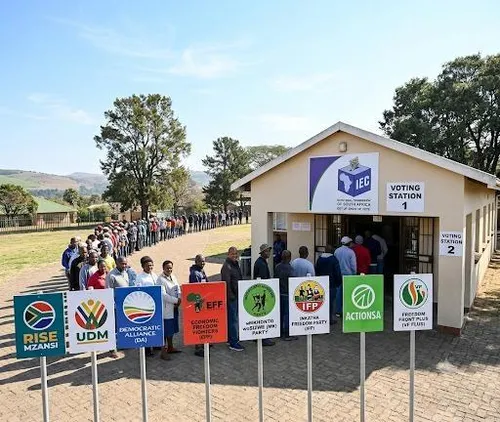
South Africa is preparing for another election season where opinion polls will serve a dual purpose: measuring public sentiment and influencing political narratives. A poll predicting the ANC lower than expected could be met with scrutiny from its supporters, and another showing the DA rising in Johannesburg might be disseminated prematurely. MK will likely embrace favorable KwaZulu-Natal findings as evidence of the old order weakening, while the EFF will dismiss unfavorable surveys as establishment propaganda.
Newspapers will turn even slight movements within the margin of error into stories of dramatic shifts, elections, and political earthquakes. The key lesson from the 2024 election is not that polling failed, but that it demands careful analysis. The better pollsters were, in general, remarkably close to the final result, with ANC at 40.18%, DA at 21.81%, MK at 14.58%, and EFF at 9.52%.
However, there were discrepancies, such as early surveys failing to capture late movements, distorted turnout assumptions, and the rapid rise of MK causing earlier numbers to become outdated.
Yet, the central question remains: How does polling become a political weapon without being corrupted? The answer lies in reading and understanding the methodology behind the polls. Polls are measurements taken at a specific moment from a particular sample using a specific method, and they should be treated as evidence rather than definitive results.
The interpretation that follows is what drives political discourse. Factors such as the sample size, voting method, treatment of undecided voters, and turnout assumptions must all be considered when evaluating a poll's implications for specific districts like Johannesburg, Tshwane, or eThekwini.
Transparency in funding and methodology is crucial to prevent misuse. If a media organization or politically connected foundation funds a poll, this should be clearly disclosed. The controversy surrounding the Social Research Foundation and Victory Research, for example, highlights the importance of scrutinizing the independence of pollsters, even if their previous work was competent and honest. While accuracy does not erase potential issues, it is essential to address them through transparency.
Ultimately, the debate around South Africa’s polling should separate the competence and integrity of the research from how that research is politically utilized. If a poll indicates a trend, such as the national percentages for ANC and DA, it's vital to delve into the specifics. Who was surveyed—registered or likely voters? What was the sampling method?
What assumptions were made about voter turnout? These details can reveal whether a reported shift in support is meaningful or simply within the margin of error. Even a seemingly small change in percentages can have significant political implications, yet the narrative often overshadows the numbers.
In conclusion, a poll is a snapshot of the electorate taken through a specific lens. Its true power lies in the interpretation that follows. By remaining vigilant about methodological details and transparently disclosing funding and affiliations, we can prevent polls from being weaponized and instead use them as valuable tools for understanding political realities.
Written by urgent.news from IOL's reporting — not their text. Machine-written — may contain errors; check the original before relying on it.