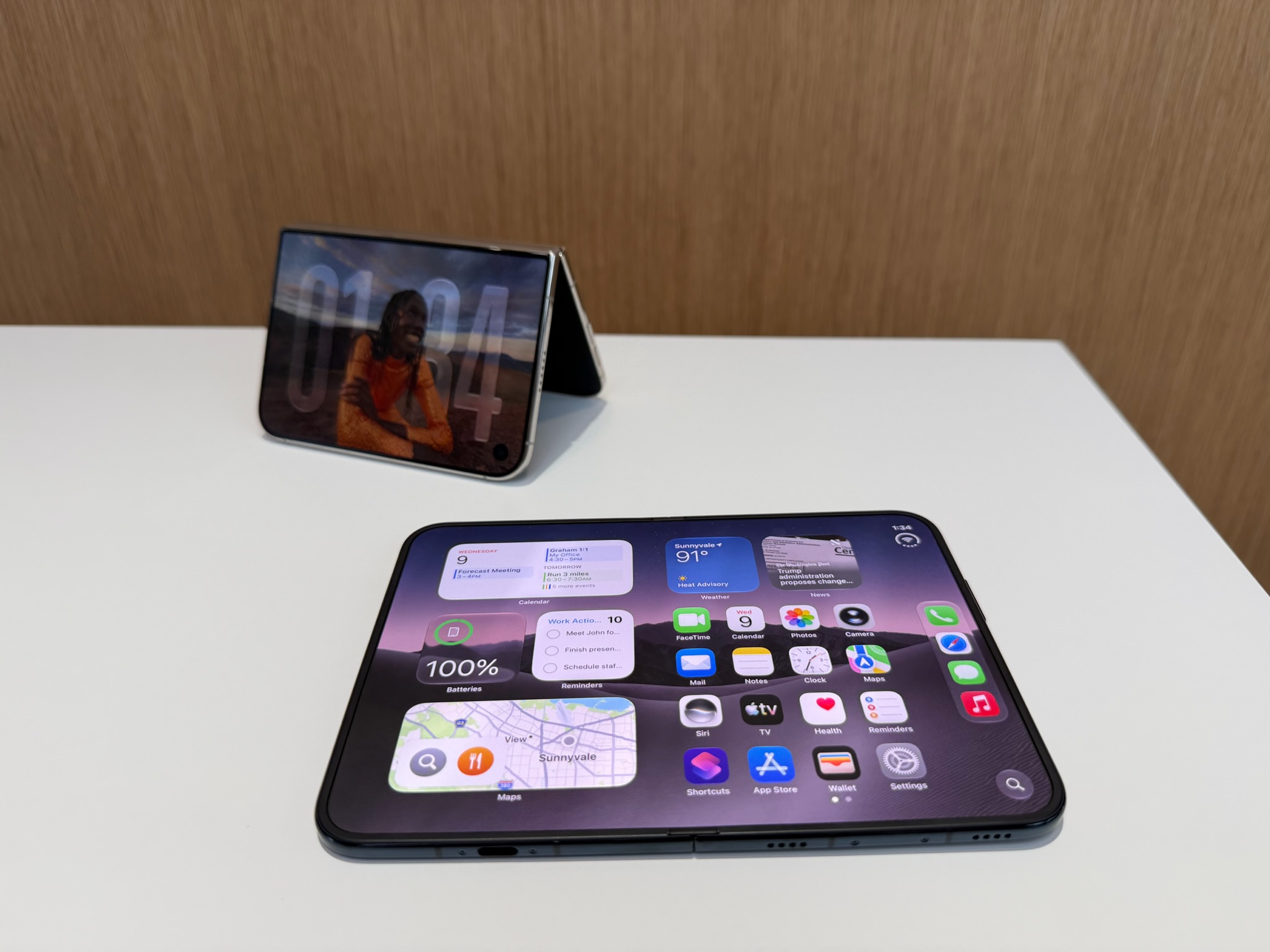
Apple’s foldable iPhone could make the format the new normal, Gurman says
The Samsung Galaxy Z Fold 8 and the upcoming iPhone Duo both showcase foldable designs, but Samsung's device edges out Apple in several key areas. The Z Fold 8 is notably lighter and thinner, weighing 201 grams (7.09 ounces) compared to the iPhone Duo's 254 grams (8.96 ounces), and unfolding to a thickness of 4.5mm versus Apple's 5.2mm.
This lighter weight translates to a more comfortable user experience. The Galaxy Z Fold 8 is also more affordable, starting at $1,899 for the 256GB model, while the iPhone Duo begins at $1,999. The Fold 8 also surpasses the Duo in multitasking capabilities, allowing up to four windows and floating app windows, unlike Apple's two Split View windows.
Samsung's DeX feature enables users to transform their foldable into a desktop-like interface, a capability absent from the iPhone Duo, which relies solely on its display. The Galaxy Z Fold 8 offers flexibility in SIM options, supporting both eSIM and physical SIM cards, while the iPhone Duo exclusively employs eSIM technology worldwide.
Lastly, for those concerned about AI capabilities, Samsung's Z Fold 8 offers a 16GB RAM option, especially advantageous for emerging AI applications, whereas the iPhone Duo remains at a fixed 12GB.
Written by urgent.news from Tom's Guide's reporting — not their text. Machine-written — may contain errors; check the original before relying on it.
This story
This is one outlet's version. Read the fullest account.
- Samsung Galaxy Z Fold 8 vs iPhone Duo — 7 ways Samsung's wider foldable beats Apple tomsguide.com
- Apple is reportedly working on iPhone game controllers theverge.com
- Apple Intelligence could be the key to cram Face ID into future iPhone Duo appleinsider.com
- iPhone Duo will usher foldables into the mainstream, just as iPhone did with smartphones; sources: iPhone game controllers will launch under the Beats brand (Mark Gurman/Bloomberg) bloomberg.com
- Apple is designing its own game controllers for iPhone, could be Beats branded 9to5mac.com
- Why your iPhone may not get iOS 27, Apple's next major update coming this week thehill.com