Sindh local govt law hits a roadblock as opposition cries foul
MQM-P, PTI and JI accuse Sindh government of seeking to curb elected mayors’ powers and empower administrators
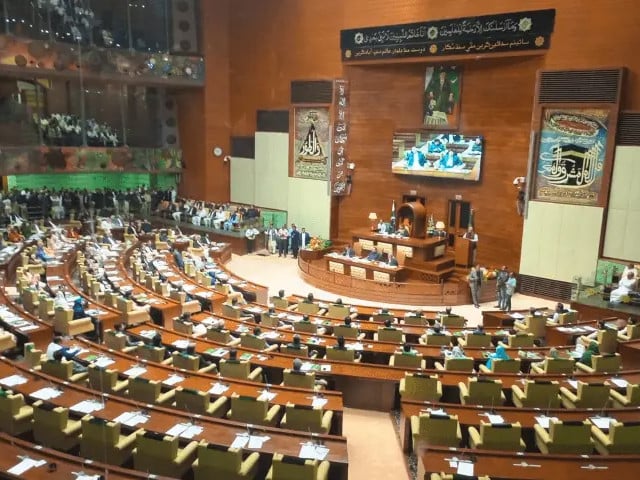
A contentious overhaul of Sindh's local government law faced strong opposition from major political parties on Saturday. The MQM-P, PTI, and Jamaat-e-Islami all rejected key government proposals, arguing that the amendments would curtail the powers of elected mayors and facilitate the appointment of unelected administrators. The parliamentary committee examining the proposed amendments included representatives from all participating parties.
The government's proposal aimed to establish a mechanism for power transfer after local representatives' terms ended, with the Election Commission of Pakistan being notified 120 days prior to local government elections. This would allow time for delimitation and other electoral preparations. Once an election schedule was announced, an administrator would handle day-to-day affairs, while the Election Commission would manage the formal process.
Opposition lawmakers vehemently rejected the government's approach. MQM-P lawmaker Taha Ahmed accused the administration of treating the Sindh Assembly as a "personal domain" and resisting power transfer to elected local representatives. He demanded full powers for mayors under Article 140-A of the Constitution and criticized the proposed removal of the mayor's authority over key areas such as master planning, solid waste management, and the Water Board.
Ahmed warned that MQM-P would organize nationwide protests if the controversial legislation was not halted.
Iftikhar Alam of MQM-P echoed similar concerns, stating that making mayors administrators could compromise election transparency, especially if elections were delayed due to unclear definitions of the administrator's tenure. He also highlighted the failure to address power transfer to local governments in accordance with Supreme Court directives, describing the proceedings as a "joke."
PTI's Shabbir Qureshi rejected the government's proposals, particularly the suggestion of unelected representatives in union councils. PTI advocated for the appointment of internal administrators and criticized existing arrangements for solid waste management, alleging that powers were taken away from the Water Board and the Sindh Building Control Authority. Qureshi called for the implementation of the 2013 Sindh Local Government Act in line with Article 140-A and Supreme Court judgments.
Jamaat-e-Islami's Muhammad Farooq argued that Sindh already had a local government law but the system remained powerless because authority was not genuinely devolved. The party proposed holding local government elections within 120 days and rejected appointing administrators, but their amendments were not accepted. Farooq also rejected the proposed oversight mechanism, stating that none of JI's proposed amendments from three months ago had been implemented, and warned of legal action if the proposed amendments were enacted.
Written by urgent.news from The Express Tribune - Pakistan's reporting — not their text. Machine-written — may contain errors; check the original before relying on it.