From god of beginnings, sutras for nation-building
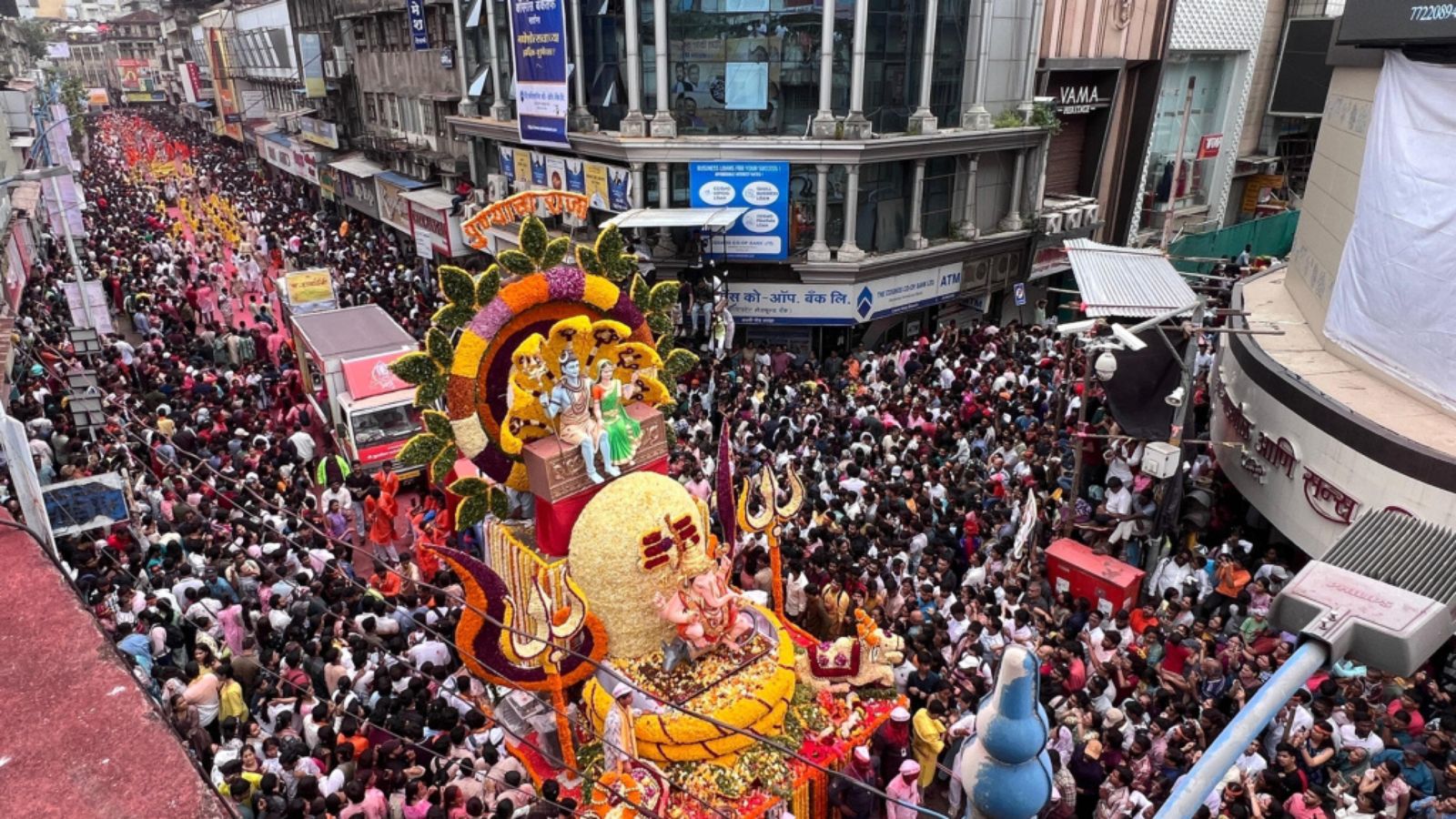
Ganapati is not merely a deity to be revered; he embodies a guiding principle to be embraced fully. As the dhol-tasha signals his arrival, Mumbai and India pause. An elephant-headed, human-bodied idol becomes the focal point of our consciousness. The resonance of this form with contemporary, forward-looking India can be traced back to the Vedas.
In the Rig Veda, he is identified as "Brahmanaspati", signifying his role as the "lord of all groups, the wisest of the wise." Before his deification as the god of beginnings, Ganapati was a Vedic concept that organized chaos into order. "Gana" signifies a group, a collective, a system. "Pati" means master. In contemporary management parlance, he is the pioneer of systems thinking.
Each facet of Ganesha symbolizes a guiding principle for nation-building. His elephant head embodies "maha mastaka" - immense intellect, memory, and vision. An elephant does not forget its path, a quality vital for Viksit Bharat to anticipate 25 years ahead, while retaining its roots and adapting to AI, biotech, and quantum advancements.
His ears, "shurpa karna", are akin to winnowing fans, capable of filtering out chaff to retain only the valuable insights amid social media noise, fake news, and polarization. Viveka, the quality of discernment, allows us to listen to all stakeholders - farmers, soldiers, scientists, youth - while retaining only what is true and beneficial for our nation.
Ganesha's curved trunk, "vakra tunda", symbolizes adaptability - his ability to uproot trees and pick up needles signifies flexibility paired with strength. Viksit Bharat will require this adaptability to navigate between border security and welfare. The mouse, "mushaka vahana", is the most profound symbol of Ganesha. Despite being small, the mouse carries him, representing how desire, if unbridled, can consume us.
We must let wisdom guide our desires to avoid destruction. The economy cannot flourish without wisdom, hence Ganesha precedes Lakshmi. The sweet "modak" in his hand symbolizes the sweet fruit of disciplined effort or "purushartha". True nation-building will not be achieved through slogans but through every Indian's tapas, or selfless devotion.
Ganesha is known as "Vighnaharta" - remover of obstacles. However, his Vedic term, "Vighnakarta", signifies that he creates obstacles to challenge our egoistic nature. Every hindrance in our path to development - corruption, casteism, pollution, lifestyle diseases - are, in fact, his grace, steering us towards the correct path. As the ecological Ganapati, we must allow the clay to return to earth, ending the practice of polluting water during visarjan.
The Vedas counsel "mrittiya mrittim" - from earth to earth. The economical Ganapati Bappa will utilize millets for modaks, linking farmers to festivals and promoting atmanirbharta. Ultimately, before initiating any venture to build Viksit Bharat - a startup, a lab, a school - one must invoke Ganapati's principle: Will this bring order or chaos?
Will it serve the collective or only me? Ganesh Chaturthi is not merely a noisy ten-day celebration; it is a ten-day mental training exercise to achieve sthita pragnya - a state of mental stability and wisdom, much like the calmness within Ganesha's belly, which houses the entire universe. The author, a Mumbai-based endocrinologist and Padmashri awardee, reflects on these teachings to inspire a nation-building ethos.
Written by urgent.news from The Indian Express's reporting — not their text. Machine-written — may contain errors; check the original before relying on it.