Cybercrime law and you
By Idowu Isamotu, Dalhatu Liman & Itodo Daniel Two years after the enactment of the amended version of the Cybercrimes Act 2015, individuals, including journalists, have been targeted, with many arrested and detained. President Bola Ahmed Tinubu had, in February 2024, signed amendments to the Act, including revisions to Section 24 criminalising certain online […]
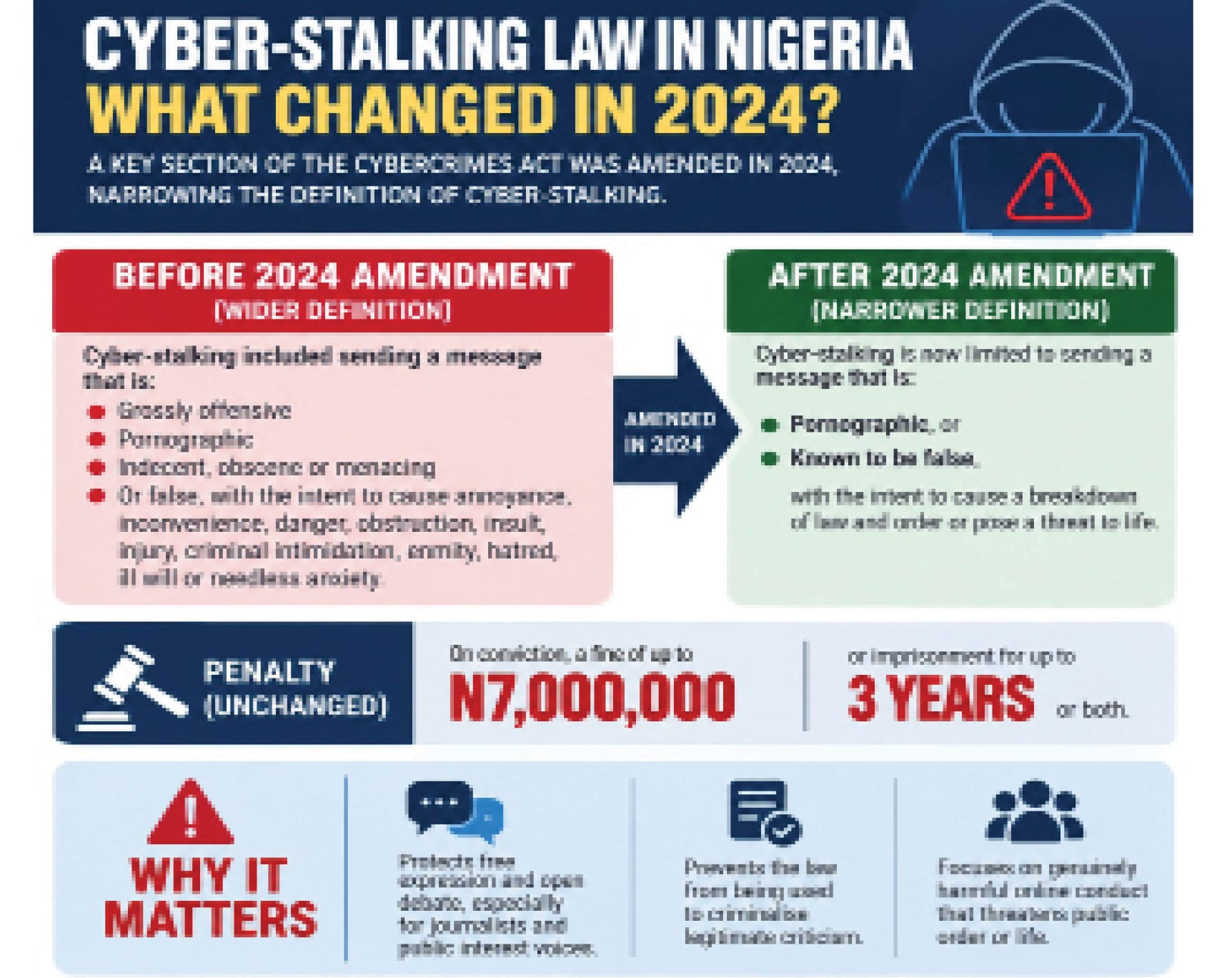
Since its enactment in 2015, Nigeria's Cybercrimes Act has been used to arrest, detain, and prosecute journalists and others who advocate for free speech. Following recent amendments, Section 24 of the law has been described as "contentious" by civil society groups. Despite the amendment, Section 24 and other provisions of the Act remain controversial.
The amended Section 24 now defines cyberstalking as "sending a message by means of a computer system or network that is pornographic, or he knows to be false, for the purpose of causing a breakdown of law and order, posing a threat to life, or causing such a message to be sent." However, legal experts and media rights organisations argue that the amendment has not fully addressed concerns over vagueness, proportionality, freedom of expression, and possible misuse against journalists, activists, and government critics.
Sections 37, 38, 39, 40, 41, and 44 are also identified as provisions of the amended Act that raise significant concerns.
Written by urgent.news from Daily Trust's reporting — not their text. Machine-written — may contain errors; check the original before relying on it.