Column | The stare decisis flip-flop: Flexibility vs judicial chaos
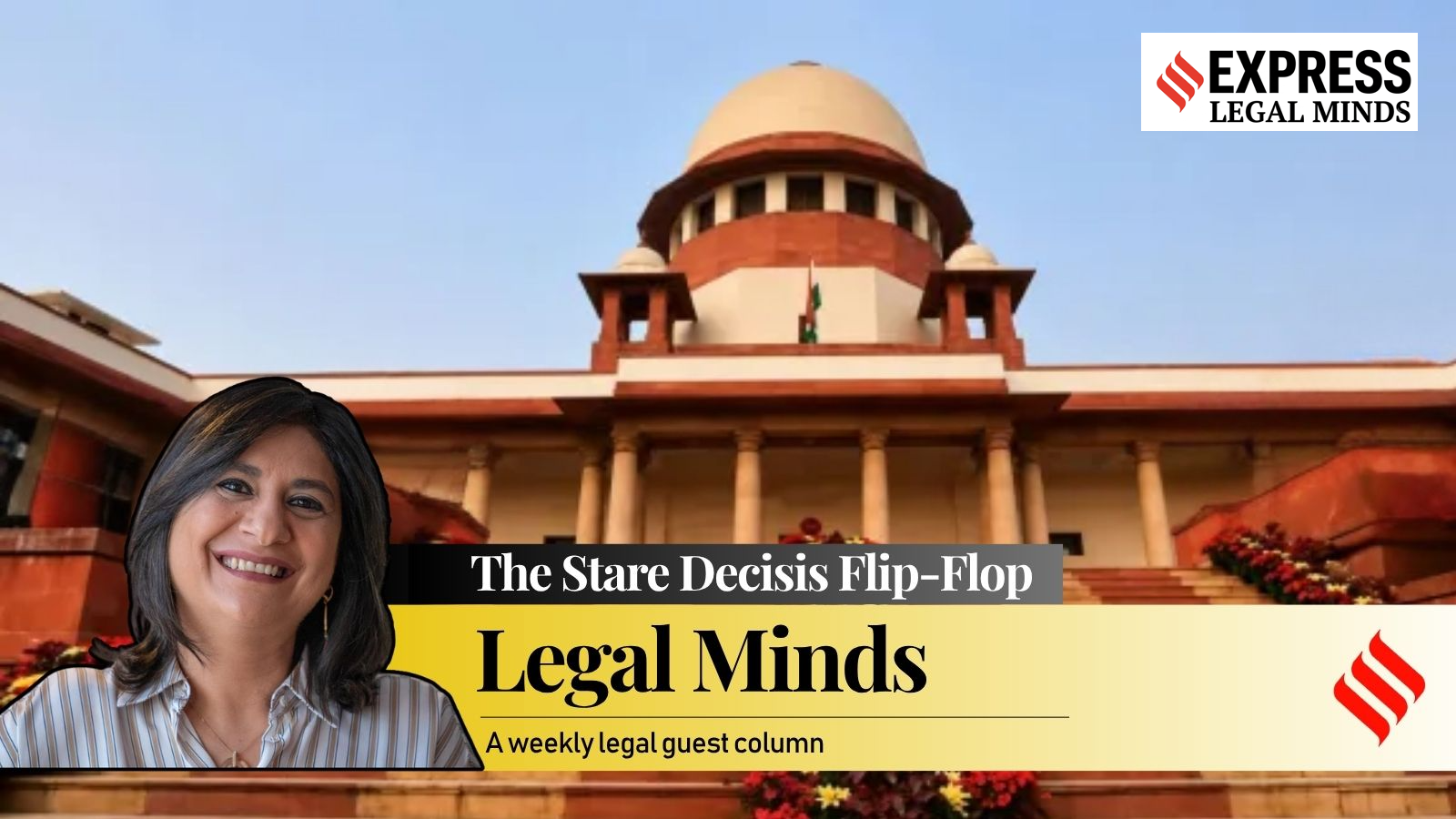
India is the world's largest democracy, boasting the world's largest electorate. The country's judiciary is extensive, with over 25,843 sanctioned subordinate court posts and a recently expanded Supreme Court with 38 judges. The Supreme Court's constitutional duty to adhere to the doctrine of stare decisis, which means standing by things decided and not disturbing settled matters, is a heavy responsibility.
However, the Supreme Court seems to be contradicting itself by flip-flopping on its rulings, a trend that is becoming more noticeable. This uncertainty undermines the Rule of Law, a foundational principle emphasized by political thinkers like Aristotle, Locke, and Montesquieu. The Seventh Principle in Lon L. Fuller's "The Morality of Law" (1964) prescribes consistency and stability of laws, which is crucial for maintaining the inner morality of law.
Recently, former Supreme Court Justice Rohinton F Nariman lamented the increasing arbitrariness in arbitration judgments, citing five Constitution Bench judgments. The Right to Fair Compensation Act cases, in particular, are experiencing grave uncertainty due to the reopening of settled questions. In 2013, the Supreme Court notified the Right to Fair Compensation and Transparency in Land Acquisition Act, 2013, which aimed to alleviate social impacts of land acquisitions.
However, in May 2014, the Court watered down procedural safeguards, weakening protections for landowners.
The question arises: should the Supreme Court be fully restricted by previous opinions, or is there value in being polyvocal? Dissenting judgments enrich decision-making. Notable examples include Justice H.R. Khanna's dissent in ADM Jabalpur (1976), which was later repudiated by the Supreme Court in K.S. Puttaswamy (2017). Foreign judgments, such as Frankfurter J's opinion in Graves v New York (1924), emphasize the importance of judicial exegesis and the ultimate touchstone of constitutionality being the Constitution itself.
Written by urgent.news from The Indian Express's reporting — not their text. Machine-written — may contain errors; check the original before relying on it.